What it is
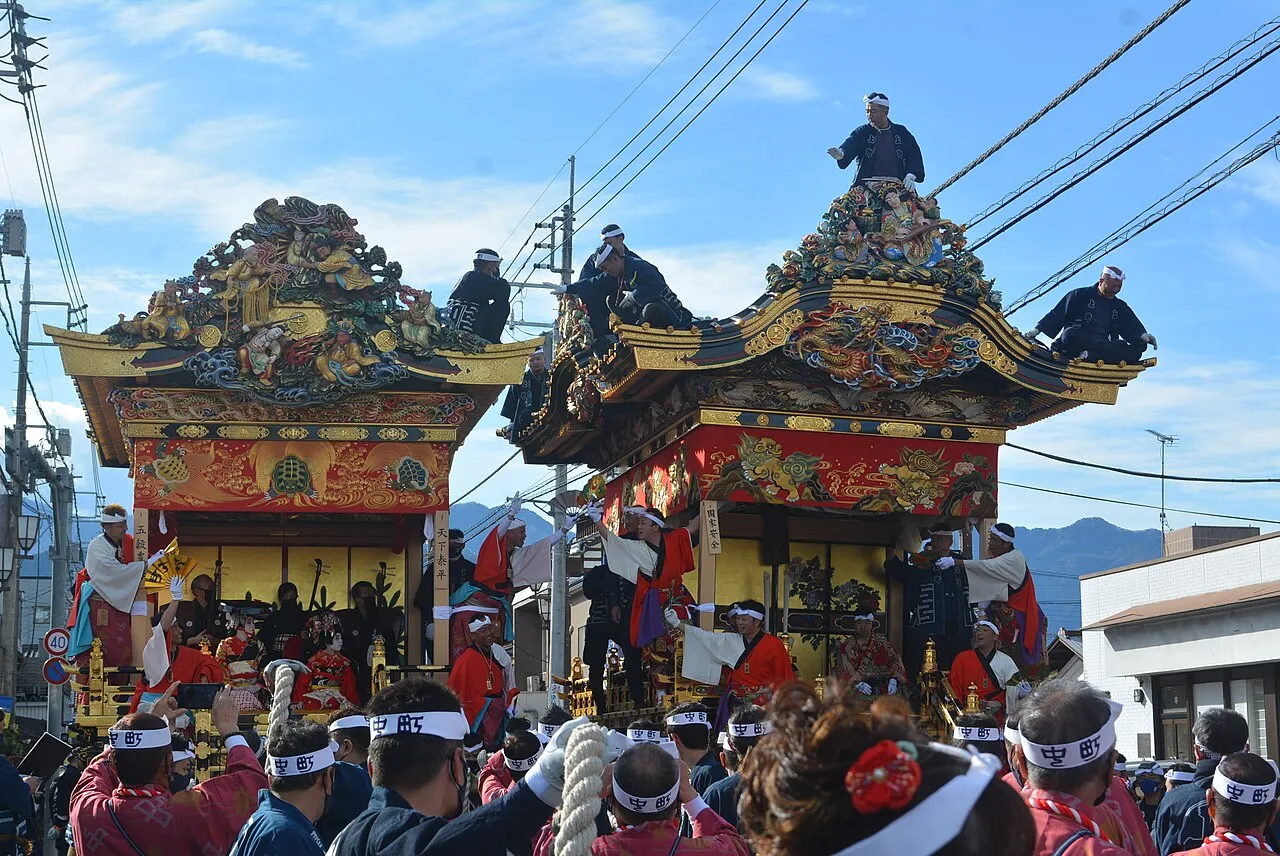
The Chichibu Night Festival is the annual festival of Chichibu Shrine, one of the oldest shrines in the Kanto region. Its origins go back more than 300 years, to a market that drew merchants from across the region in the Edo period, when Chichibu was famous for its silk.
The highlight is the night of December 3. Six enormous floats, lit by hundreds of lanterns, are pulled through the streets to the drumming of the Chichibu-bayashi. Late in the evening they are hauled up the steep Dangozaka slope to the festival grounds, while fireworks light up the winter sky.
The legend behind it
A local legend says the festival is a once-a-year meeting of two kami: the goddess of Chichibu Shrine and the male dragon god of Mount Bukō, the mountain that rises over the town. The floats and fireworks celebrate their reunion.
The festival at a glance
| Date | What happens |
|---|---|
| Dec 2 | Yoimiya (festival eve): Floats are pulled through town in the day and evening, with some fireworks |
| Dec 3 | Main festival: Kabuki performed on the float stages in the daytime; the procession sets out from Chichibu Shrine in the evening |
| Dec 3 night | Dangozaka and fireworks: Floats are hauled up the Dangozaka slope to the festival grounds as fireworks burst overhead |
Which day should you go?
Evening of Dec 3
The climax: six floats glowing with lanterns, taiko drums, and a winter fireworks display. Come by late afternoon and stay into the night.
Dec 2
A smaller warm-up with floats in the streets and a shorter fireworks show. Easier to get close to the floats.
What to look for
Two kinds of floats
Two kasaboko, tall floats topped with layered decorations, and four yatai, which carry a small stage. All six are designated Important Tangible Folk Cultural Properties.
The Dangozaka slope
Each float weighs about 10 to 20 tonnes. Teams haul them up this short, steep slope with ropes while drummers inside play at full force.
Kabuki on the floats
On Dec 3, the yatai floats open out into stages and local performers present kabuki plays.
Winter fireworks
Fireworks are launched from Hitsujiyama Park. In the clear, cold air they look brighter than summer displays.
Practical tips
- Cold. Nights in Chichibu often drop below freezing. Wear thermal layers, gloves and a hat, and bring heat packs.
- Trains. Seibu runs extra trains, but reserved seats on the Limited Express sell out early. Book ahead or plan for a long wait on the way home.
- Paid seats. Reserved seats along the route and near Dangozaka are sold online in autumn, mostly on Japanese-language sites.
- Staying over. Hotels in Chichibu fill up months in advance. Many visitors return to Tokyo the same night.
Glossary
Yatai屋台
A festival float with a roof, often carrying musicians or a small stage. The same word also means a street food stall.
Matsuri祭り
A Japanese festival, usually held for the kami of a local shrine. The word comes from the idea of serving and entertaining the gods.
Kagura神楽
Sacred music and dance performed for the kami. Many forms retell myths, above all the story of Amaterasu and the rock cave.
References
- Chichibu City official tourism site: Chichibu Night Festival, https://navi.city.chichibu.lg.jp/p_festival/1030/
- Chichibu Festival Hall (Chichibu Matsuri Kaikan): Chichibu Yomatsuri, https://www.chichibu-matsuri.jp/yomatsuri/
- UNESCO: “Yama, Hoko, Yatai, float festivals in Japan” (2016).
Last checked 2026-10-12.