What it is
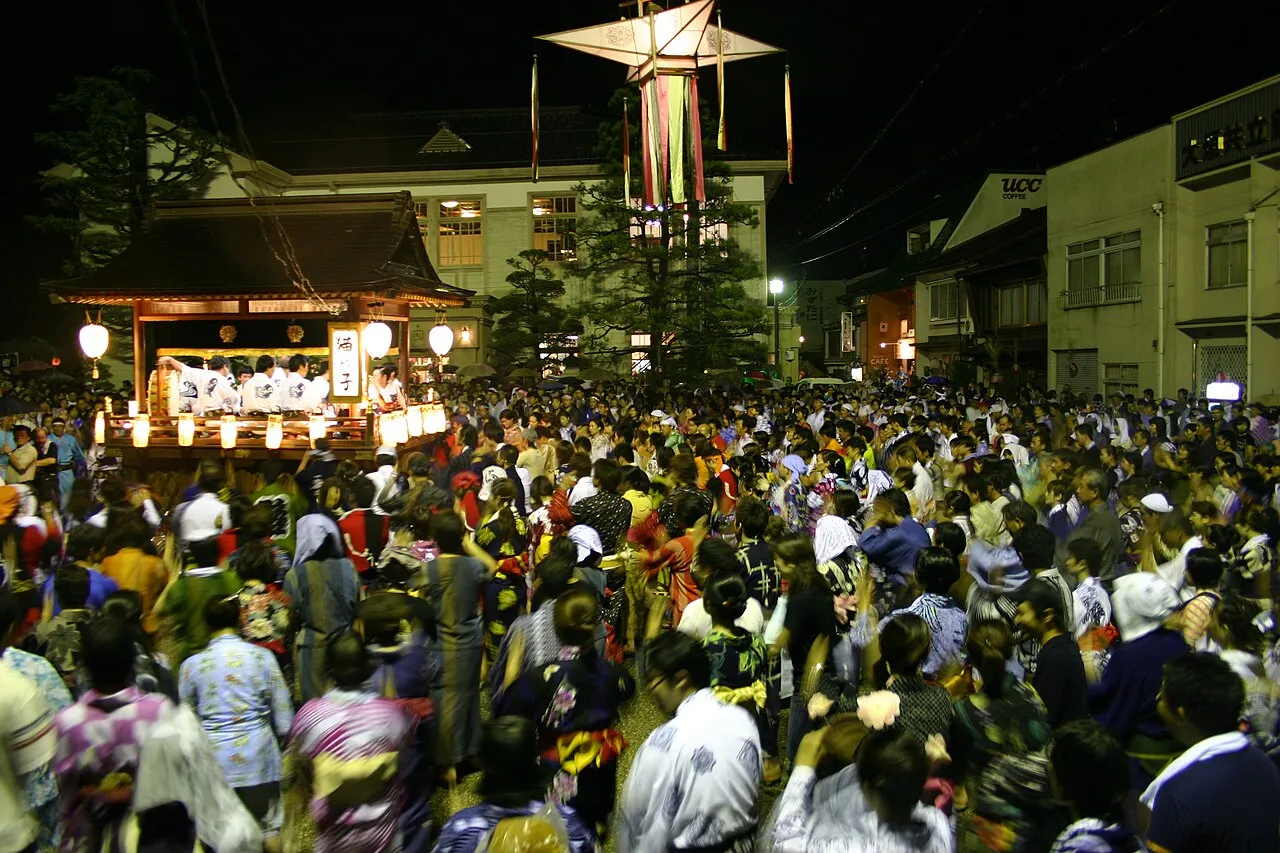
Gujō Hachiman is a small castle town in the mountains of Gifu, crossed by clear rivers. Its summer dance has been held for about 400 years. It is said that a local lord encouraged it to bring the people of the area together.
The dance season is one of the longest in Japan, with about 30 nights from mid-July to early September. Visitors are welcome to join in, and the steps are easy to pick up. For four nights around Obon, from August 13 to 16, the tetsuya odori goes on all night, and the narrow streets fill with dancers until dawn.
The festival at a glance
| Date | What happens |
|---|---|
| Mid-July to early September | Dance nights: About 30 evenings of dancing at different spots in the old town |
| Aug 13–16 | Tetsuya odori: All-night dancing, from evening until dawn |
Which day should you go?
Any dance night
Every night is open to everyone. Watch for a while, then join the circle.
Aug 13–16
The all-night dances are the busiest and most famous nights.
What to look for
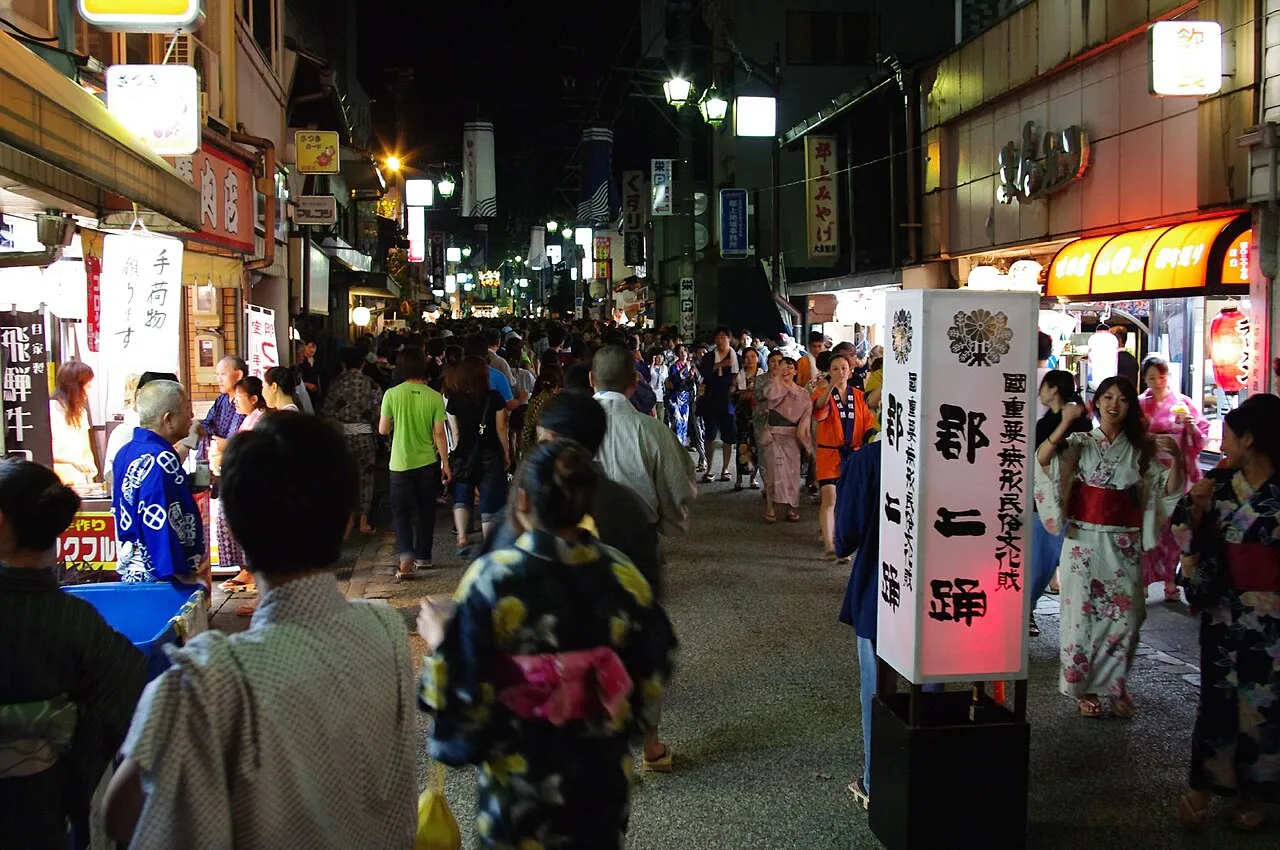

Join in
Anyone can dance. Follow the people in front of you.
Ten dances
The festival has ten traditional dances, each with its own song.
Geta
Many dancers wear wooden geta sandals, which clack on the street in time with the music.
Getting there & where to stay
| From | How | Time |
|---|---|---|
| Nagoya | Highway bus to Gujō Hachiman | about 1 h 30 min |
| Gifu | Bus to Gujō Hachiman | about 1 h 15 min |
On the day. The dance moves to a different street of the old town each night. Check the schedule for the night's location.
Crowds. The all-night dances from August 13 to 16 draw the biggest crowds. Other nights are calmer.
Where to stay
Gujō Hachiman
Dance until late and walk back to your inn.
Gifu
More hotels, about 1 hour 15 minutes by bus. Check the last bus.
When to book. Gujō's inns fill for August 13–16. Book 3–6 months ahead.
Times are typical fastest routes. Check current timetables before you travel.
Practical tips
- Geta. Shops in town sell geta. Try a pair for the dance.
- Certificate. Dance enough nights and you can get a 'Gujō Odori master' certificate.
Glossary
Obonお盆
The Buddhist summer season, usually mid-August, when the spirits of ancestors are believed to return home. Bon dances and farewell fires mark it.
Yukata浴衣
A light cotton kimono worn in summer, especially to festivals and fireworks displays.
Matsuri祭り
A Japanese festival, usually held for the kami of a local shrine. The word comes from the idea of serving and entertaining the gods.
References
- Gujō Hachiman Tourism Association: Gujō Odori.
- Gifu Prefecture tourism: Gujō Odori.
Last checked 2026-10-13.