What it is
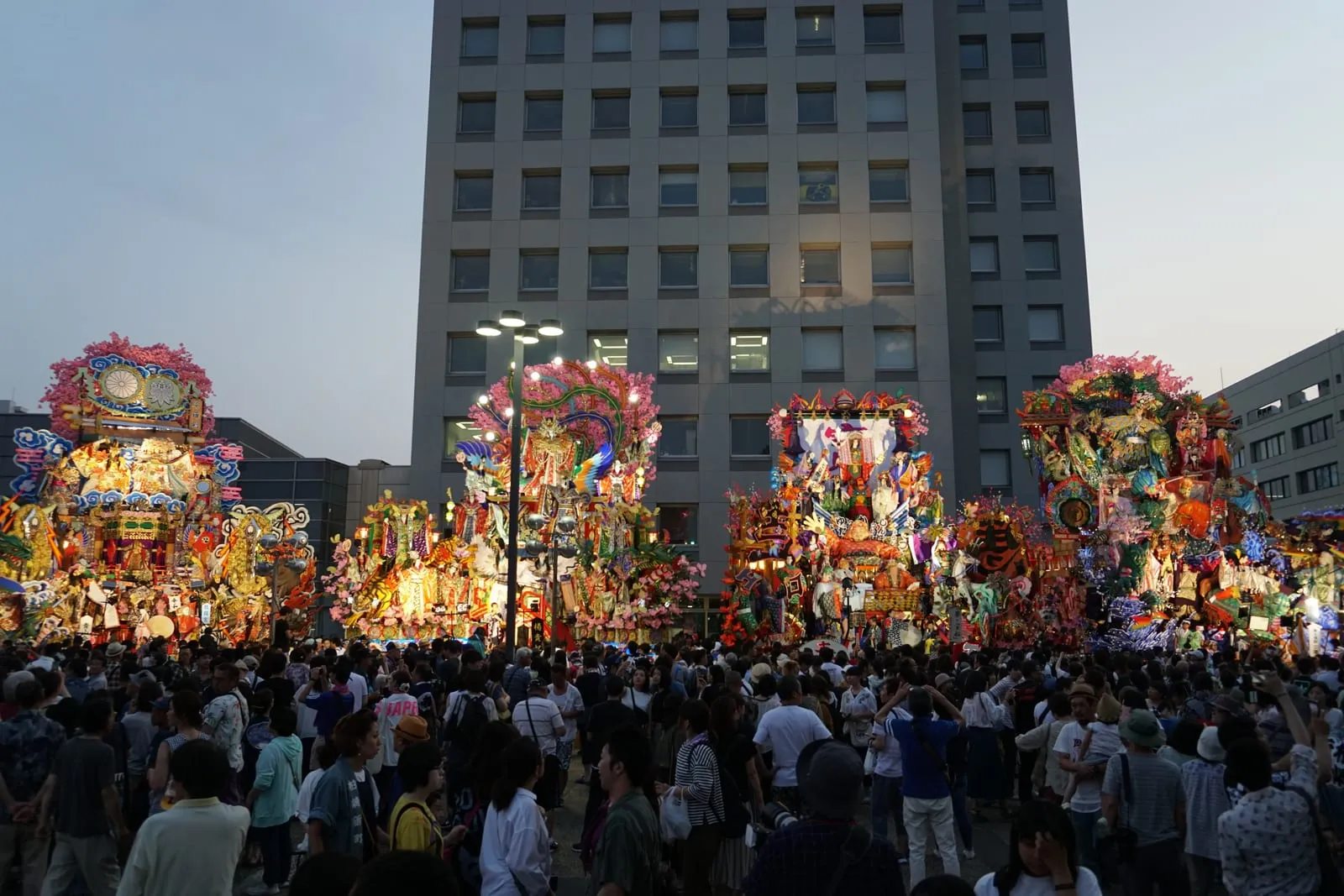
The Hachinohe Sansha Taisai, “Great Festival of Three Shrines”, has been held for about 300 years in this port city on the Pacific coast of Aomori. It began as a prayer for good harvests in the Edo period, when the town’s people carried the deity of Ogami Shrine in procession.
Today three shrines take part, joined by 27 floats built by local neighbourhoods. The floats are huge and full of detail, showing scenes from Japanese myth and legend, and many expand as they move, growing taller and wider in front of the crowd.
The festival at a glance
| Date | What happens |
|---|---|
| Jul 31, evening | Zenyasai: The floats are lit up and displayed in the city centre |
| Aug 1, day | Otōri procession: The three shrines' mikoshi and the floats parade through the city |
| Aug 2, evening | Nakabi night parade: The floats parade lit up at night |
| Aug 3, day | Okaeri procession: The procession returns the deities to their shrines |
| Aug 4, evening | Kōyasai: A last display of the lit floats |
Which day should you go?
Aug 1 or Aug 2
The day procession shows the full parade; the night parade shows the floats at their brightest.
What to look for
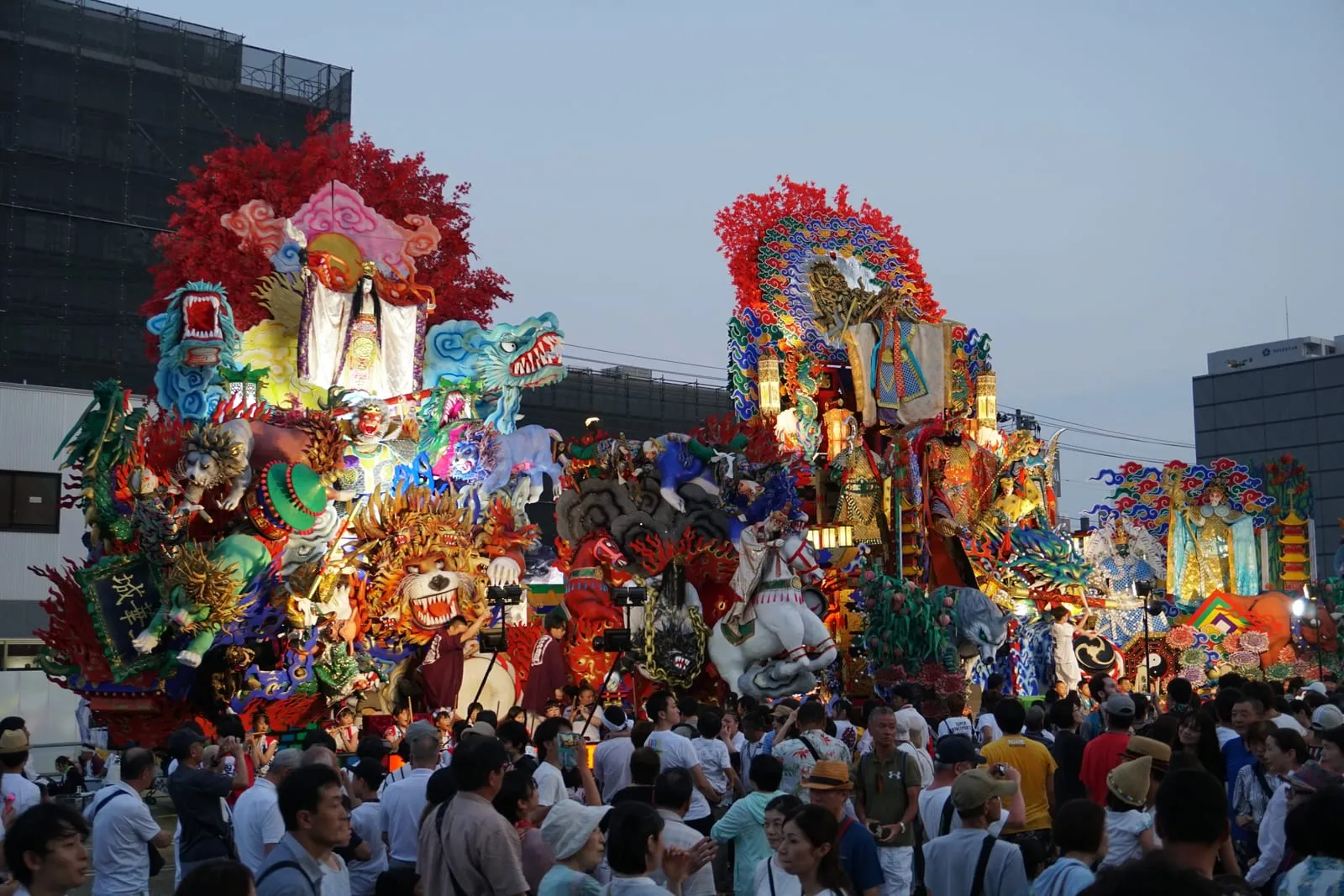
Moving floats
Many floats open up as they move, rising higher and spreading their sides.
Scenes
Each float shows a scene from myth, legend or kabuki.
Three shrines
Ogami Shrine, Chōjasan Shinra Shrine and Shinmei Shrine take part.
Getting there & where to stay
| From | How | Time |
|---|---|---|
| Tokyo | Tōhoku Shinkansen to Hachinohe, then JR Hachinohe Line to Hon-Hachinohe | about 3 h |
| Aomori | JR and Aoimori Railway to Hachinohe | about 1 h 30 min |
On the day. The floats parade through the city centre, a short walk from Hon-Hachinohe Station.
Crowds. The day procession on August 1 and the night parade on August 2 are the busiest.
Where to stay
Central Hachinohe
Walk to the parades and the city's lively food alleys.
Hachinohe Station area
Easy for the Shinkansen, about 10 minutes from the centre by train.
When to book. Book 3–4 months ahead. The Aomori Nebuta runs at the same time.
Times are typical fastest routes. Check current timetables before you travel.
Practical tips
- Combine. The festival overlaps with the Aomori Nebuta and other Tohoku summer festivals.
Glossary
Dashi山車
A general word for a festival float that is pulled through the streets.
Mikoshi神輿
A portable shrine. During the festival the kami rides inside while people carry it through the neighborhood.
Matsuri祭り
A Japanese festival, usually held for the kami of a local shrine. The word comes from the idea of serving and entertaining the gods.
References
- Hachinohe Sansha Taisai official site: schedule and history.
- Hachinohe Tourism: Hachinohe Sansha Taisai.
Last checked 2026-10-13.