What it is
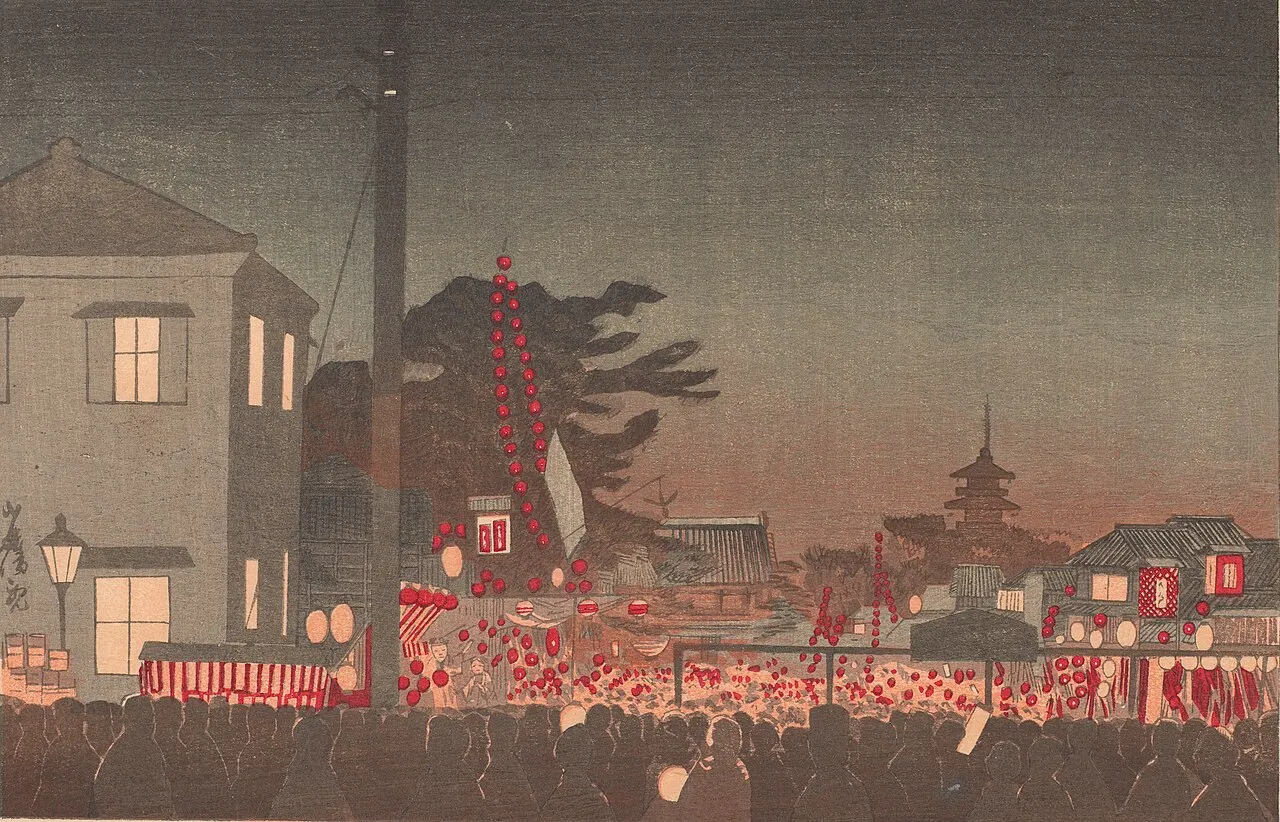
The Hagoita-ichi is a year-end market at Sensō-ji in Asakusa. It began as part of the temple’s last fair of the year, when people bought goods for the New Year. Today it is famous for hagoita, the wooden paddles used in a traditional New Year shuttlecock game.
The decorative hagoita sold here are works of craft, with raised pictures of kabuki actors, beautiful women and the year’s celebrities made from padded silk. They are given as charms to protect children and keep away bad luck.
The festival at a glance
| Date | What happens |
|---|---|
| Dec 17–19 | Hagoita market: Stalls in the temple grounds sell decorated paddles |
Which day should you go?
Any evening
The paddles shine under the stall lights after dark.
What to look for
Hagoita
Paddles used for a New Year game like badminton. The decorative ones show kabuki actors and celebrities in padded silk.
Toshi-no-ichi
The market grew out of the year-end fair on Kannon's last festival day of the year.
Lucky charms
Hagoita are given to baby girls at their first New Year to protect them.
Getting there & where to stay
| From | How | Time |
|---|---|---|
| Tokyo Station | JR to Kanda, then Ginza subway line to Asakusa | about 20 min |
| Narita Airport | Keisei Access Express to Asakusa | about 1 h |
| Haneda Airport | Keikyū and Toei Asakusa Line to Asakusa | about 40 min |
On the day. The stalls line the Sensō-ji grounds, a few minutes on foot from Asakusa Station. Evenings are atmospheric, with the stalls lit up.
Crowds. Busy in the evenings, but easy to walk around.
Where to stay
Asakusa
Walk to the temple early and late, when it is calmer. Many hotels and hostels.
Ueno
Two stops away on the Ginza line, with more hotels.
When to book. Mid-December is not peak season. Booking 2–4 weeks ahead is usually enough.
Times are typical fastest routes. Check current timetables before you travel.
Practical tips
- Combine. Asakusa's streets are decorated for New Year by mid-December.
Glossary
Hagoita羽子板
A wooden paddle for a New Year shuttlecock game. Decorated hagoita are sold as lucky charms.
Matsuri祭り
A Japanese festival, usually held for the kami of a local shrine. The word comes from the idea of serving and entertaining the gods.
References
- Sensō-ji, official website: annual events.
- Taitō City tourism information: Hagoita-ichi.
Last checked 2026-10-12.