What it is
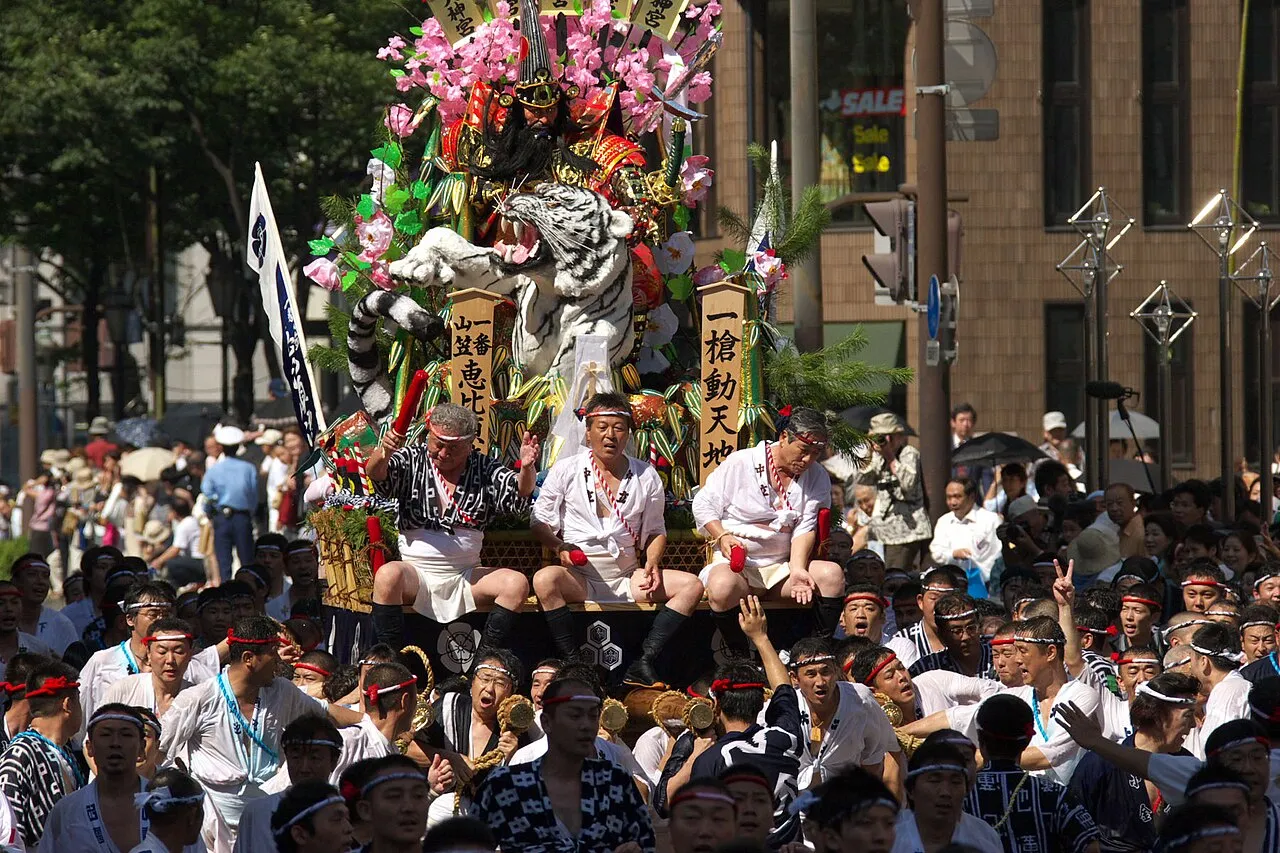
Hakata Gion Yamakasa is the festival of Kushida Shrine, the guardian shrine of Hakata, the old merchant half of Fukuoka. Legend says it began in 1241, when a monk was carried through the streets sprinkling holy water to drive away an epidemic. Like the Gion Matsuri in Kyoto, it is a summer prayer against disease to the Gion deity, identified with Susanoo.
The festival is a race. Seven neighborhood teams carry heavy floats at a run through the streets, taking turns under the poles. Their training builds to the Oiyama on the morning of July 15, a timed race of about 5 kilometers that starts in the dark at 4:59 a.m.
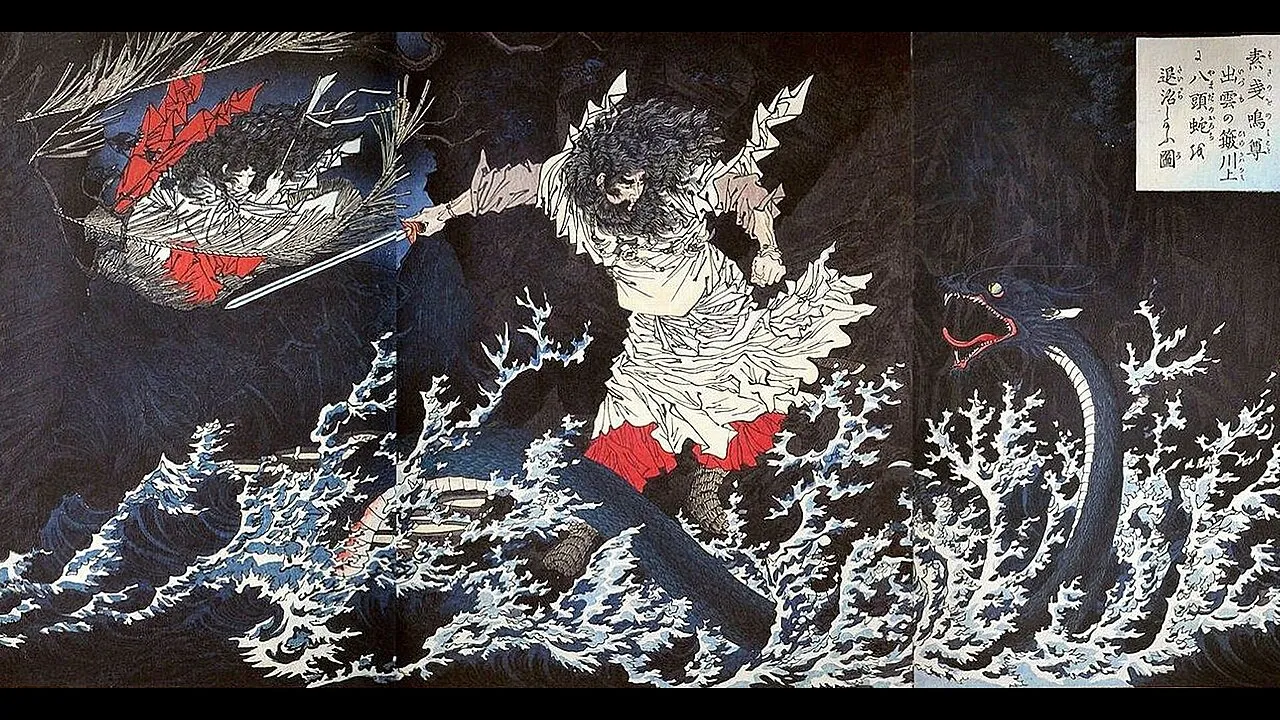 Kami of this festivalSusanooThe storm god who was thrown out of heaven, slew an eight-headed serpent, and is now the guardian at the center of Kyoto's Gion Matsuri. Read the story →
The festival at a glance
| Date | What happens |
|---|---|
| Jul 1–15 | Kazari-yamakasa: Tall decorated floats are displayed at sites around the city |
| Jul 10–14 | Practice runs: Teams run their racing floats through the streets |
| Jul 15, 4:59 a.m. | Oiyama: The final timed race through the city, starting at Kushida Shrine |
Which day should you go?
Jul 15, before dawn
Get up early for the Oiyama race. Find a spot along the course by 3 to 4 a.m.
Jul 1–14
Visit the displayed floats any day, and catch a practice run in the evening from July 10.
What to look for
Two kinds of float
Decorated kazari-yamakasa stand over 10 meters tall. The racing kaki-yamakasa weigh about a tonne and are carried by teams running in relays.
Water
Spectators throw water over the runners to cool them, a custom called kioi-mizu.
Festival dress
Runners wear happi coats and loincloths in their team's colors.
Getting there & where to stay
| From | How | Time |
|---|---|---|
| Tokyo | Fly from Haneda to Fukuoka, then subway to Hakata (5 min) | about 2 h 30 min |
| Osaka | Sanyō Shinkansen from Shin-Osaka to Hakata | about 2 h 30 min |
On the day. Kushida Shrine is near Gion and Nakasu-Kawabata subway stations. The final race (Oiyama) starts at 4:59 am on July 15.
Crowds. Spots near the shrine fill in the middle of the night before the race. Paid seats inside the shrine are sold in advance.
Where to stay
Hakata and Nakasu
Walk to Kushida Shrine before dawn for the final race.
Tenjin
A short taxi ride away. Trains do not run before the race starts.
When to book. Hotels near the shrine fill for July 14. Book 2–3 months ahead.
Times are typical fastest routes. Check current timetables before you travel.
Practical tips
- Dawn start. The Oiyama race begins at 4:59 a.m. on July 15. Plan to stay nearby.
- Heat and humidity. Fukuoka in July is hot and humid. Bring water.
- Combine. The festival is part of the Gion faith also behind Kyoto's Gion Matsuri, held the same month.
Glossary
Fundoshi褌
A traditional loincloth of white cotton, worn by men at some festivals, especially naked festivals and float races.
Matsuri祭り
A Japanese festival, usually held for the kami of a local shrine. The word comes from the idea of serving and entertaining the gods.
References
- Hakata Gion Yamakasa Promotion Association, official website.
- UNESCO: “Yama, Hoko, Yatai, float festivals in Japan” (2016).
Last checked 2026-10-12.