What it is
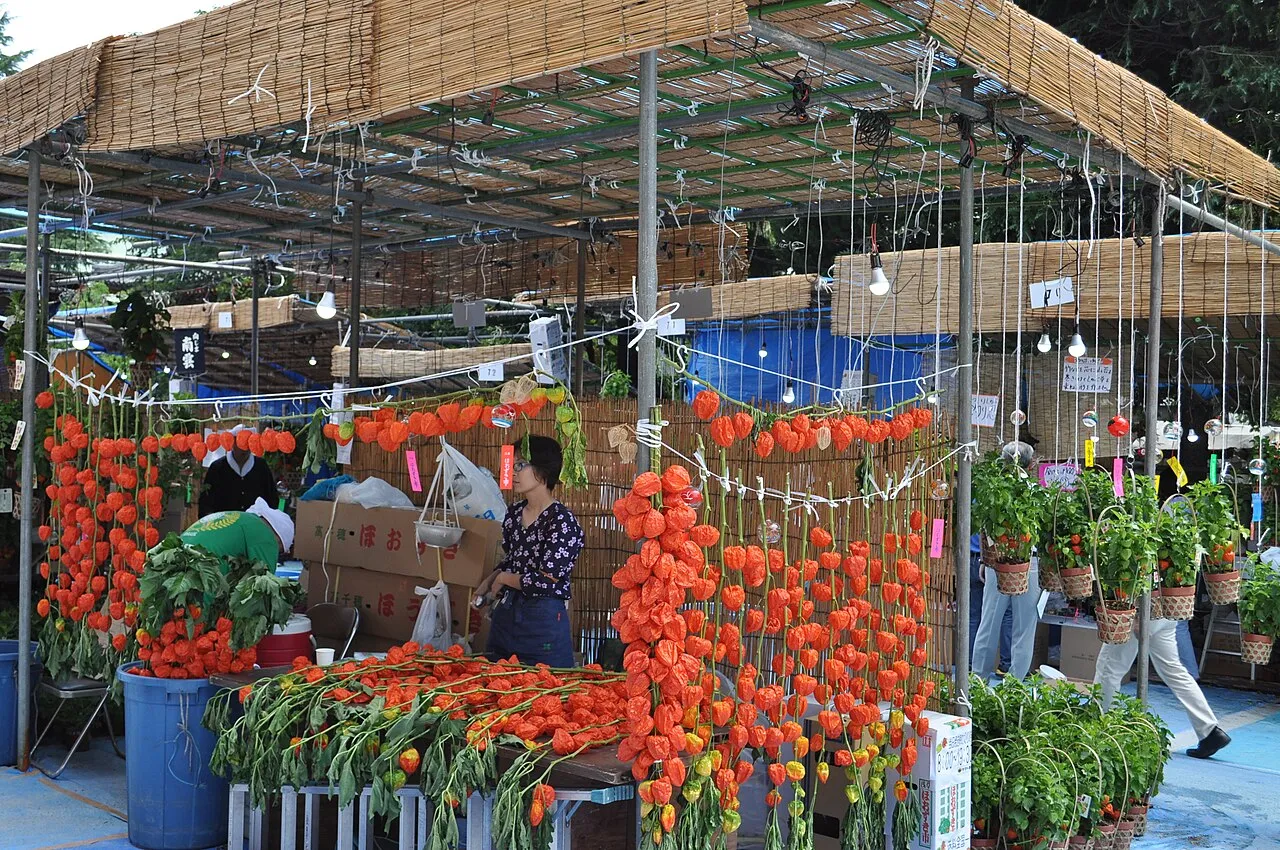
The Hōzuki-ichi is a summer market at Sensō-ji in Asakusa, Tokyo’s oldest temple. July 10 is one of the temple’s special days, when a visit is said to bring the merit of 46,000 days of prayer. Crowds came for that blessing, and a market grew up around them.
Today, about a hundred stalls sell potted hōzuki, ground-cherry plants with glowing orange husks, often with a glass wind chime hung above. Once used as a medicine, the plant is now simply a beautiful sign of summer.
The festival at a glance
| Date | What happens |
|---|---|
| Jul 9–10 | Hōzuki market: Stalls selling potted ground-cherry plants fill the temple grounds |
Which day should you go?
Either evening
Come at dusk, when the stalls are lit and the wind chimes ring in the evening breeze.
What to look for
Hōzuki
The ground-cherry plant has bright orange papery husks that look like little lanterns.
Wind chimes
Each pot comes with a glass wind chime, a sound of the Japanese summer.
46,000 days
Praying at Sensō-ji on July 10 is said to bring the blessings of 46,000 days of prayer, about a lifetime.
Getting there & where to stay
| From | How | Time |
|---|---|---|
| Tokyo Station | JR to Kanda, then Ginza subway line to Asakusa | about 20 min |
| Narita Airport | Keisei Access Express to Asakusa | about 1 h |
| Haneda Airport | Keikyū and Toei Asakusa Line to Asakusa | about 40 min |
On the day. The plant stalls fill the Sensō-ji grounds, a few minutes on foot from Asakusa Station.
Crowds. July 10 is the busiest day. Mornings are hot but less crowded.
Where to stay
Asakusa
Walk to the temple early and late, when it is calmer. Many hotels and hostels.
Ueno
Two stops away on the Ginza line, with more hotels.
When to book. Booking 1 month ahead is usually enough.
Times are typical fastest routes. Check current timetables before you travel.
Practical tips
- Buying. Potted plants are hard to take abroad. Buy a wind chime or just enjoy the view.
- Combine. Stroll Nakamise shopping street and see Sensō-ji's main hall lit up at night.
Glossary
Matsuri祭り
A Japanese festival, usually held for the kami of a local shrine. The word comes from the idea of serving and entertaining the gods.
References
- Sensō-ji, official website: annual events.
- Taitō City tourism information: Hōzuki-ichi.
Last checked 2026-10-12.