What it is
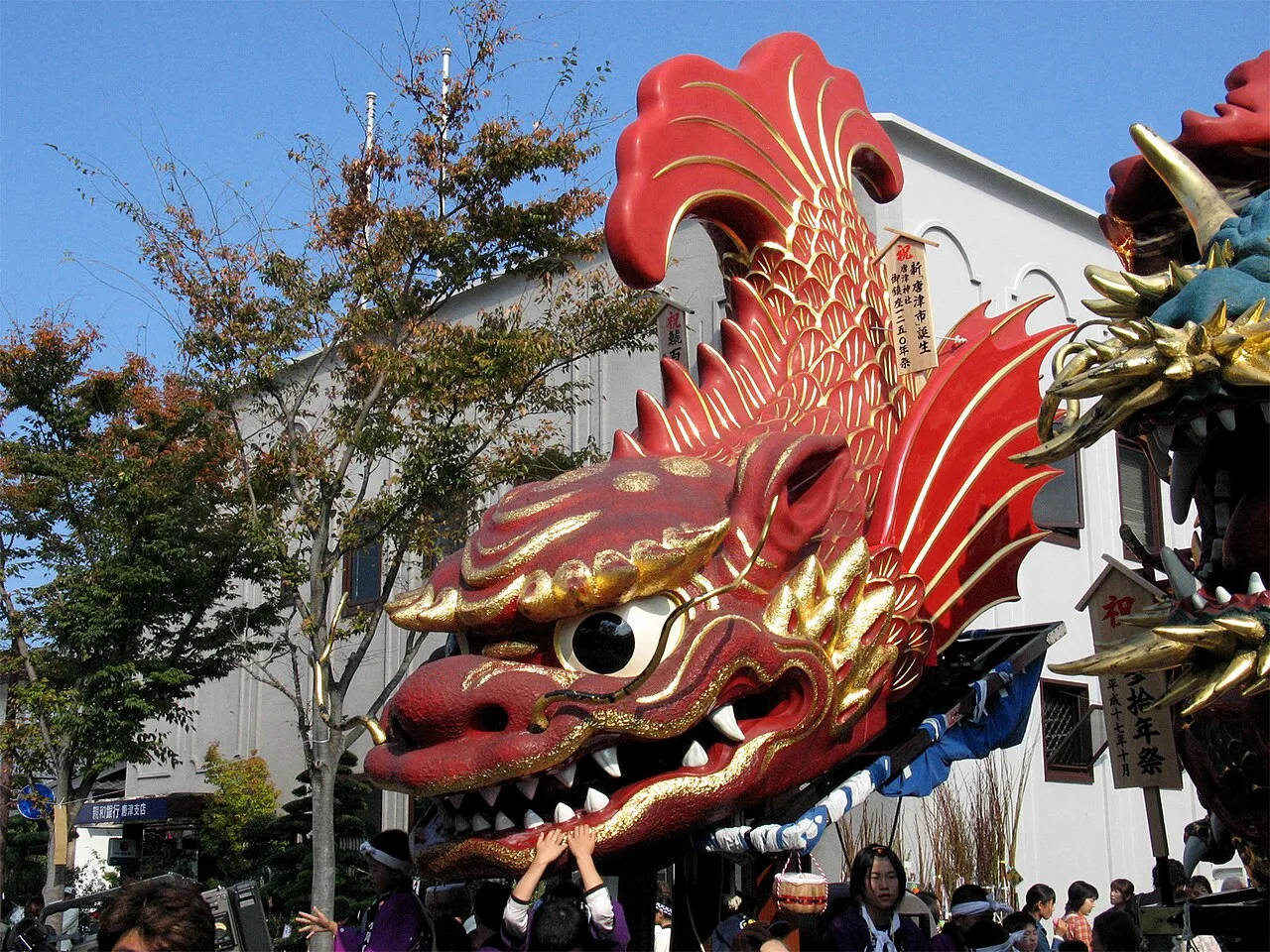
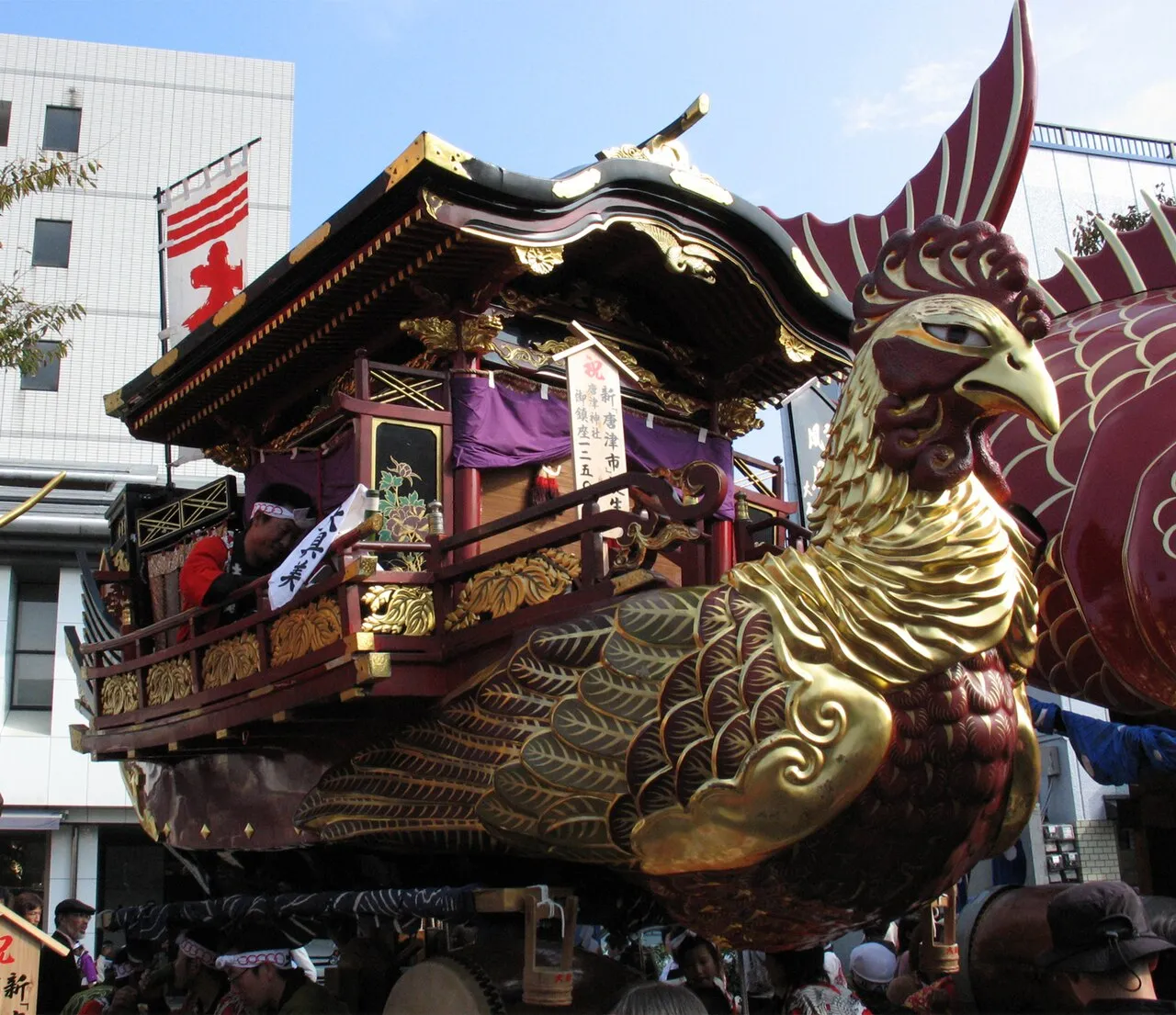
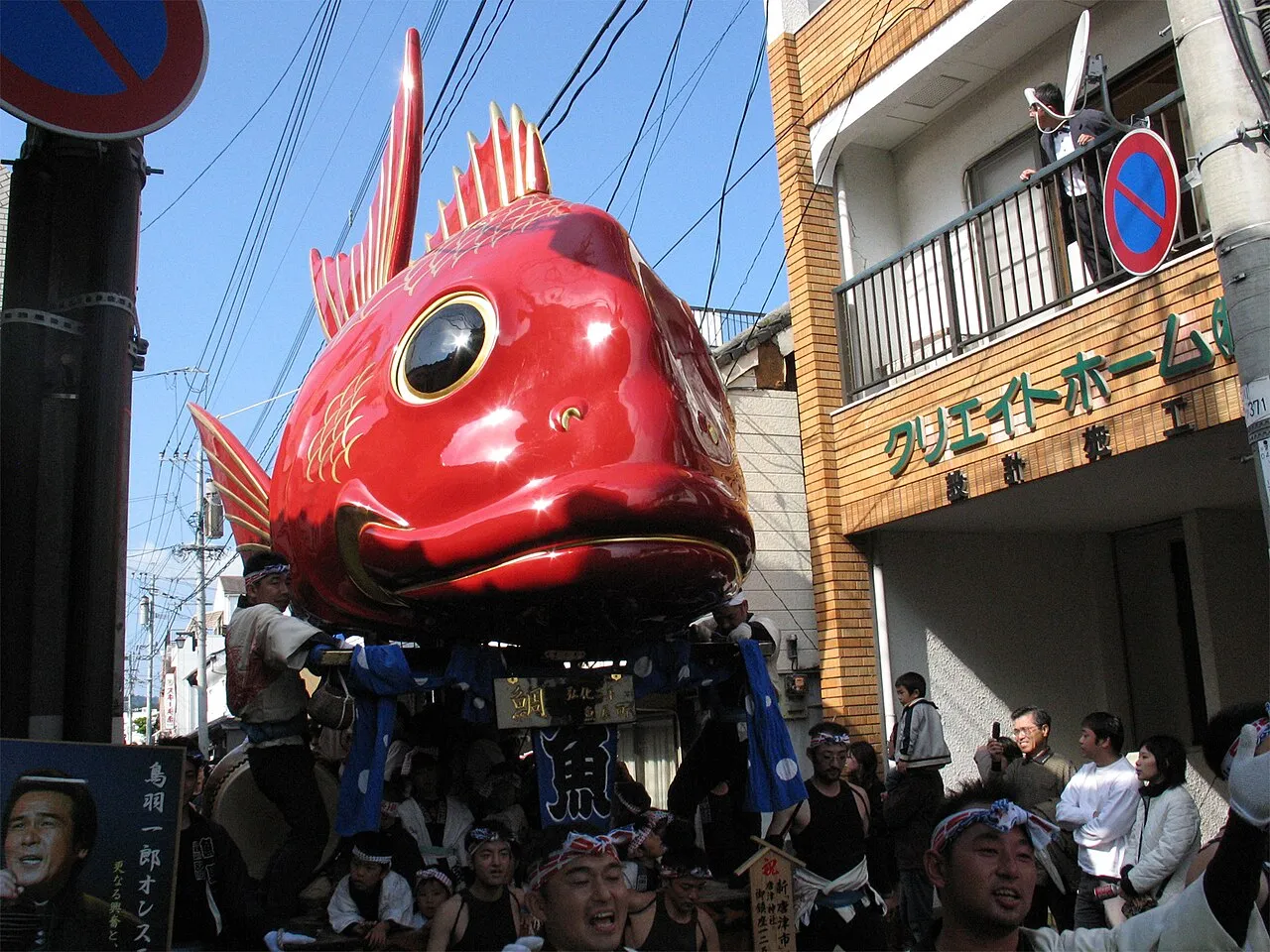
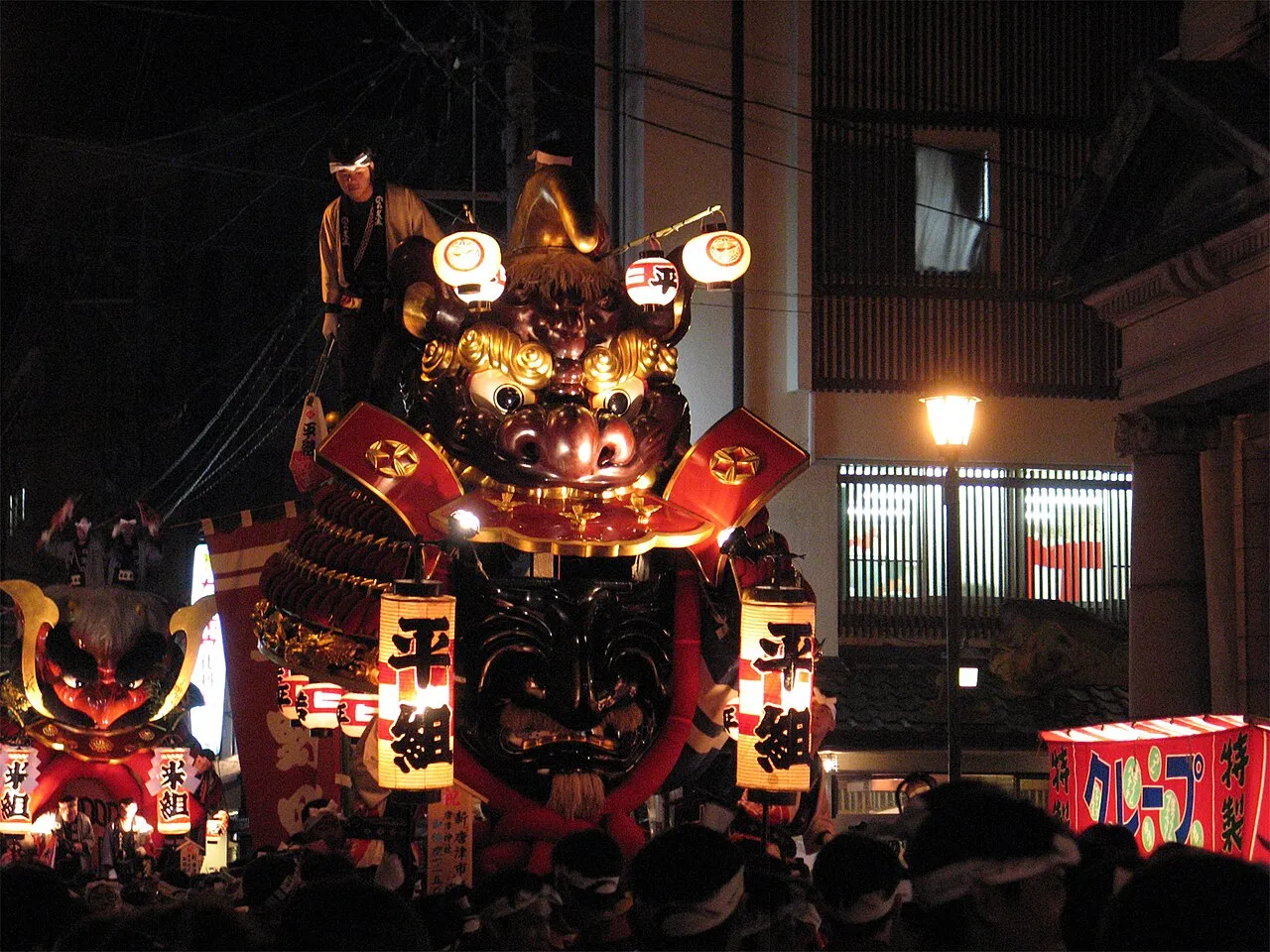
Karatsu Kunchi is the autumn festival of Karatsu Shrine, in a castle town on the northern coast of Kyushu. Its stars are fourteen hikiyama, giant floats owned by the town’s neighbourhoods. They are shaped like a red lion, a sea bream, samurai helmets, a dragon and a phoenix boat, and are made from paper and cloth layered over a frame and finished in lacquer and gold leaf.
The oldest float, the red lion Akajishi, was made in 1819, and the newest date from the 1870s. The festival is a National Important Intangible Folk Cultural Property and part of the UNESCO listing of Japan’s float festivals.

The festival at a glance
| Date | What happens |
|---|---|
| Nov 2, 19:30–22:00 | Yoiyama: The floats, lit with lanterns, are pulled through the town at night and line up in front of Karatsu Shrine |
| Nov 3, 9:30–16:30 | Otabisho Shinkō: The floats escort the deity to its temporary shrine at Nishinohama, where they are dragged through deep sand |
| Nov 4, 10:00–16:40 | Machimawari: The floats tour the town; around midday all fourteen line up on Komeya-machi street |
Which day should you go?
Nov 3
Watch the floats being hauled through the sand at Nishinohama, the most dramatic moment of the festival.
Nov 2, evening
The lantern-lit night parade is beautiful and less tiring than the long day on the 3rd.
What to look for


The floats
Each float, about 7 metres tall and 2 to 3 tonnes, is made from layers of Japanese paper and cloth finished in lacquer and gold.
Akajishi
The first float, a red lion made in 1819, always leads the parade.
The sand
At Nishinohama, hundreds of pullers drag each float into the sand, where its wheels sink deep.
The chant
Pullers shout 'En-ya! En-ya!' and 'Yoi-sa! Yoi-sa!' as they run with the ropes.
Getting there & where to stay
| From | How | Time |
|---|---|---|
| Fukuoka (Tenjin) | Fukuoka subway Kūkō Line, through to JR Chikuhi Line, to Karatsu | about 1 h 20 min |
| Fukuoka Airport | Fukuoka subway, through to JR Chikuhi Line, to Karatsu | about 1 h 30 min |
| Tokyo | Fly to Fukuoka, then subway and JR to Karatsu | about 4 h |
On the day. The floats move around central Karatsu, a short walk from Karatsu Station. Nishinohama, the beach where they are hauled through the sand, is also within walking distance of the station.
Crowds. Hundreds of thousands of people come over three days. Find your spot at Nishinohama early on November 3.
Where to stay
Fukuoka (Tenjin or Hakata)
Many hotels and direct trains to Karatsu. The best base if Karatsu is full.
Karatsu
Stay close to see the night parade on November 2 without rushing for the train. Rooms are few.
Yobuko
A fishing port 30 minutes away, famous for live squid, with small inns.
When to book. Karatsu's few hotels fill for November 2–4. Book 3 months ahead, or stay in Fukuoka.
Book ahead
Some links on this page are affiliate links. We may earn a commission at no extra cost to you.
Times are typical fastest routes. Check current timetables before you travel.
Practical tips
- Off season. The floats are on display all year at the Hikiyama Exhibition Hall in Karatsu.
- Combine. Karatsu Castle and the pine forest of Niji-no-Matsubara are near the parade route.
Glossary
Dashi山車
A general word for a festival float that is pulled through the streets.
Matsuri祭り
A Japanese festival, usually held for the kami of a local shrine. The word comes from the idea of serving and entertaining the gods.
Otabisho御旅所
The kami's temporary lodging during a festival, often in the busiest part of town.
Mikoshi神輿
A portable shrine. During the festival the kami rides inside while people carry it through the neighborhood.
References
- Karatsu Tourism Association (karatsu-kankou.jp): Karatsu Kunchi schedule and history.
- Nippon Travel Agency event listing: Karatsu Kunchi 2026.
Last checked 2026-10-15.