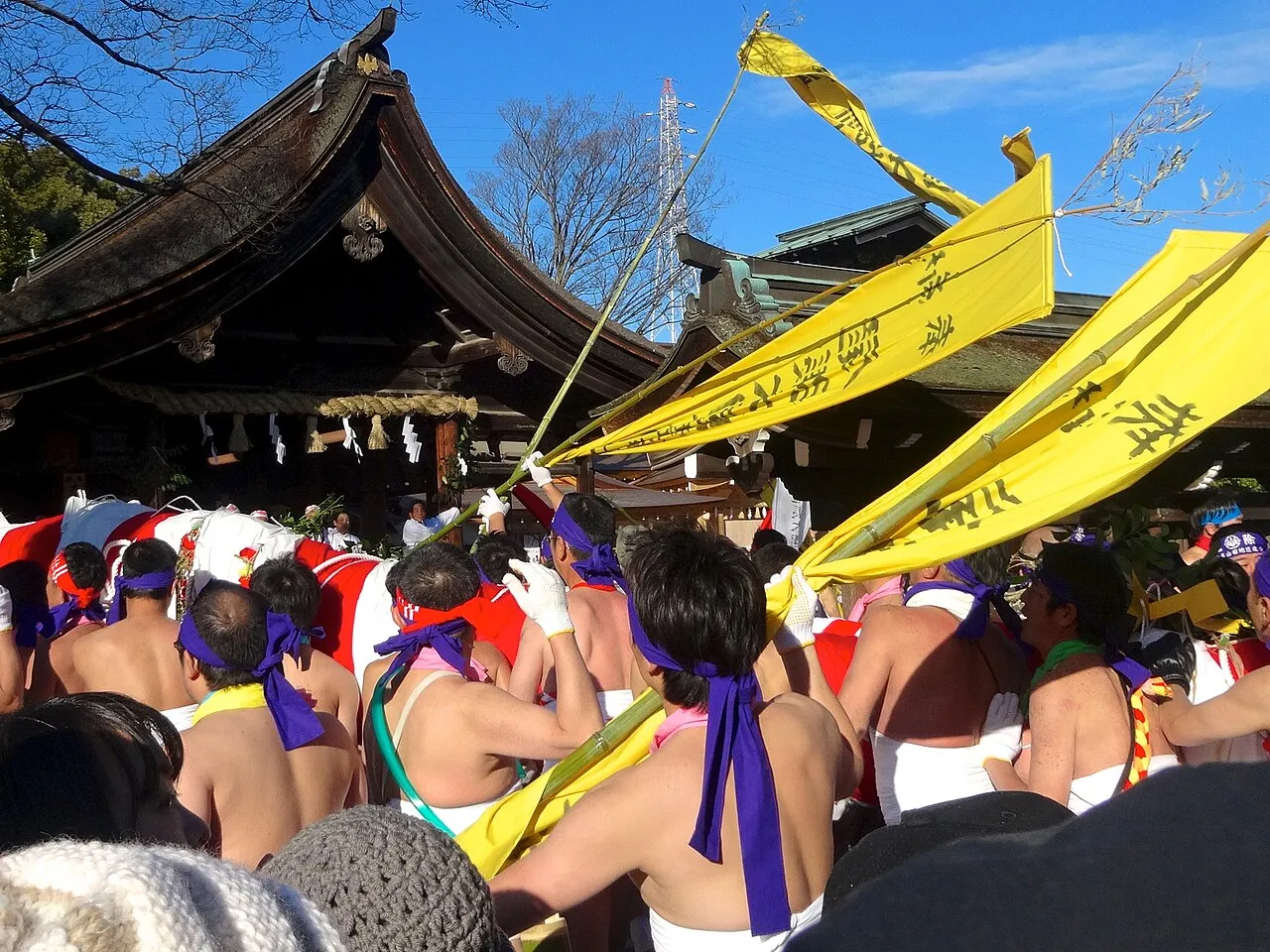
What it is
The formal name is Naoi Shinji, the rite to drive out misfortune. By the shrine’s account it began about 1,250 years ago, when a provincial governor held a purification at the shrine; in the late Edo period it combined with the custom of visiting shrines half-naked in midwinter, and took its present form.
Each year one man is chosen as the shin-otoko, the “god man”, who takes on the misfortunes of everyone. On the festival day, thousands of men, many of them at the unlucky ages of 42 and 25, wear only white loincloths and white socks and surge towards him: touching him is believed to rid you of bad luck. The crush lasts about an hour, until he is pulled into the shrine hall.
The festival at a glance
| Date | What happens |
|---|---|
| Afternoon | Naoi-zasa: Groups of men in loincloths carry tall bamboo branches hung with cloth strips of prayers to the shrine, as offerings to take away misfortune |
| Late afternoon | The shin-otoko: The one chosen man appears, and the crowd surges to touch him; the crush lasts about an hour until he reaches the hall |
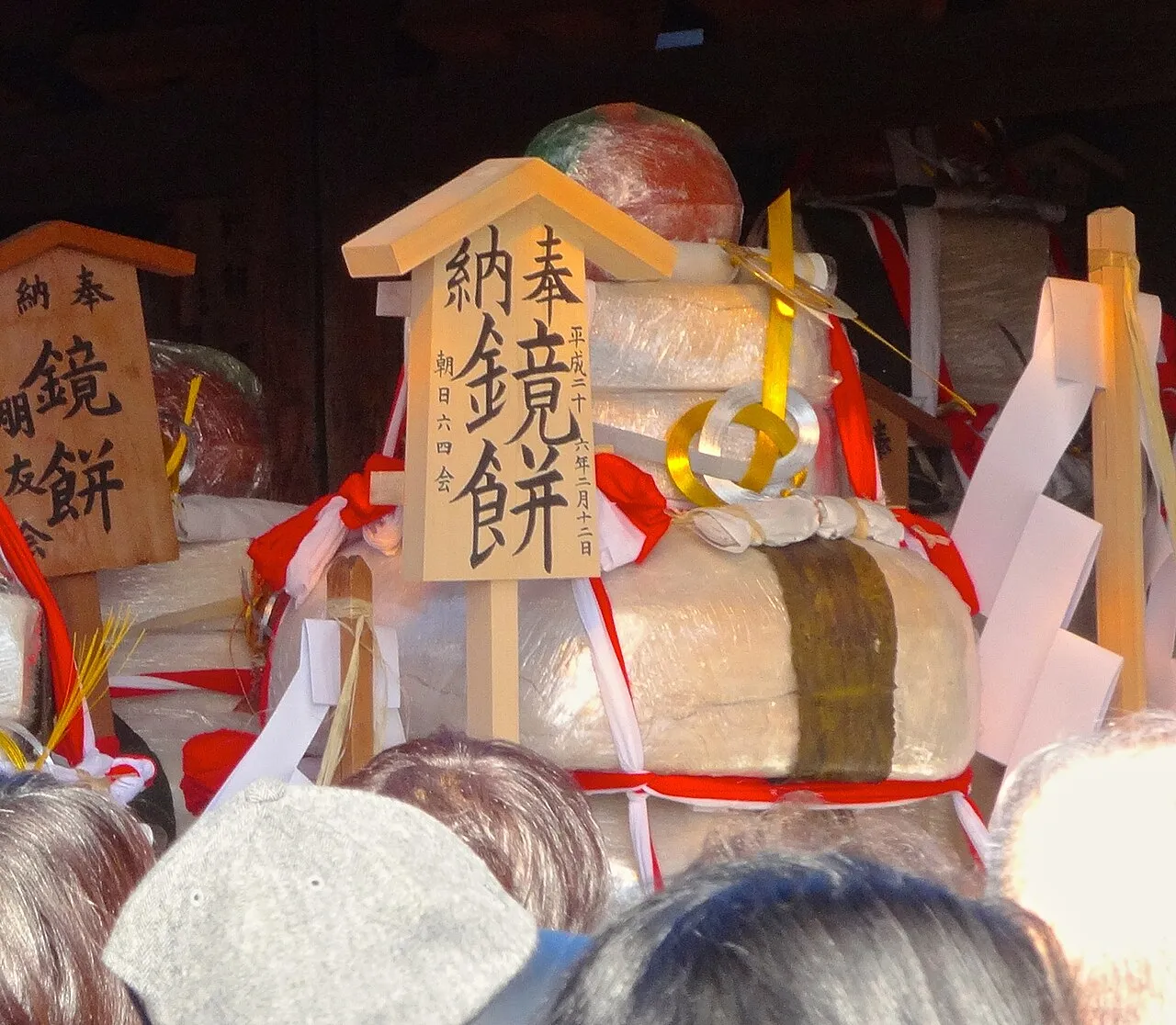
| Next morning | The giant rice cake: A huge mirror rice cake, offered by local districts, is cut up from about 8:00 and handed out; eating it is said to keep you well |
Which day should you go?
Festival day, afternoon
Arrive early and watch the naoi-zasa groups arrive, then the crush around the shin-otoko from a safe place at the edge.
What to look for

The shin-otoko
Chosen each year, the shin-otoko (also called naoi-nin) takes on everyone's misfortune. Touching him is believed to rid you of bad luck.
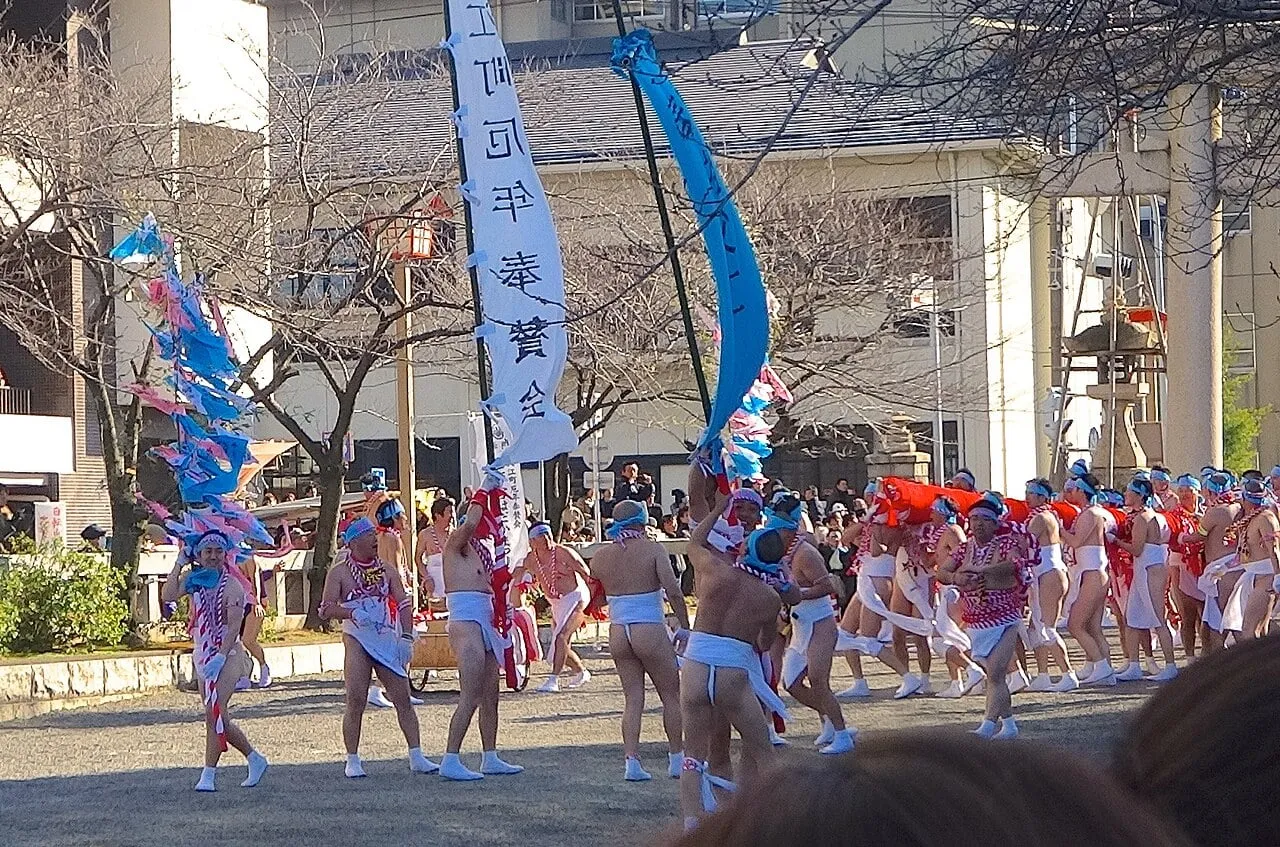

Naoi-zasa
Bamboo branches tied with strips of cloth that carry people's prayers, offered in their place to take away misfortune.
Getting there & where to stay
| From | How | Time |
|---|---|---|
| Nagoya | Meitetsu Line from Meitetsu Nagoya to Kōnomiya | about 15 min |
| Nagoya | JR Tōkaidō Line from Nagoya to Inazawa, then 15 min on foot | about 25 min |
On the day. The shrine is a 3-minute walk from the north exit of Meitetsu Kōnomiya Station.
Crowds. Very crowded around the shrine on the afternoon. Trains back to Nagoya are busy afterwards.
Where to stay
Nagoya
Many hotels, about 15 minutes away by train.
When to book. Nagoya has plenty of hotels; booking 2–4 weeks ahead is usually enough.
Book ahead
Some links on this page are affiliate links. We may earn a commission at no extra cost to you.
Times are typical fastest routes. Check current timetables before you travel.
Practical tips
- Watch from the edge. The crush is dangerous. Stay well back from the crowd of men and follow the staff.
- No parking. Roads around the shrine are closed for three days and the shrine car parks cannot be used. Come by train.
- Dates. The date follows the old lunar calendar, so it moves each year between February and early March.
Glossary
Fundoshi褌
A traditional loincloth of white cotton, worn by men at some festivals, especially naked festivals and float races.
Matsuri祭り
A Japanese festival, usually held for the kami of a local shrine. The word comes from the idea of serving and entertaining the gods.
References
- Aichi Prefecture tourism (Aichi Now): Kōnomiya Hadaka Matsuri, https://aichinow.pref.aichi.jp/events/detail/229/
- Owari Ōkunitama Shrine: Naoi Shinji.
Last checked 2026-10-17.