What it is
The Hatsuichi, or “first market”, is one of Maebashi’s three big festivals. It goes back about 400 years, to the days when the town held a market every month on dates ending in 4 and 9. January 9 was the first market of the new year.
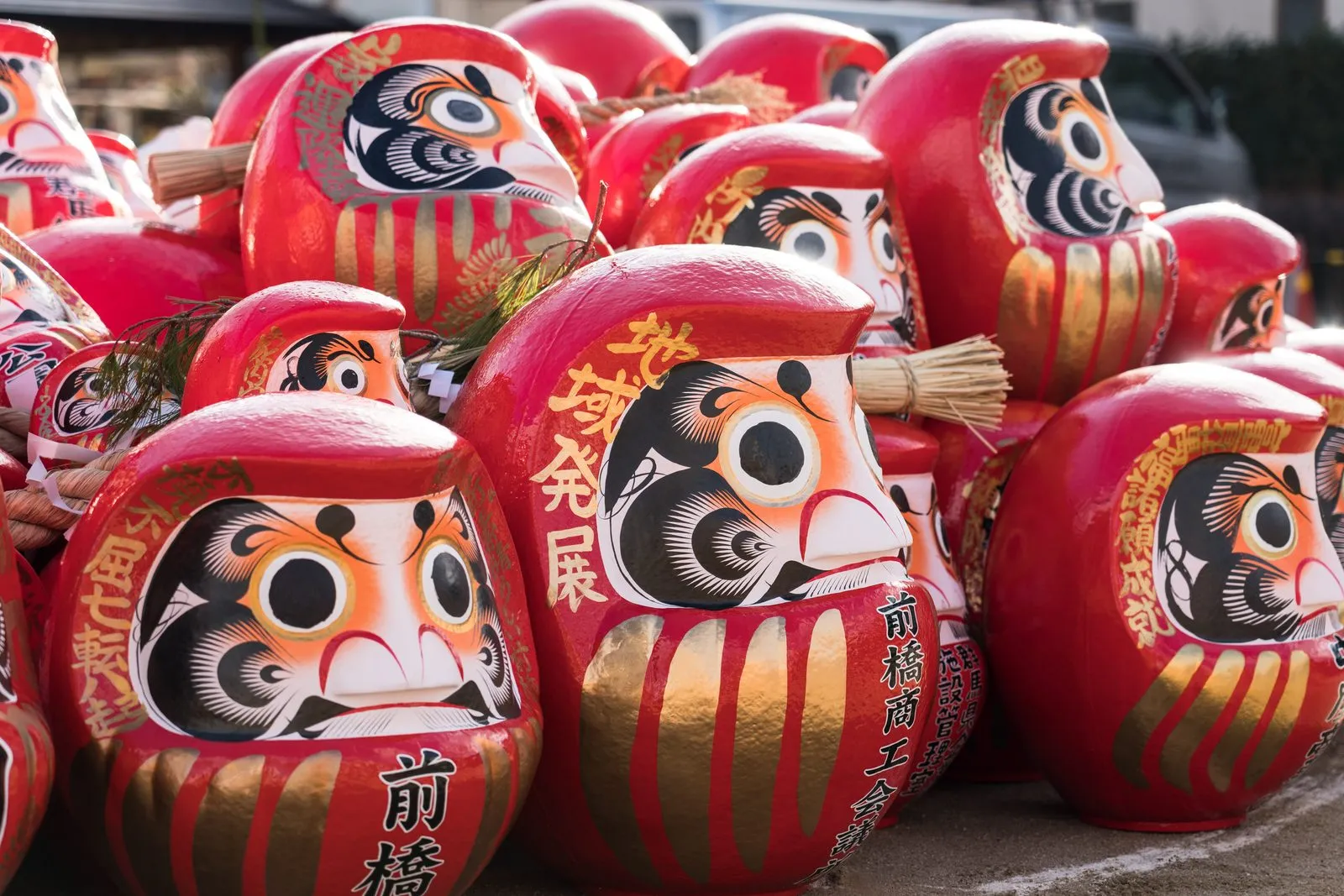
Today the day begins at Maebashi Hachimangū, where old daruma dolls are burned to thank them for the past year’s luck. Then stalls fill the central streets, selling new daruma of every size along with other New Year charms.
The festival at a glance
| Date | What happens |
|---|---|
| Jan 9, morning | Burning the old daruma: Last year's daruma are burned at Maebashi Hachimangū |
| Jan 9, all day | Daruma market: Stalls selling daruma and lucky charms line the central streets |
Which day should you go?
Jan 9, morning
Watch the daruma burning at the shrine, then walk the market streets.
What to look for
Daruma
Round red dolls modeled on a Buddhist monk. You paint in one eye when you make a wish and the other when it comes true.
The burning
People bring back last year's daruma to be burned in thanks before buying new ones.
First market
Maebashi once held markets on days ending in 4 and 9. January 9 was the first of the year.
Getting there & where to stay
| From | How | Time |
|---|---|---|
| Tokyo Station | Jōetsu or Hokuriku Shinkansen to Takasaki, then JR Ryōmō Line to Maebashi | about 1 h 30 min |
On the day. Maebashi Hachimangū and the market streets are about 15 minutes on foot from Maebashi Station.
Crowds. Busy in the afternoon. The daruma stalls are the highlight.
Where to stay
Day trip from Tokyo
Easy to visit for the day.
Takasaki
A larger city 15 minutes away, home of the Shōrinzan daruma temple.
When to book. Booking 2–4 weeks ahead is usually enough.
Times are typical fastest routes. Check current timetables before you travel.
Practical tips
- Gunma daruma. Gunma is Japan's biggest producer of daruma. The Takasaki Daruma Market is held a few days earlier.
- Traffic. Central streets close to cars for most of the day.
Glossary
Darumaだるま
A round, hollow good-luck doll modeled on a Buddhist monk. You paint in one eye when you make a wish and the other when it comes true.
Matsuri祭り
A Japanese festival, usually held for the kami of a local shrine. The word comes from the idea of serving and entertaining the gods.
References
- Maebashi Convention & Visitors Bureau: Maebashi Hatsuichi Matsuri, https://www.maebashi-cvb.com/news/2342
- Matsuri Stream (Nippon Matsuri Network): Maebashi Hatsuichi Matsuri.
Last checked 2026-10-13.