What it is
Nagasaki Kunchi is the autumn festival of Suwa Shrine, the guardian shrine of Nagasaki, held since 1634. For more than two centuries Nagasaki was the only port where Japan traded with China and the Netherlands, and the festival shows it.
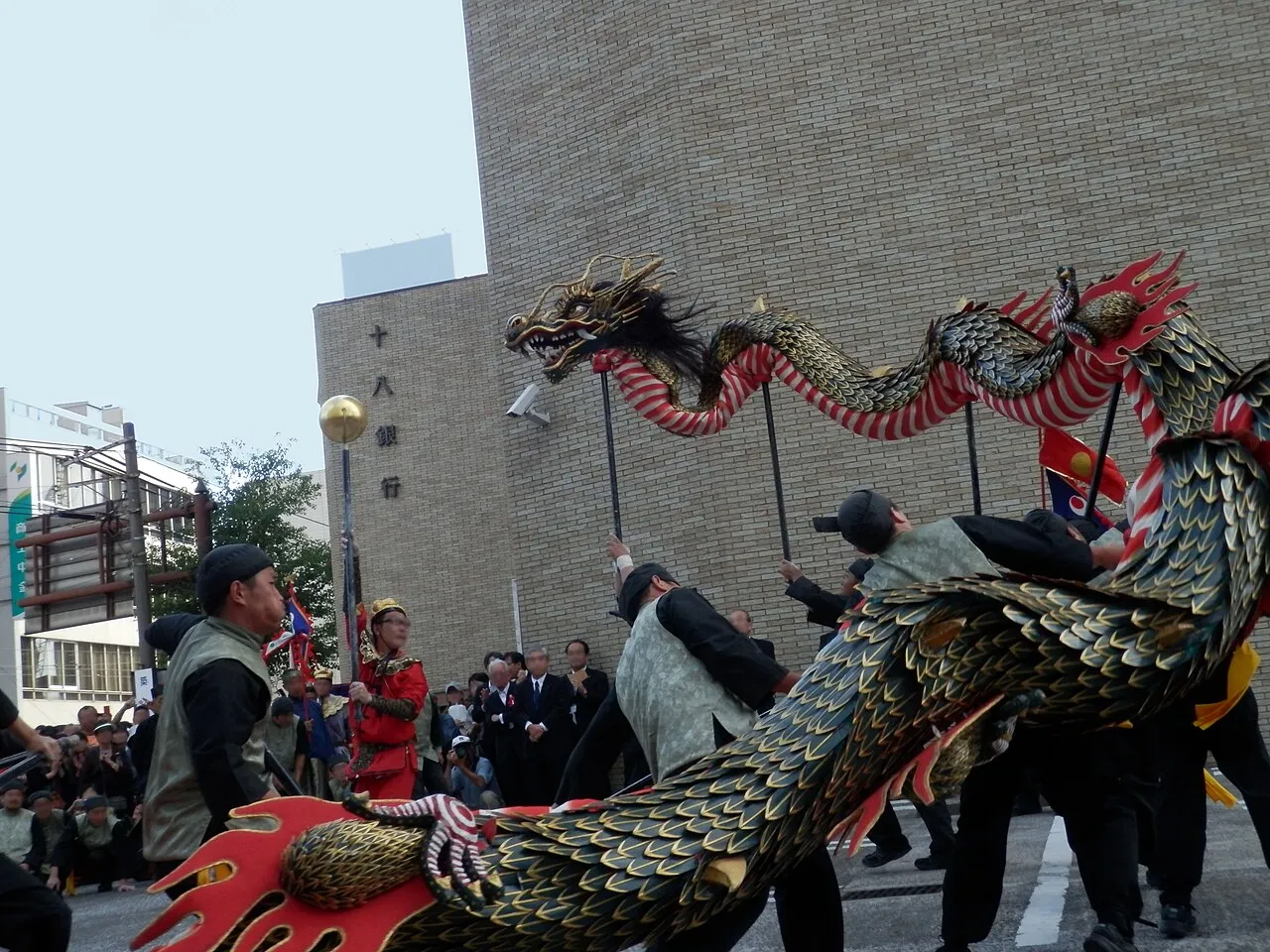
Each year, a rotating group of neighborhoods presents its performance: dragon dances from the Chinese community, ships spun around on the shrine grounds, Dutch-inspired costumes and traditional dances. Over three days, the groups also tour the city, performing in front of homes and businesses for luck.
The festival at a glance
| Date | What happens |
|---|---|
| Oct 7 | Mikoshi descend: The shrine's mikoshi are carried down the long stone steps to the temporary shrine |
| Oct 7–9 | Dedicated performances: Neighborhood groups perform at Suwa Shrine and the temporary shrine |
| Oct 7–9 | Niwasaki-mawari: Groups perform in front of homes, shops and offices across the city |
| Oct 9 | Mikoshi return: The mikoshi are carried back up to Suwa Shrine |
Which day should you go?
Oct 7 or 8
Follow the performing groups around the city streets for free, close-up shows.
Oct 7–9, at Suwa Shrine
Watch the dedicated performances from the stepped seats at the shrine, which are sold in advance.
What to look for
Jaodori
The dragon dance, in which a long dragon chases a golden ball, a tradition from Nagasaki's Chinese community.
Ship floats
Floats shaped like trading ships are spun around at speed by their crews.
“Motte koi!”
The crowd shouts “Bring it back!” to ask for an encore.
Getting there & where to stay
| From | How | Time |
|---|---|---|
| Fukuoka | Relay Kamome and Nishi-Kyushu Shinkansen from Hakata to Nagasaki | about 1 h 30 min |
| Tokyo | Fly to Nagasaki Airport, then airport bus to the city | about 3 h |
On the day. Suwa Shrine is reached by tram (Suwa-jinja stop). The other dance sites are in the city centre, connected by tram.
Crowds. The paid seats at Suwa Shrine and the other main venues are the best way to see the dances, and are sold in advance.
Where to stay
Central Nagasaki (Hamanomachi)
Close to the shrine and the dance sites, with many restaurants.
Nagasaki Station area
Easy for trains and the airport bus, with tram links to every site.
When to book. Hotels fill up for October 7–9. Book 3 months ahead, and check when seat tickets go on sale in summer.
Times are typical fastest routes. Check current timetables before you travel.
Practical tips
- Each year is different. Each neighborhood performs only once every seven years, so the program changes every year.
- Seats. The main venues have paid seats sold in advance. The street performances are free.
Glossary
Mikoshi神輿
A portable shrine. During the festival the kami rides inside while people carry it through the neighborhood.
Matsuri祭り
A Japanese festival, usually held for the kami of a local shrine. The word comes from the idea of serving and entertaining the gods.
References
- Nagasaki City: Nagasaki Kunchi.
- Suwa Shrine, official website.
Last checked 2026-10-12.