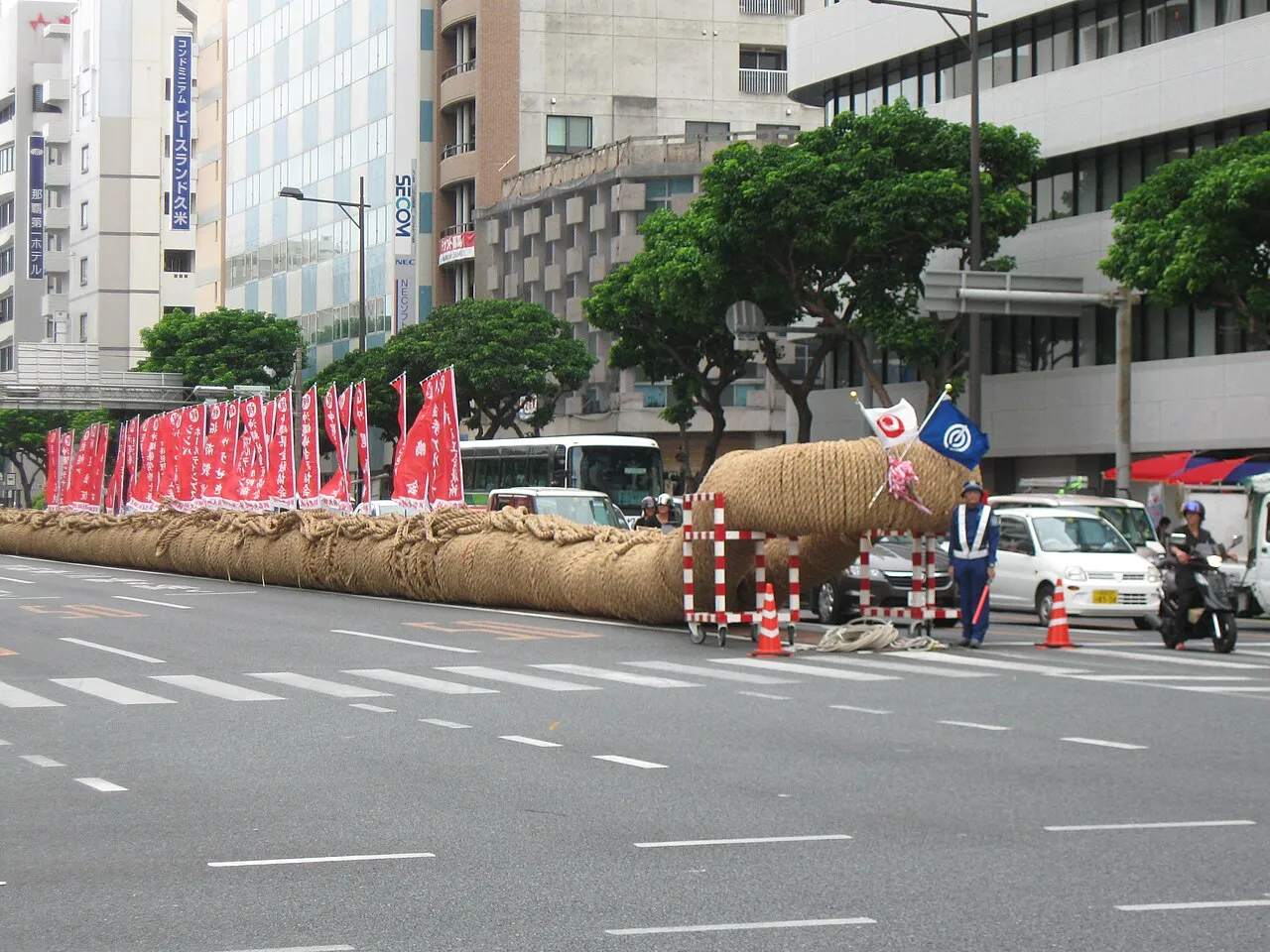
What it is
The Naha Great Tug-of-War began around 1450, in the days of the Ryūkyū Kingdom, as a rite to pray for a good harvest and a safe year. It stopped in 1935 and was revived in 1971, and today it is one of Okinawa’s biggest festivals.
Two halves of a huge rope of rice straw, one for the east and one for the west, are laid down Route 58 in the heart of Naha and joined in the middle. Then, to the sound of gongs and drums, thousands of people take hold of the branch ropes along each side and pull. Visitors are welcome to join. When it is over, the crowd cuts pieces of rope to take home for luck, and everyone dances.
The festival at a glance
| Date | What happens |
|---|---|
| Saturday | Festival opens: Events and stalls around Naha over the long weekend |
| Sunday | Hatagashira parade: Fourteen neighbourhood groups march along Kokusai-dōri with towering flag poles and traditional music |
| Sunday, after the parade | The Great Tug: The two halves of the rope are joined at the Kumoji intersection and the east and west sides pull |
Which day should you go?
Sunday
See the flag parade on Kokusai-dōri, then join the crowd at the Kumoji intersection and pull.
What to look for
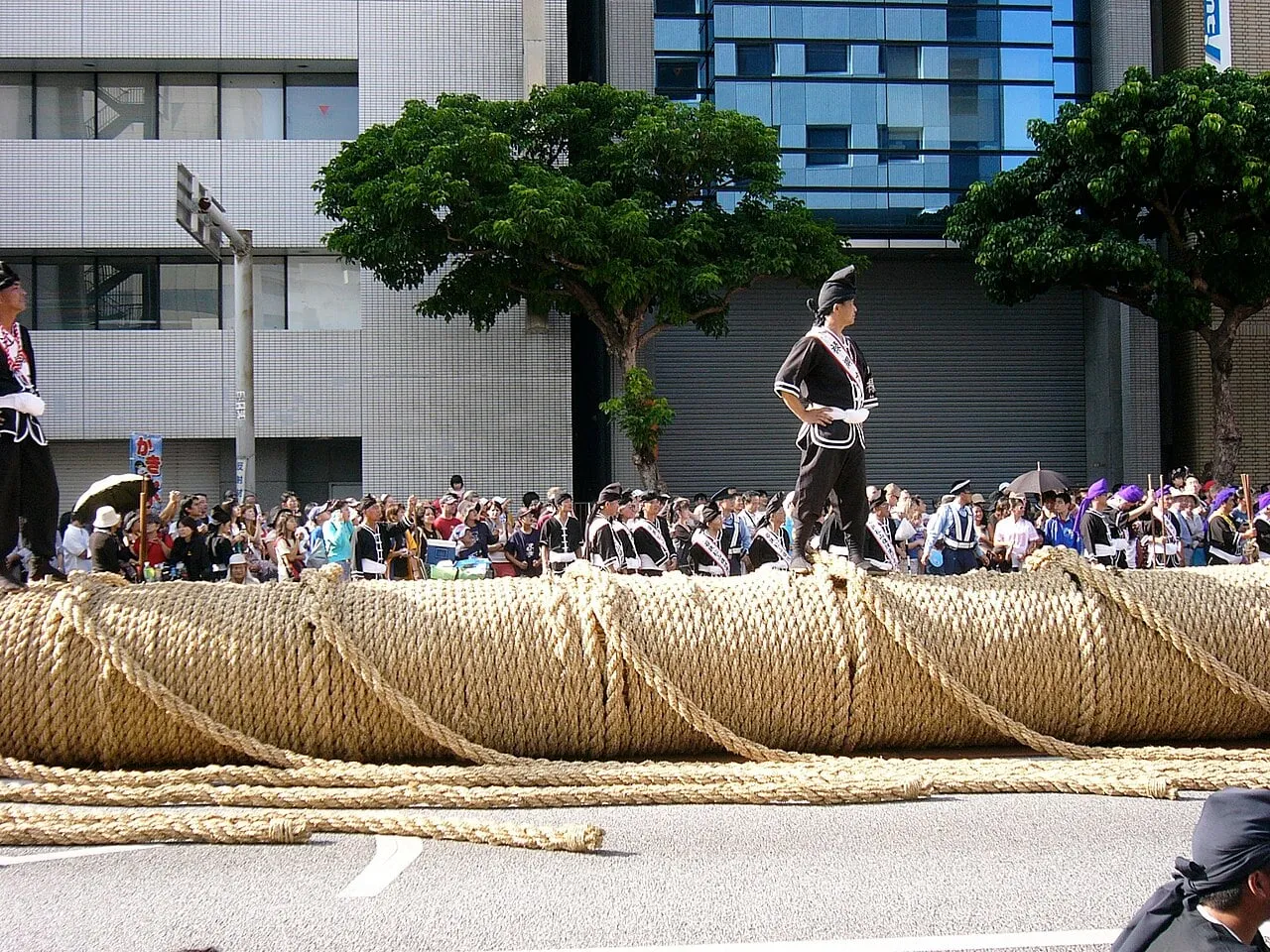

The rope
Made by hand each year from rice straw, it is so thick that no one can wrap a hand around it. People pull on smaller branch ropes attached along its length.
Hatagashira
Huge decorated flag poles, carried and balanced high above the crowd, lead the neighbourhood groups to the sound of drums and gongs.
A piece of the rope
After the tug, people cut off pieces of the branch ropes to take home. They are kept as charms for good health.
Kachāshī
When the tug is over, the crowd celebrates with kachāshī, Okinawa's free hand-waving dance.
Getting there & where to stay
| From | How | Time |
|---|---|---|
| Naha Airport | Okinawa monorail (Yui Rail) to Kenchō-mae | about 15 min |
| Tokyo | Flight from Haneda or Narita to Naha | about 2 h 30 min |
| Osaka | Flight from Itami or Kansai to Naha | about 2 h |
On the day. The tug is held on Route 58 at the Kumoji intersection, a short walk from Kenchō-mae Station. The flag parade goes along Kokusai-dōri, next to it.
Crowds. Huge crowds on Sunday. Roads around the venue are closed during the event.
Where to stay
Kokusai-dōri
Central Naha, a few minutes on foot from the tug and the parade.
Naha Port and Asahibashi
Close to the monorail, with many business hotels.
When to book. It is a three-day weekend in Japan, so flights and hotels fill early. Book 1–2 months ahead.
Book ahead
Some links on this page are affiliate links. We may earn a commission at no extra cost to you.
Times are typical fastest routes. Check current timetables before you travel.
Practical tips
- Join in. Visitors are welcome to pull. Wear closed shoes and clothes you don't mind getting dusty.
- Crowds. The streets around the intersection are packed. Keep children close and follow the stewards.
- Weather. October in Okinawa is still warm and sunny. Bring water and sun protection.
Glossary
Matsuri祭り
A Japanese festival, usually held for the kami of a local shrine. The word comes from the idea of serving and entertaining the gods.
References
- Naha City Tourist Association (Naha Navi): Naha Great Tug-of-War, https://www.naha-navi.or.jp/
- Tabi-mag: 56th Naha Ōtsunahiki Festival 2026 (event outline from the organisers), https://tabi-mag.jp/naha-tsunahiki/
- Kumamoto Nichinichi Shimbun / Okinawa Times (October 2026): Naha Ōtsunahiki, https://kumanichi.com/articles/2043969
Last checked 2026-10-17.