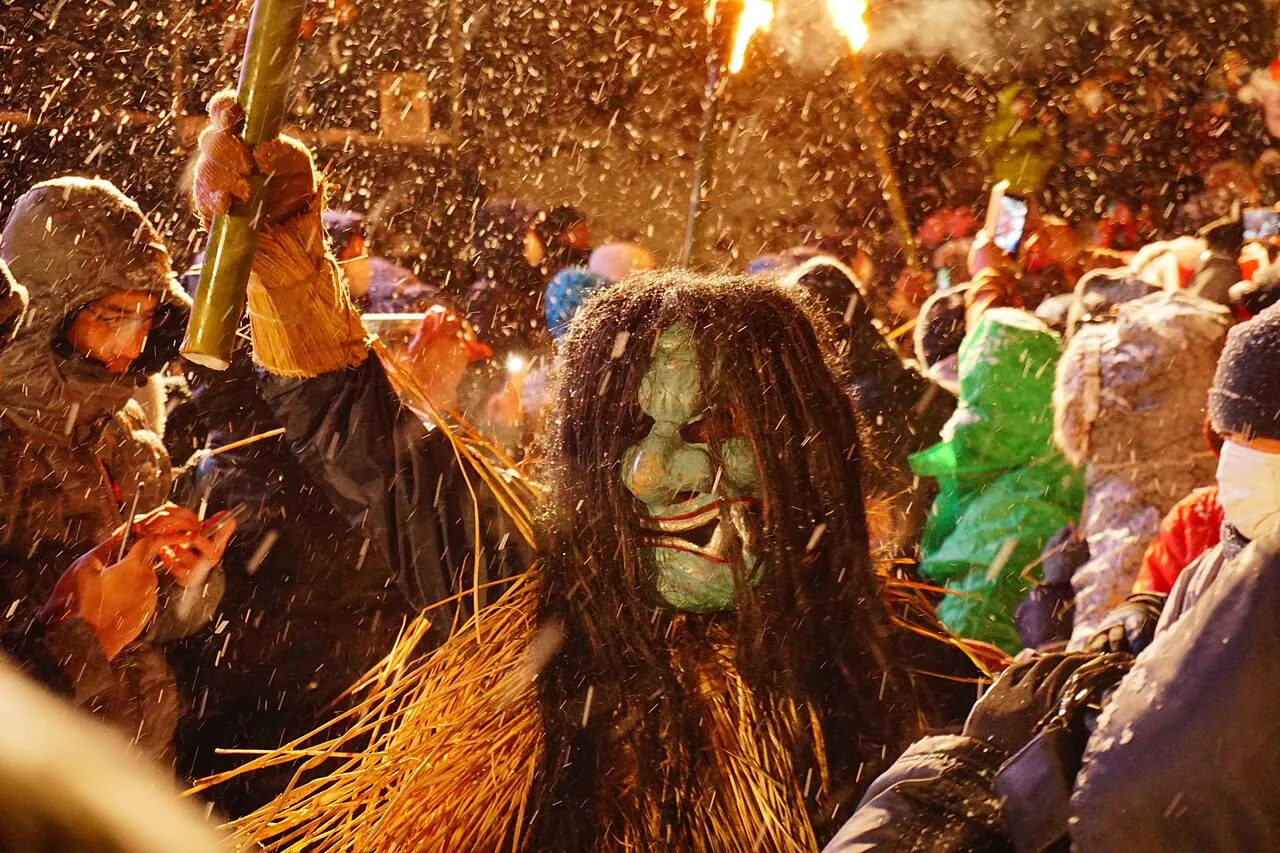
What it is
On New Year’s Eve in the villages of the Oga Peninsula, men dressed as namahage visit each house, stamping and shouting to scold lazy children and drive out bad luck, then are welcomed with food and drink. They are thought of as messengers of the mountain deities, and the custom is part of UNESCO’s listing of Japan’s raihō-shin, visiting deities.
The Sedo Festival, started in 1964, brings this custom together with an old rite of Shinzan Shrine, in which rice cakes toasted over a sacred fire are offered to the mountain deities. Over three February evenings, visitors can see the namahage dance, drum and finally descend from the mountain carrying burning torches.
The festival at a glance
| Date | What happens |
|---|---|
| Each evening, 18:00–20:30 | Festival evenings: Rites at the bonfire, the namahage dance and drumming, and the descent of the namahage from the mountain |
Which day should you go?
Any of the three evenings
Each evening has the full programme. Arrive early to find a spot near the bonfire.
What to look for
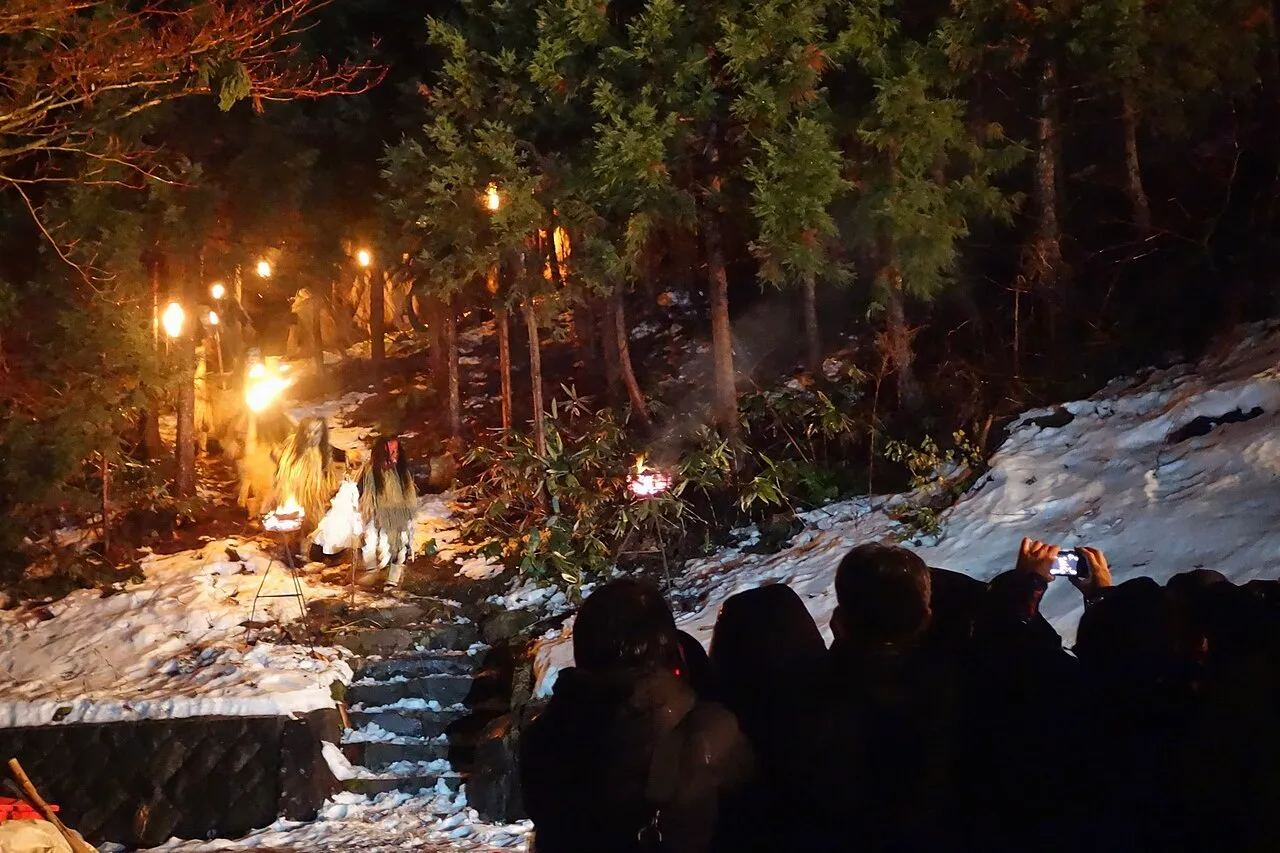

The descent
The climax: namahage with flaming torches walk down the dark, snowy mountainside toward the crowd.
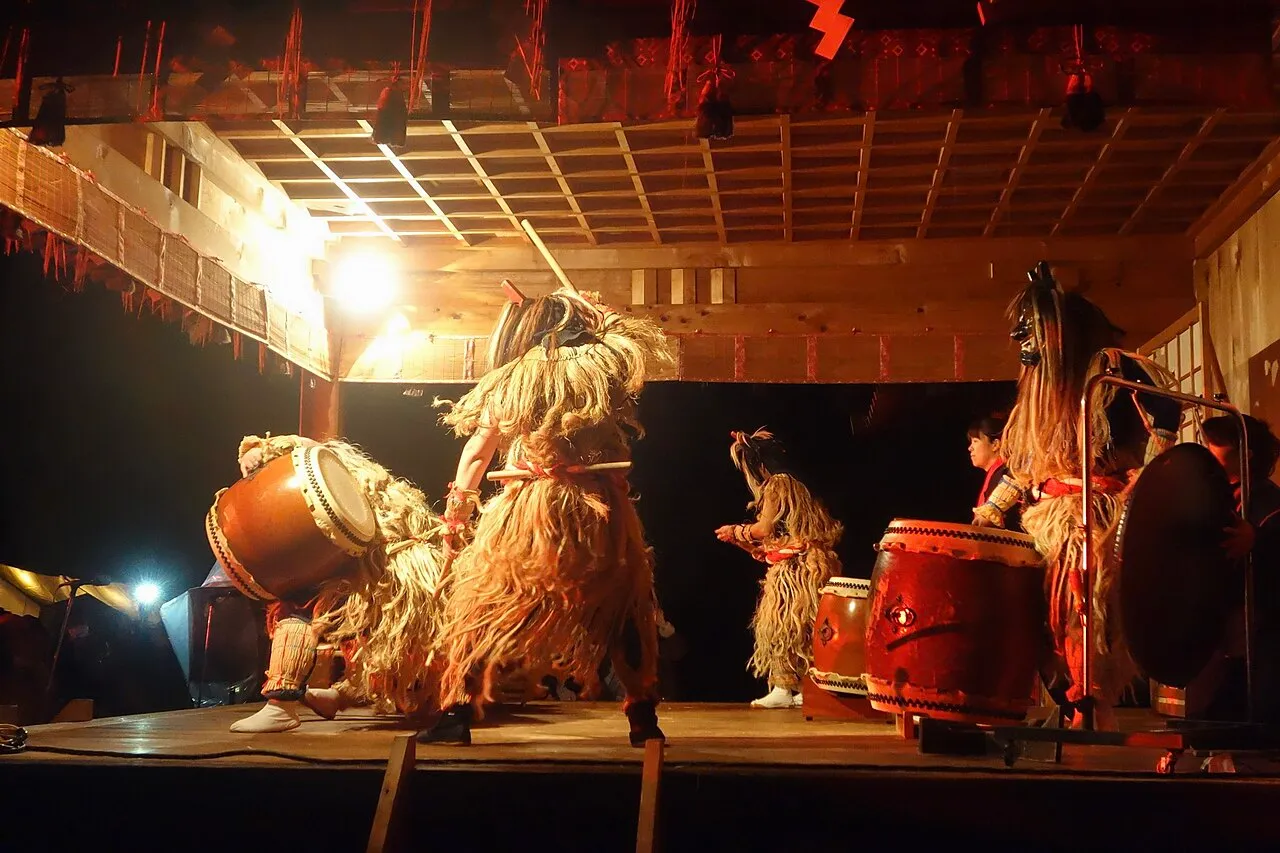

The masks
Each namahage wears a fierce mask, a straw cape and carries a wooden blade. They are visiting deities, not monsters.
Gomamochi
Large rice cakes toasted over the sacred fire are offered to the namahage and shared with visitors for protection.
Getting there & where to stay
| From | How | Time |
|---|---|---|
| Akita | JR Oga Line to Oga Station, then festival bus or taxi | about 1 h 30 min |
| Tokyo | Akita Shinkansen to Akita, then JR Oga Line | about 5 h 30 min |
On the day. Shinzan Shrine is far from Oga Station and buses are few. Check the festival's shuttle buses or join a bus tour from Akita.
Crowds. Viewing areas around the bonfire are limited. Arrive early, and expect cold queues for the buses afterwards.
Where to stay
Oga Onsen
A hot-spring village on the peninsula. Warm up in the bath after the festival.
Akita
More hotels, about 1 hour away. Check the last train or bus back.
When to book. Oga's inns are small. Book 2 months ahead.
Book ahead
Some links on this page are affiliate links. We may earn a commission at no extra cost to you.
Times are typical fastest routes. Check current timetables before you travel.
Make a day of it
Namahage Museum なまはげ館
Right next to Shinzan Shrine, the museum displays well over a hundred namahage masks from the villages of the peninsula, some made of seaweed or rope. Come in the afternoon and stay on for the festival at 18:00. Open 8:30–17:00 every day.
Oga Shinzan Folklore Museum 男鹿真山伝承館
Next to the Namahage Museum, a traditional Oga farmhouse where the New Year's Eve namahage visit is re-enacted: the namahage burst in, stamp and roar, and the head of the house calms them with food and sake. Individual visitors do not need to book.
Oga Onsen 男鹿温泉
The hot-spring village on the north coast of the peninsula, the most convenient place to stay. A bath is the best end to an evening in the snow.
Opening hours change by season. Check before you go.
Practical tips
- Dress warmly. The festival is outdoors in the snow at night. Wear boots, gloves and several layers.
- Namahage Museum. The Namahage Museum near the shrine shows masks from across the peninsula all year.
Glossary
Oni鬼
A horned demon or ogre of Japanese folklore, often red or blue. At Setsubun, oni are driven out with roasted beans.
Taimatsu松明
A torch made from bundled wood or bamboo. Giant taimatsu are the centerpiece of fire festivals such as the Omizutori.
Matsuri祭り
A Japanese festival, usually held for the kami of a local shrine. The word comes from the idea of serving and entertaining the gods.
Kami神
A Shinto deity or sacred presence. Kami can be gods from myth, spirits of nature, or deified people.
References
- Oga City Tourism Association: Namahage Sedo Festival.
- Japan National Tourism Organization: Namahage Sedo Festival.
- Oga City (Oga Navi): Namahage Museum and Oga Shinzan Folklore Museum, https://oganavi.com/en/namahage/
- Japan Tourism Agency multilingual commentary database: Namahage Museum, About the Masks, https://www.mlit.go.jp/tagengo-db/en/R1-01077.html
- Namahage Museum: visitor information, https://www.namahage.co.jp/namahagekan/
Last checked 2026-10-15.