What it is
Dōsojin are guardian kami of roads and village boundaries, believed to protect against misfortune and to bring children and good marriages. In Nozawa Onsen, a hot-spring village in the mountains of Nagano, they are honored every January 15 with one of Japan’s most dramatic fire festivals.
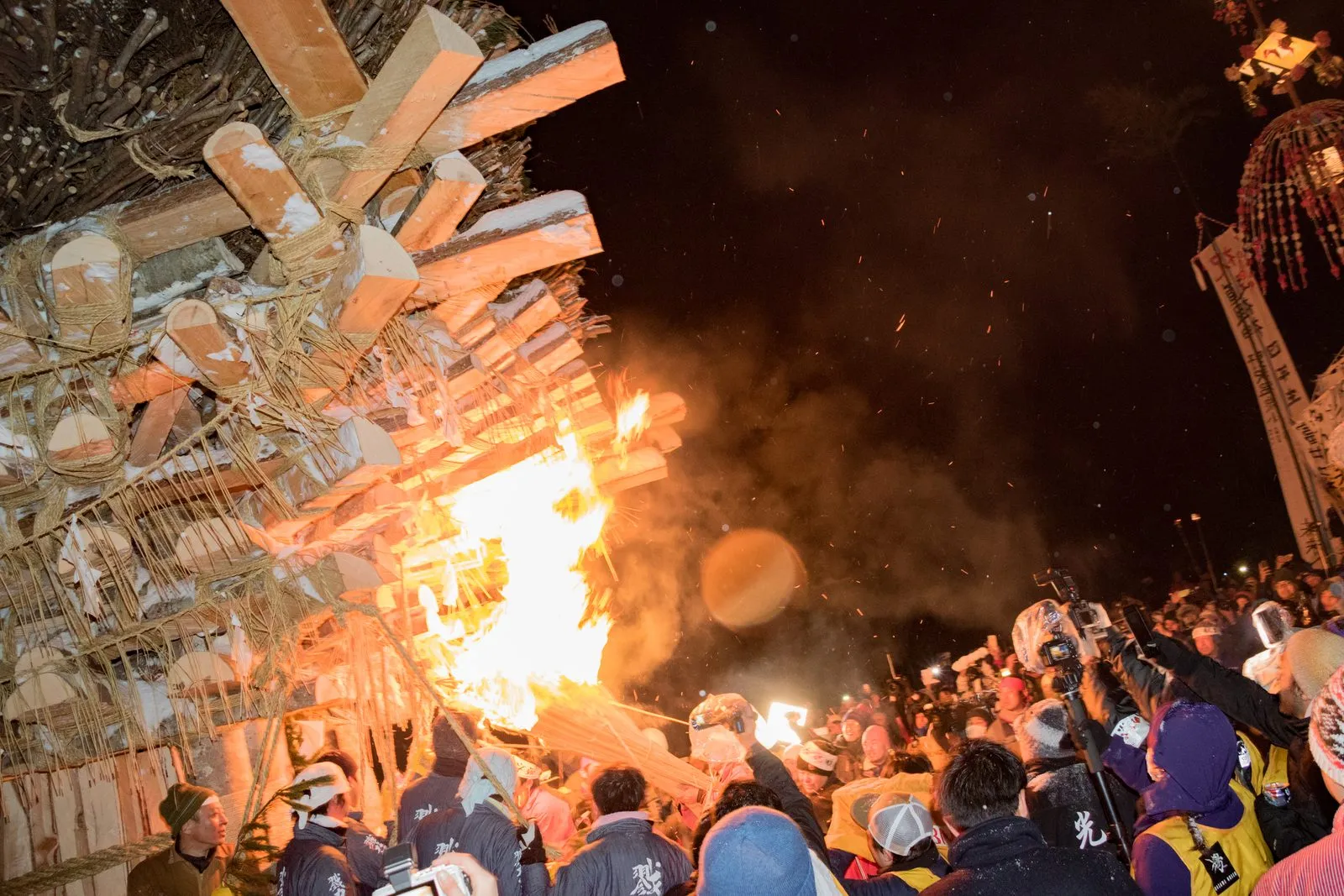
The village builds a huge wooden shrine from beech trees. On the night of the festival, men in the unlucky years of 42 and 25 defend it, while the rest of the village attacks with flaming torches. After a long and noisy battle, the shrine is set ablaze, and the fire is said to burn away bad luck for the coming year.
The festival at a glance
| Date | What happens |
|---|---|
| Jan 15, daytime | Building the shrine: The great wooden shrine stands at Babanohara, built over the preceding days |
| Jan 15, night | The fire battle: Villagers attack the shrine with torches; the defenders beat out the flames until it is finally set alight |
Which day should you go?
Jan 15, evening
Find a place behind the barriers early. The fire battle lasts more than an hour before the shrine burns.
What to look for
The defenders
Men aged 42 by the traditional count sit on top of the shrine, and men aged 25 guard the front. Both are unlucky ages in Japanese belief.
The attack
Villagers rush the shrine with burning bundles of straw, and the defenders beat them back with pine branches.
Lanterns
Families who have had a first son in the past year make tall decorated lanterns, which are burned with the shrine.
Getting there & where to stay
| From | How | Time |
|---|---|---|
| Tokyo | Hokuriku Shinkansen to Iiyama, then bus to Nozawa Onsen | about 2 h 30 min |
On the day. The fire festival is held at Babanohara in the village, starting in the evening. It is a few minutes on foot from most inns.
Crowds. The fire is fierce. Stay behind the ropes and follow the stewards. Wear clothes you don't mind getting smoky.
Where to stay
Nozawa Onsen
A ski village with hot springs. Stay to see the fire without worrying about buses.
Iiyama
A few hotels by the Shinkansen station.
When to book. Mid-January is ski season. Book 3–4 months ahead.
Times are typical fastest routes. Check current timetables before you travel.
Practical tips
- Cold and snow. Nozawa is a ski village in deep snow. Wear snow boots and warm, fire-safe outer clothing; synthetic jackets can melt near sparks.
- Stay over. Stay in the village and enjoy its free public hot springs. Rooms fill up early for the festival night.
Glossary
Taimatsu松明
A torch made from bundled wood or bamboo. Giant taimatsu are the centerpiece of fire festivals such as the Omizutori.
Kami神
A Shinto deity or sacred presence. Kami can be gods from myth, spirits of nature, or deified people.
Matsuri祭り
A Japanese festival, usually held for the kami of a local shrine. The word comes from the idea of serving and entertaining the gods.
References
- Nozawa Onsen Tourism Association: Dosojin Matsuri.
- Hachijuni Culture Foundation: Nozawa Onsen Dosojin Matsuri, https://www.82bunka.or.jp/bunkazai/legend/detail/01/post-13.php
- Matsuri Stream (Nippon Matsuri Network): Nozawa Onsen Dosojin Matsuri.
Last checked 2026-10-13.