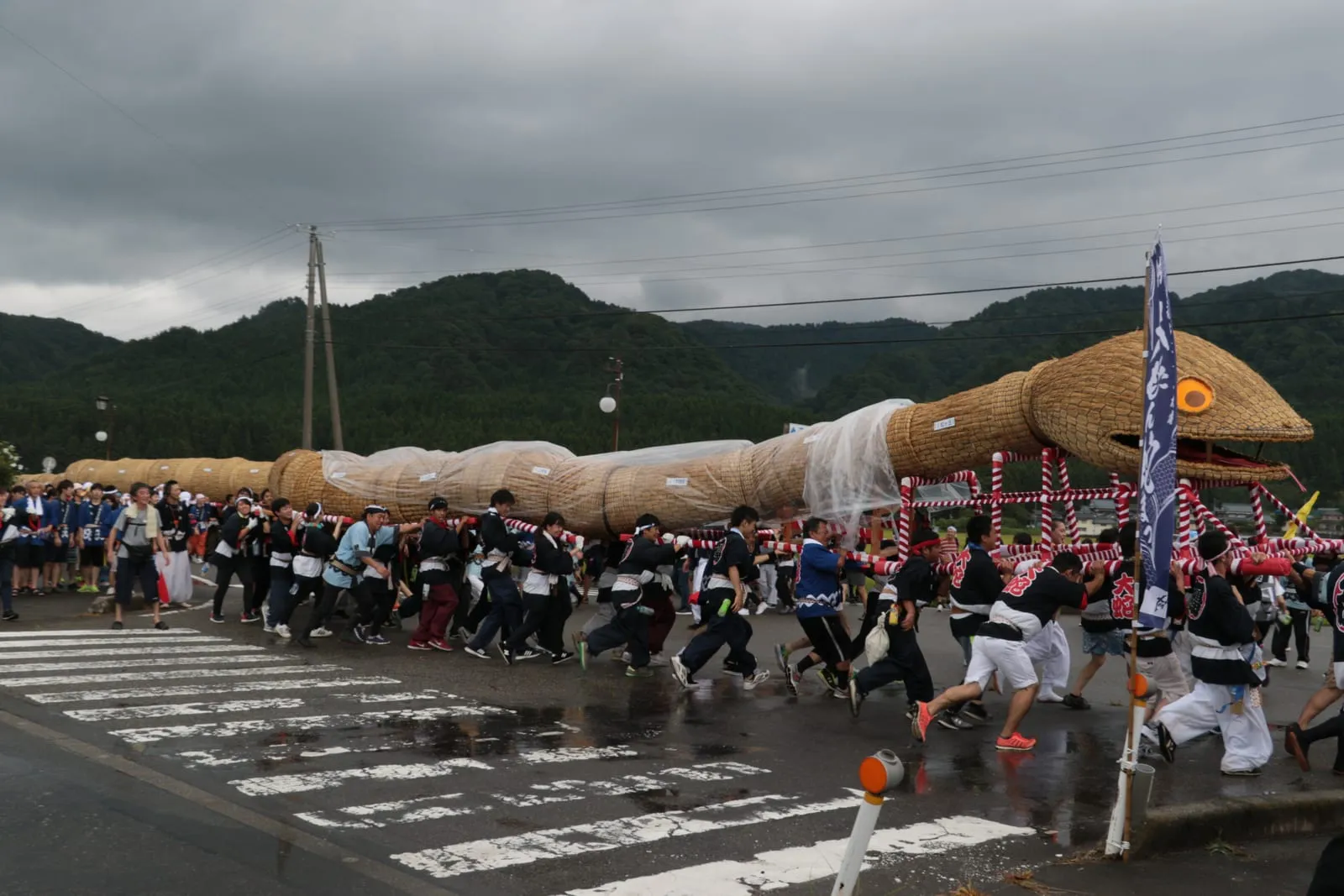
What it is
Sekikawa is a mountain village in northern Niigata, near the border with Yamagata. On August 28, 1967, the Uetsu floods devastated the area. Years later the village began this festival to remember the disaster and to pray for safety from water, building on an old local legend about a woman who turned into a great serpent and lived in a pond in the mountains.
Taishitamon is local dialect for “something great”, and ja means snake, so the name is a pun: “a great snake”. On the Sunday, hundreds of people lift the enormous snake on their shoulders and carry it through the village, its head swinging above the crowd.
The festival at a glance
| Date | What happens |
|---|---|
| Friday–Saturday | Festival events: Stalls, local performances and evening events around the village |
| Sunday morning | Snake parade: The great snake is carried through the village from Takase Onsen, usually from about 9:00 |
Which day should you go?
Sunday morning
The snake parade is the reason to come. Arrive early and find a spot along the route.
What to look for
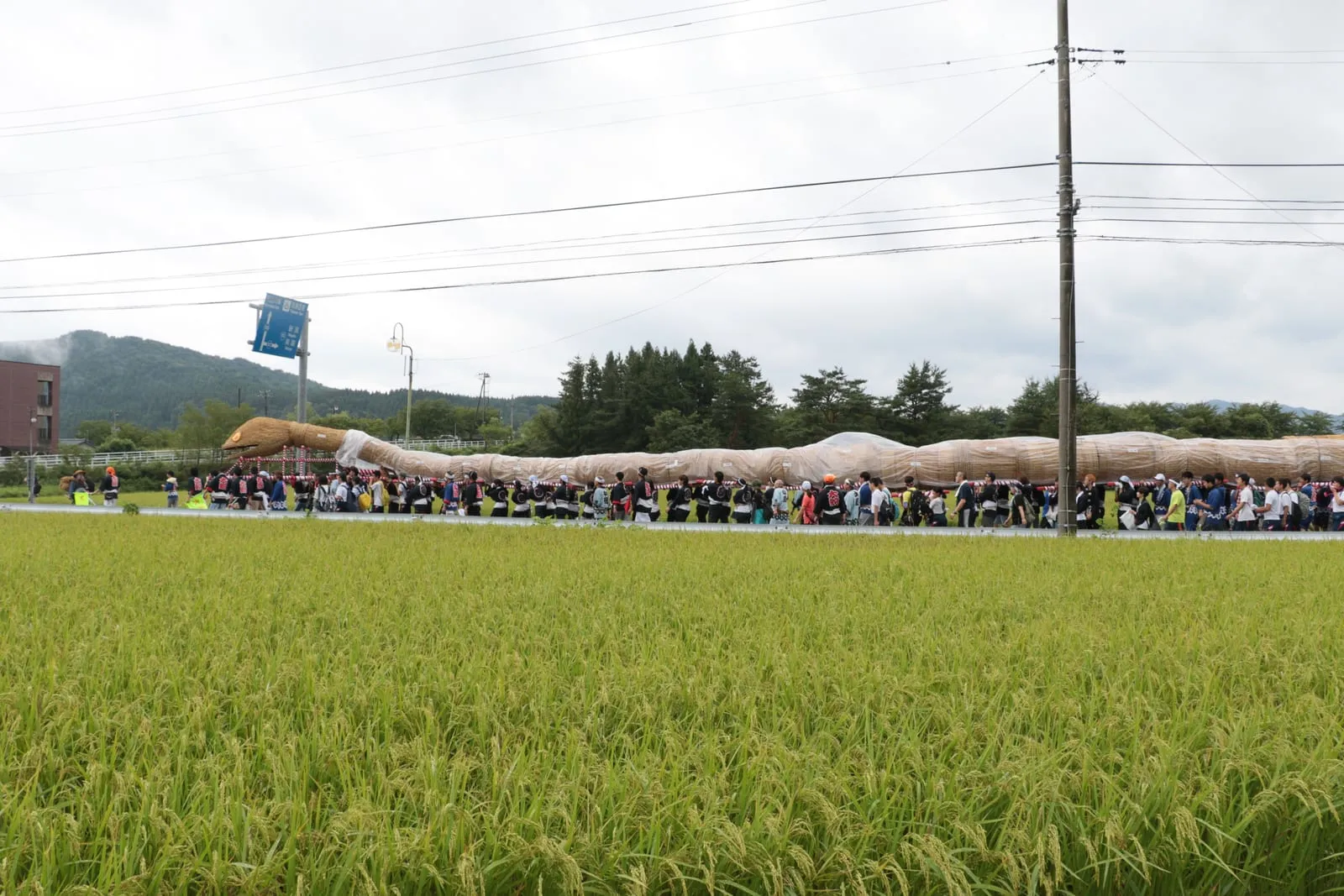
The snake
About 82.8 metres long and around 2 tonnes, made of bamboo, straw and wisteria vine. Guinness World Records certified it in 2001.
One body, many villages
The body is built in sections, each made by one of the village's communities.
The number
The length, 82.8 metres, recalls the date of the 1967 flood: August 28.
Getting there & where to stay
| From | How | Time |
|---|---|---|
| Niigata | JR to Sakamachi, then JR Yonesaka Line to Echigo-Shimoseki | about 2 h |
| Niigata (by car) | Drive via the Nihonkai-Tōhoku Expressway | about 1 h 30 min |
On the day. The snake parade starts near Takase Onsen on Sunday morning. Trains on the Yonesaka Line are infrequent, so check times carefully.
Crowds. A friendly village festival. Arrive early on Sunday to find a spot along the route.
Where to stay
Sekikawa's hot-spring inns
Stay at Takase or Yuzawa Onsen and walk to the parade.
Murakami or Niigata
More hotels, about 1–2 hours away.
When to book. Sekikawa's inns are small. Book 2–3 months ahead.
Times are typical fastest routes. Check current timetables before you travel.
Practical tips
- Getting there. Trains are infrequent. Check the timetable, or drive and use the festival parking.
- Combine. Sekikawa has several small hot-spring towns along the Arakawa river.
Glossary
Matsuri祭り
A Japanese festival, usually held for the kami of a local shrine. The word comes from the idea of serving and entertaining the gods.
References
- Sekikawa Village: Taishitamon Ja Matsuri official information.
- Niigata Prefecture tourism: Echigo-Sekikawa Taishitamon Ja Matsuri.
Last checked 2026-10-13.