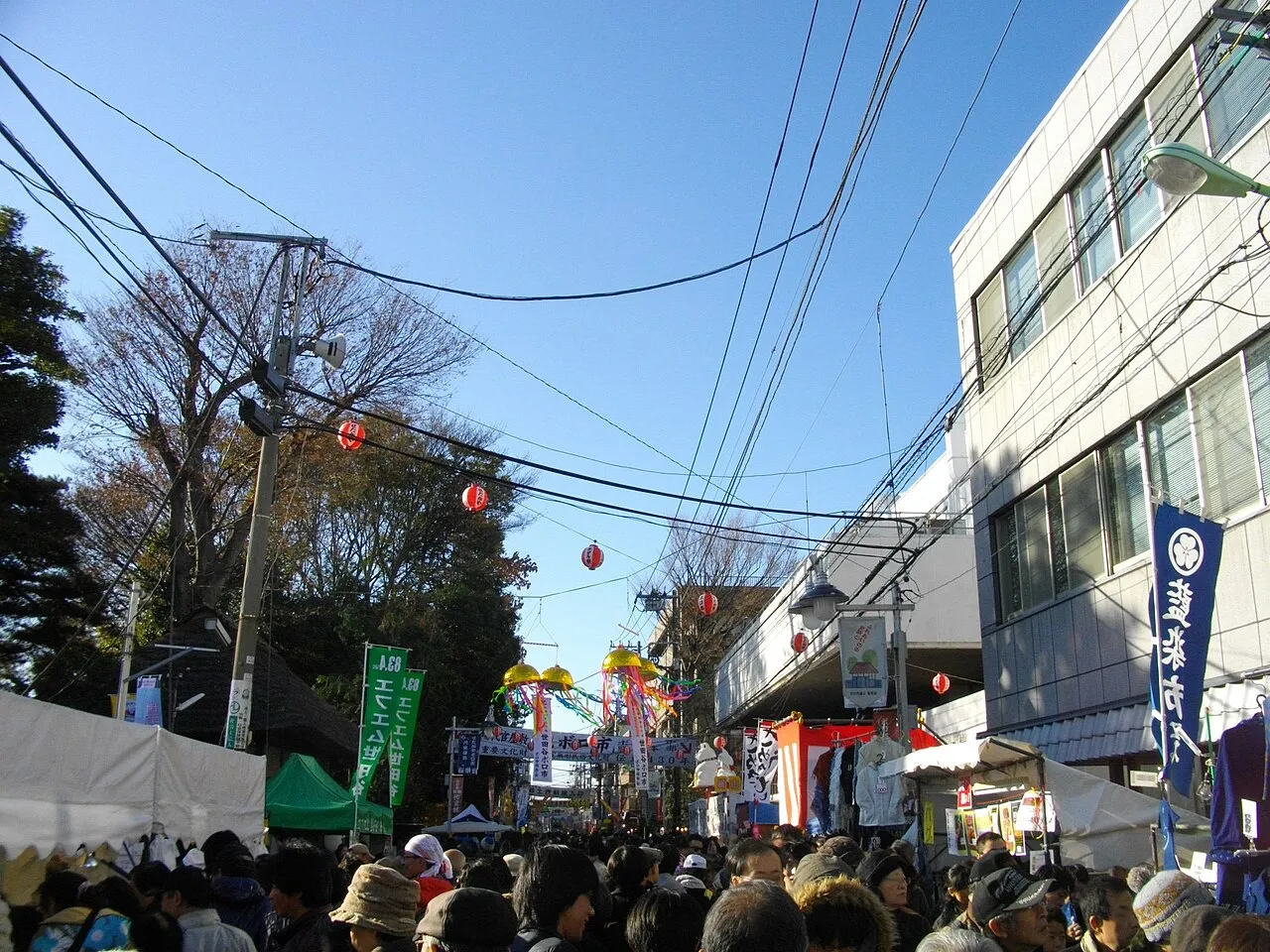
What it is
In 1578, Hōjō Ujimasa, the lord of Odawara Castle, opened a free market in the new post town of Setagaya, where merchants could trade without paying market taxes. After the Hōjō fell, the market shrank to a once-a-year fair at the end of the year. In the Meiji period it became known for trade in old cloth and rags, boro, which gave it its name.
Today the market is held on four days each winter, December 15–16 and January 15–16, along Boroichi-dōri near the Setagaya Daikan Yashiki, the old residence of the area’s magistrates. About 700 stalls sell antiques, second-hand goods, plants and food, and hundreds of thousands of people visit.
The festival at a glance
| Date | What happens |
|---|---|
| Dec 15–16, 9:00–20:00 | December market: About 700 stalls along Boroichi-dōri and the streets around it |
| Jan 15–16, 9:00–20:00 | January market: The same market again in the new year |
Which day should you go?
Any market day, morning
Arrive soon after 9:00 for the best finds and fewer crowds, and try the rice cakes at the old magistrate's house.
What to look for
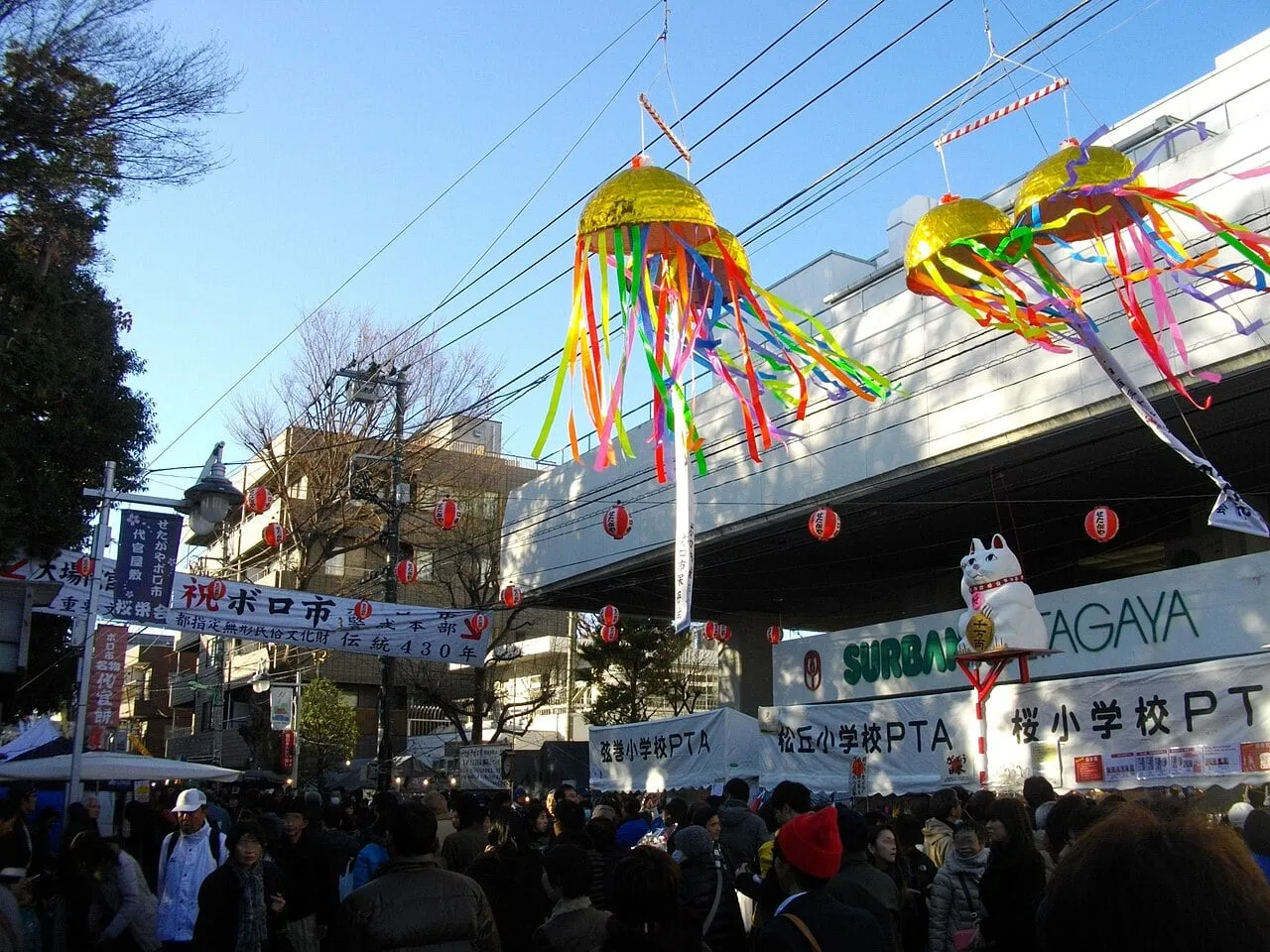

Antiques and old things
Kimono, pottery, tools, toys and household goods, new and very old.
Daikan-mochi
Rice cakes sold near the Setagaya Daikan Yashiki, the old magistrate's residence; the queue is famous.
The Setagaya Line
A small two-car tram line that runs extra trains on market days.
Getting there & where to stay
| From | How | Time |
|---|---|---|
| Shibuya | Tōkyū Den-en-toshi Line to Sangen-jaya, then Setagaya Line to Setagaya or Kamimachi | about 20 min |
| Shinjuku | Odakyū Line to Gōtokuji, then Setagaya Line from Yamashita | about 30 min |
On the day. Boroichi-dōri runs between Setagaya and Kamimachi stations on the Setagaya tram line. Trains run on a special timetable on market days.
Crowds. Weekends and the afternoons are the busiest. The narrow street can be shoulder to shoulder.
Where to stay
Shibuya
Many hotels, about 20 minutes away.
Sangen-jaya
A lively neighbourhood at the start of the Setagaya Line, with a few hotels.
When to book. Mid-December and mid-January are not peak season. Book Tokyo hotels 2–4 weeks ahead.
Book ahead
Some links on this page are affiliate links. We may earn a commission at no extra cost to you.
Times are typical fastest routes. Check current timetables before you travel.
Make a day of it
Setagaya Daikan Yashiki 世田谷代官屋敷
The market runs along the street in front of this house, the home of the Ōba family, who served as local magistrates for the Ii lords from the mid-Edo period. Its main house and gate are Important Cultural Properties. The free Setagaya Local History Museum stands in the same grounds (9:00–16:30, closed Mondays).
Gōtoku-ji 豪徳寺
The family temple of the Ii lords in Edo, and one of the places said to be the birthplace of the maneki-neko, the beckoning cat. More than a thousand cat figures offered by visitors fill a corner of the grounds. About 5 minutes on foot from Miyanosaka, two stops from Setagaya on the same tram line.
Opening hours change by season. Check before you go.
Practical tips
- Cash. Many stalls take cash only. Bring small notes and coins.
- Bargain politely. Some antique sellers will lower the price a little, especially late in the day. Ask with a smile.
Glossary
Matsuri祭り
A Japanese festival, usually held for the kami of a local shrine. The word comes from the idea of serving and entertaining the gods.
Yatai屋台
A festival float with a roof, often carrying musicians or a small stage. The same word also means a street food stall.
References
- Setagaya City: Setagaya Boroichi (history and dates).
- National Museum of Japanese History research report: the Setagaya market of 1578.
- Tōkyū Corporation: Setagaya Line service on market days.
- Setagaya City: Setagaya Local History Museum, https://www.city.setagaya.lg.jp/documents/3565/siryoukanpamphlet.pdf
- Tokyo Metropolitan Government: cultural properties (Setagaya Daikan Yashiki, Setagaya Boroichi).
Last checked 2026-10-16.