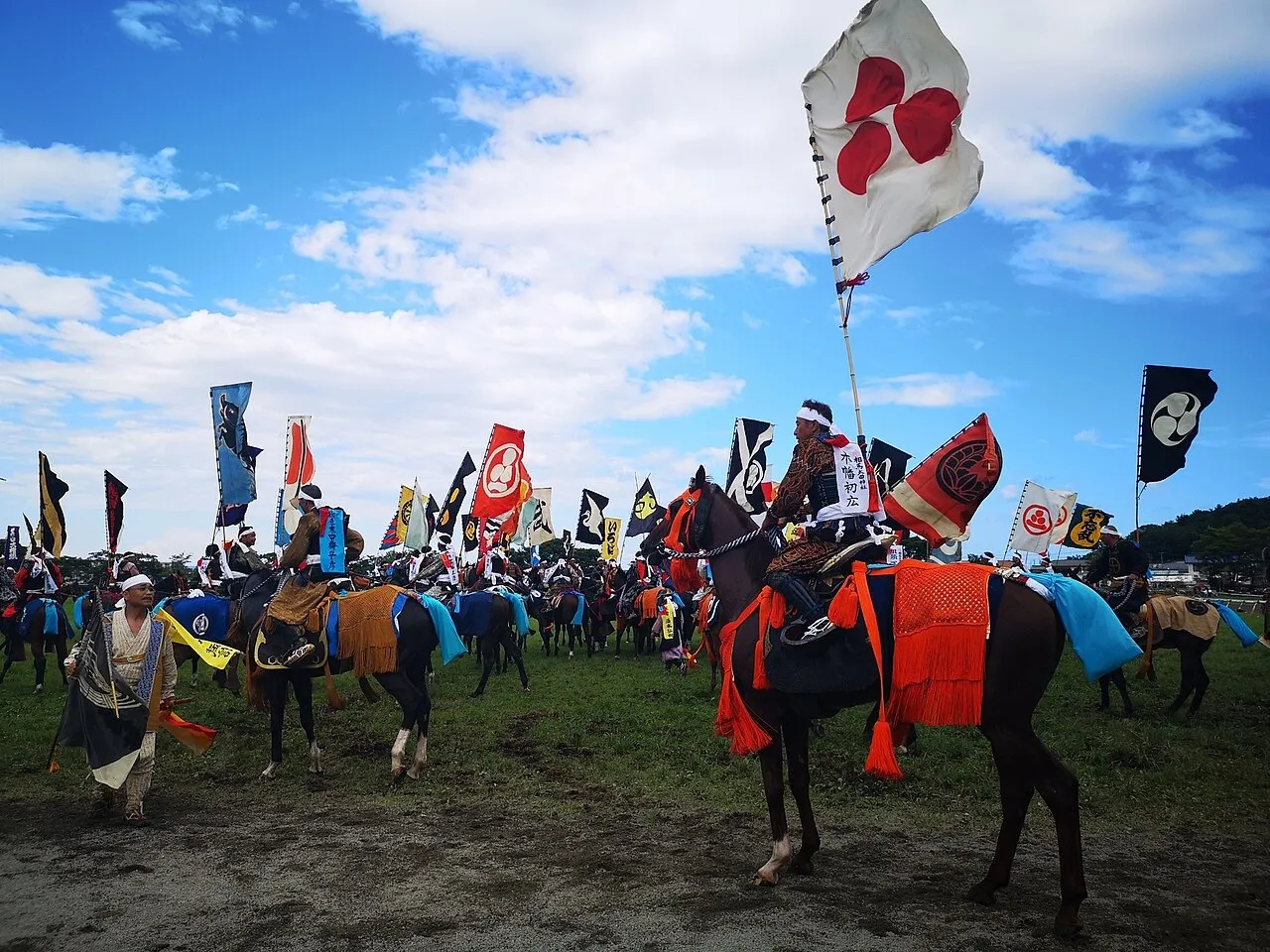
What it is
The Sōma Nomaoi grew from the military training of the Sōma clan, who ruled this coast of Fukushima for centuries. Wild horses were driven into a field, nomaoi means “chasing wild horses”, and caught as offerings to the clan’s shrines.
Today about 400 riders in samurai armour, each with a family banner on his back, gather from the towns of the Sōma area. On the main day at the Hibarigahara festival ground they parade, race in armour and fight for sacred flags launched into the sky by fireworks. The festival is a National Important Intangible Folk Cultural Property.
The festival at a glance
| Date | What happens |
|---|---|
| Day 1 | Departure: Riders in armour gather at the shrines of the Sōma area and set out |
| Day 2 | Main day at Hibarigahara: A grand procession of riders, then the armoured horse race and the battle for the sacred flags |
| Day 3 | Nomakake: Men on foot catch horses with bare hands and offer them at Odaka Shrine |
Which day should you go?
Day 2
The main day at Hibarigahara has the procession, the race and the flag battle. Tickets are needed for the festival ground.
What to look for
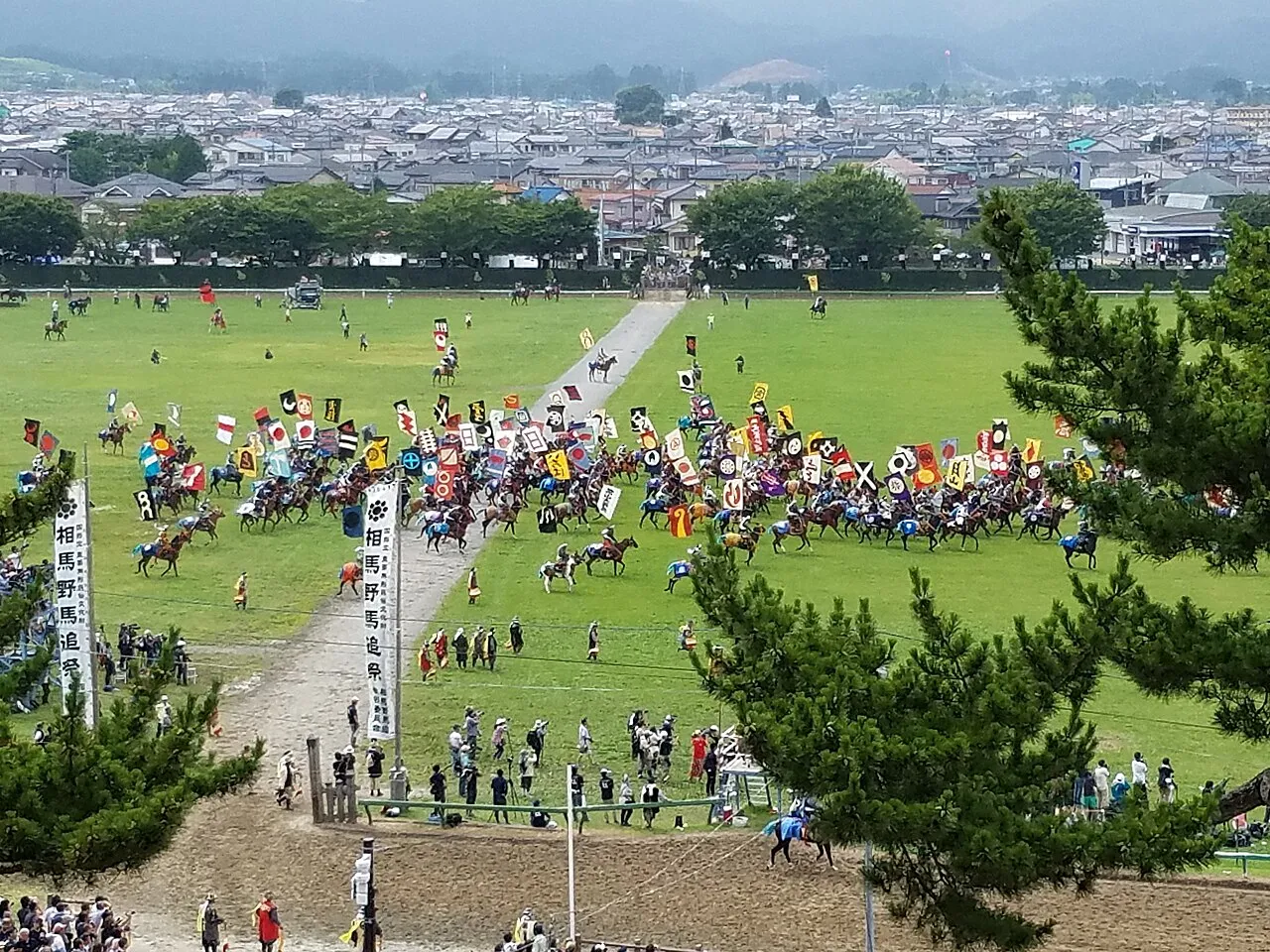

The armoured race
Riders in helmets and armour, with family banners on their backs, gallop around the track.
Shinki sōdatsusen
Fireworks shoot sacred flags into the sky, and hundreds of riders charge to catch them as they fall.
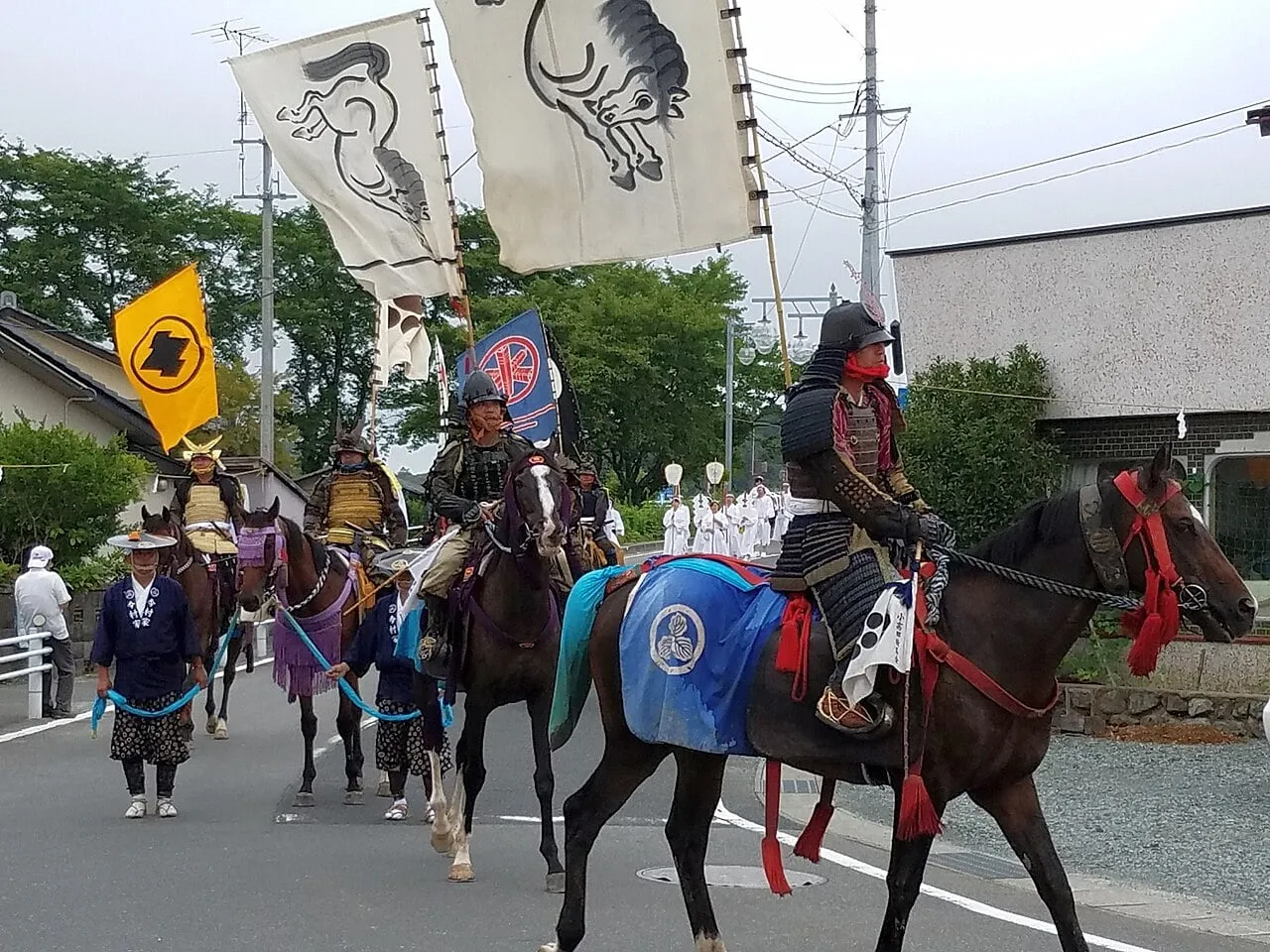

Banners
Each rider carries a sashimono banner showing the crest of a samurai family.
Getting there & where to stay
| From | How | Time |
|---|---|---|
| Sendai | JR Jōban Line to Haranomachi | about 1 h 30 min |
| Tokyo | Tōhoku Shinkansen to Sendai, then JR Jōban Line to Haranomachi | about 3 h 30 min |
On the day. Hibarigahara is on the edge of Haranomachi, in Minamisōma. Shuttle buses usually run from Haranomachi Station on the main day.
Crowds. Tens of thousands watch the main day. Arrive in the morning for a good seat in the stands.
Where to stay
Sendai
A large city with many hotels, about 1 hour 30 minutes away.
Minamisōma
A few business hotels near Haranomachi Station, which fill early.
When to book. Minamisōma has few rooms. Book 2–3 months ahead, or stay in Sendai.
Book ahead
Some links on this page are affiliate links. We may earn a commission at no extra cost to you.
Times are typical fastest routes. Check current timetables before you travel.
Make a day of it
Minamisōma City Museum 南相馬市博物館
The local museum's displays begin with the Sōma Nomaoi, with armour, banners and the history of the horse festival. Open 9:00–16:45; closed Mondays.
Opening hours change by season. Check before you go.
Practical tips
- New dates. Held in late July for centuries, it moved to late May from 2024 to protect horses and riders from the heat. Check the year's dates.
- Tickets. Entry to Hibarigahara on the main day needs a ticket, sold in advance and on the day.
Glossary
Matsuri祭り
A Japanese festival, usually held for the kami of a local shrine. The word comes from the idea of serving and entertaining the gods.
Kami神
A Shinto deity or sacred presence. Kami can be gods from myth, spirits of nature, or deified people.
References
- Sōma Nomaoi Executive Committee (soma-nomaoi.jp): festival information.
- JR East and news reports: Sōma Nomaoi, May 23–25, 2026.
- Minamisōma City Museum: annual report and visitor information, https://www.city.minamisoma.lg.jp/material/files/group/43/nenpoR6.pdf
Last checked 2026-10-16.