What it is
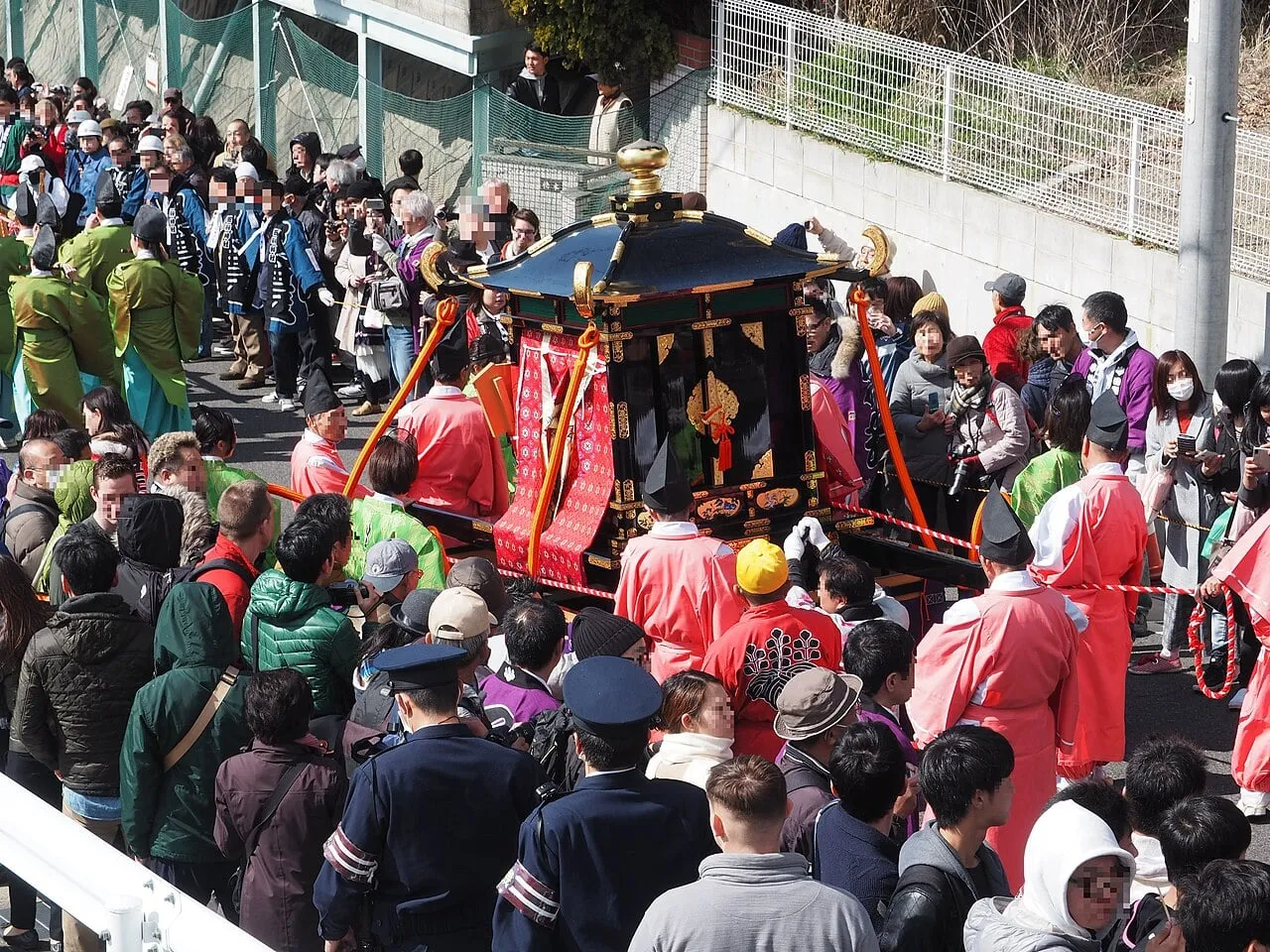
The Hōnen Matsuri, the “festival of the rich harvest”, is the great annual festival of Tagata Shrine in Komaki, just north of Nagoya. It prays for a good harvest, for all living things to grow, and for families to have children and prosper.
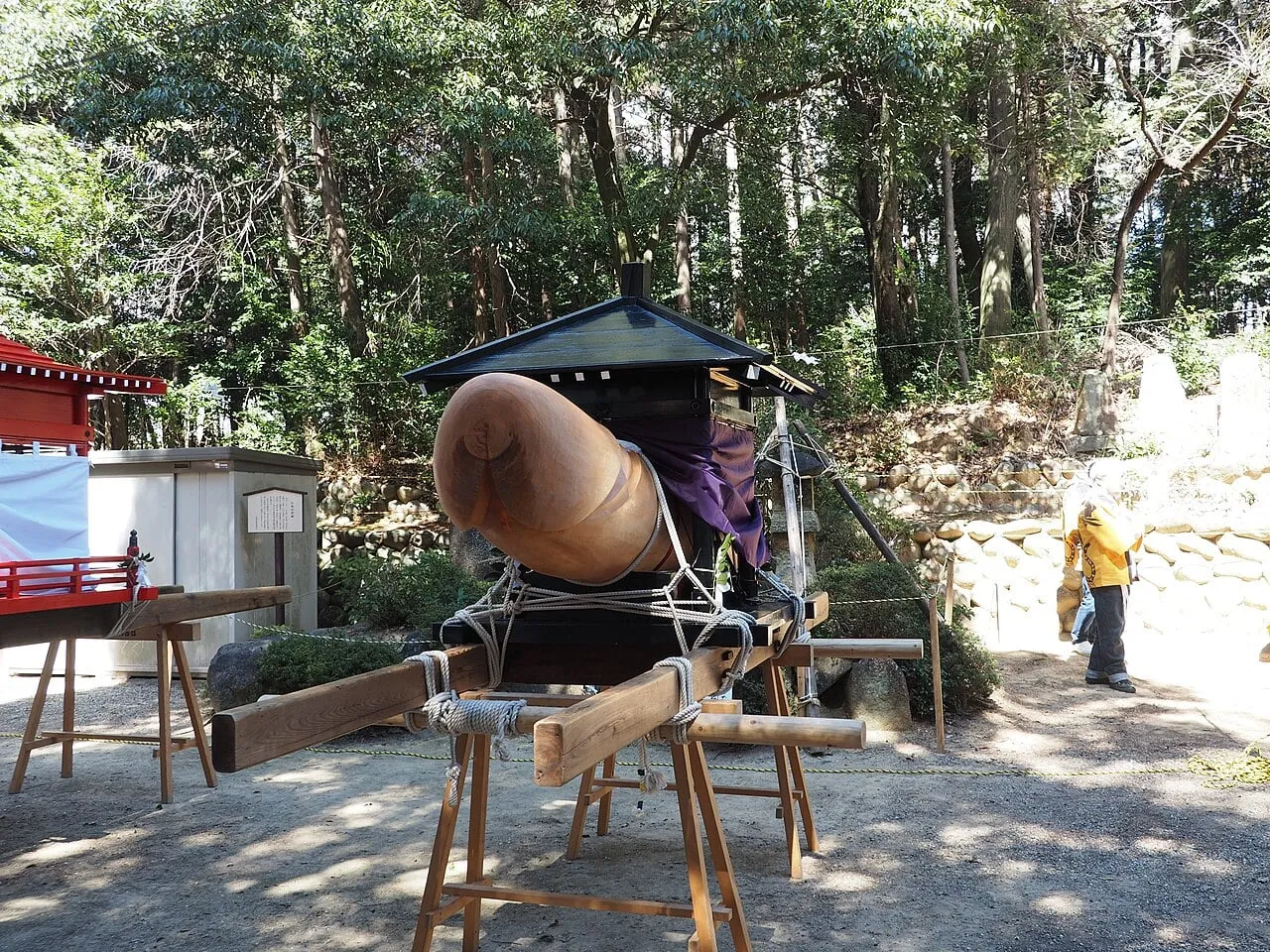
The festival centres on the ōowasegata, a wooden phallus more than two metres long. Each year, craftsmen carve a new one from a Kiso cypress about 300 years old; the first cut is made in a rite on March 3. On March 15 it is laid on a mikoshi at one of two nearby shrines and carried in procession to Tagata Shrine as an offering to its kami.
The procession is long and stately, with priests, court musicians, flag bearers and men in old costume. The festival is open and good-humoured, and visitors come from all over the world, but it remains a shrine rite: the procession ends with prayers in the hall of worship, then a shower of rice cakes for the crowd.
The festival at a glance
| Date | What happens |
|---|---|
| Morning | Festival opens: Rites and stalls at the shrine and at the otabisho, the shrine where the procession starts |
| About 14:00 | Procession sets out: The mikoshi leave the otabisho for Tagata Shrine |
| About 15:30 | Arrival: The procession reaches Tagata Shrine and the mikoshi are carried into the grounds |
| After the main rite | Mochi throwing: Rice cakes are thrown from a platform to celebrate the end of the festival |
Which day should you go?
March 15, from early afternoon
Find a place along the route or near the shrine gate before 14:00, then stay for the mochi throwing at the end.
What to look for

The ōowasegata
The great phallus is carved each year from a single Kiso cypress. It is about 60 cm across and over 2 m long, and it rides on a black-lacquered mikoshi.
The yakudoshi men
Men of 42, the most unlucky age for men in Japanese tradition, carry the mikoshi as a once-in-a-lifetime duty.
The five women
Five women chosen by lot at the shrine in February walk in the procession holding smaller wooden phalluses.

The shrine's other treasures
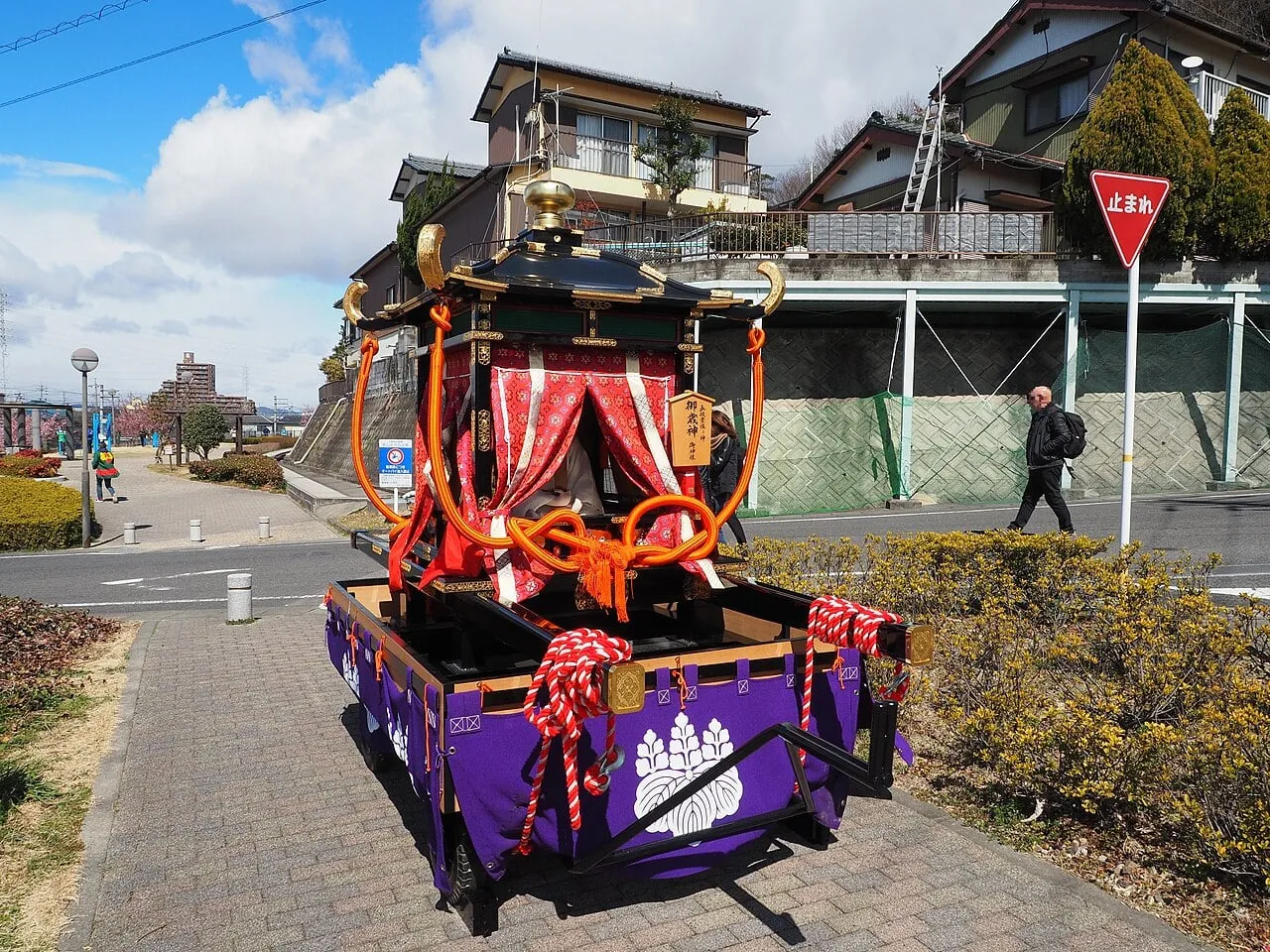
A richly decorated palanquin carries the shrine's treasured statue of a seated goddess, and a red mikoshi carries a statue of Takeinadane, husband of the shrine's goddess Tamahime.
Getting there & where to stay
| From | How | Time |
|---|---|---|
| Nagoya | Subway Meijō Line to Heian-dōri, then the Kamiiida Line and Meitetsu Komaki Line to Tagata-jinja-mae | about 40 min |
| Nagoya (Meitetsu) | Meitetsu Inuyama Line to Inuyama, then the Meitetsu Komaki Line to Tagata-jinja-mae | about 45 min |
On the day. Tagata Shrine is about 5 minutes on foot from Tagata-jinja-mae Station on the Meitetsu Komaki Line.
Crowds. The small shrine grounds fill up quickly, with many visitors from abroad. The route is easier for watching than the gate.
Where to stay
Nagoya
The easiest base, with hotels of every kind and trains to Komaki.
Inuyama
A castle town on the same rail line, good for the next day.
When to book. No booking needed; it is free to watch.
Book ahead
Some links on this page are affiliate links. We may earn a commission at no extra cost to you.
Times are typical fastest routes. Check current timetables before you travel.
Make a day of it
Ōagata Shrine 大縣神社
In Inuyama, the next city to the north, Ōagata Shrine holds its own Hōnen Matsuri, known as the festival that calls spring to Owari. A great kagami mochi is offered, and men in their unlucky year carry a mikoshi. In 2026 it was held on March 15, 9:00–16:00.
Opening hours change by season. Check before you go.
Practical tips
- Respect the shrine. It is a harvest rite with a sacred side, and families from the neighbourhood take part. Enjoy the humour, but follow the staff.
- Mochi throwing. The rice-cake throw is lively. Keep children close and hold on to your phone.
- English guides. A local volunteer group has offered English guiding on festival day. Check the Aichi Now page for the current year.
- No parking. There is no public parking on festival day. Come by train.
Glossary
Mikoshi神輿
A portable shrine. During the festival the kami rides inside while people carry it through the neighborhood.
Otabisho御旅所
The kami's temporary lodging during a festival, often in the busiest part of town.
Matsuri祭り
A Japanese festival, usually held for the kami of a local shrine. The word comes from the idea of serving and entertaining the gods.
References
- Tagata Shrine, official website: Hōnen Matsuri, http://www.tagatajinja.com/pg28.html (in Japanese)
- Aichi Now (Aichi Prefecture official tourism site): Tagata Shrine Hōnen Matsuri (2026 times, access, parking), https://aichinow.pref.aichi.jp/spots/detail/70/ (in Japanese)
- Aichi Now: Ōagata Shrine Hōnen Matsuri, https://aichinow.pref.aichi.jp/spots/detail/2125/ (in Japanese)
Last checked 2026-10-21.