What it is
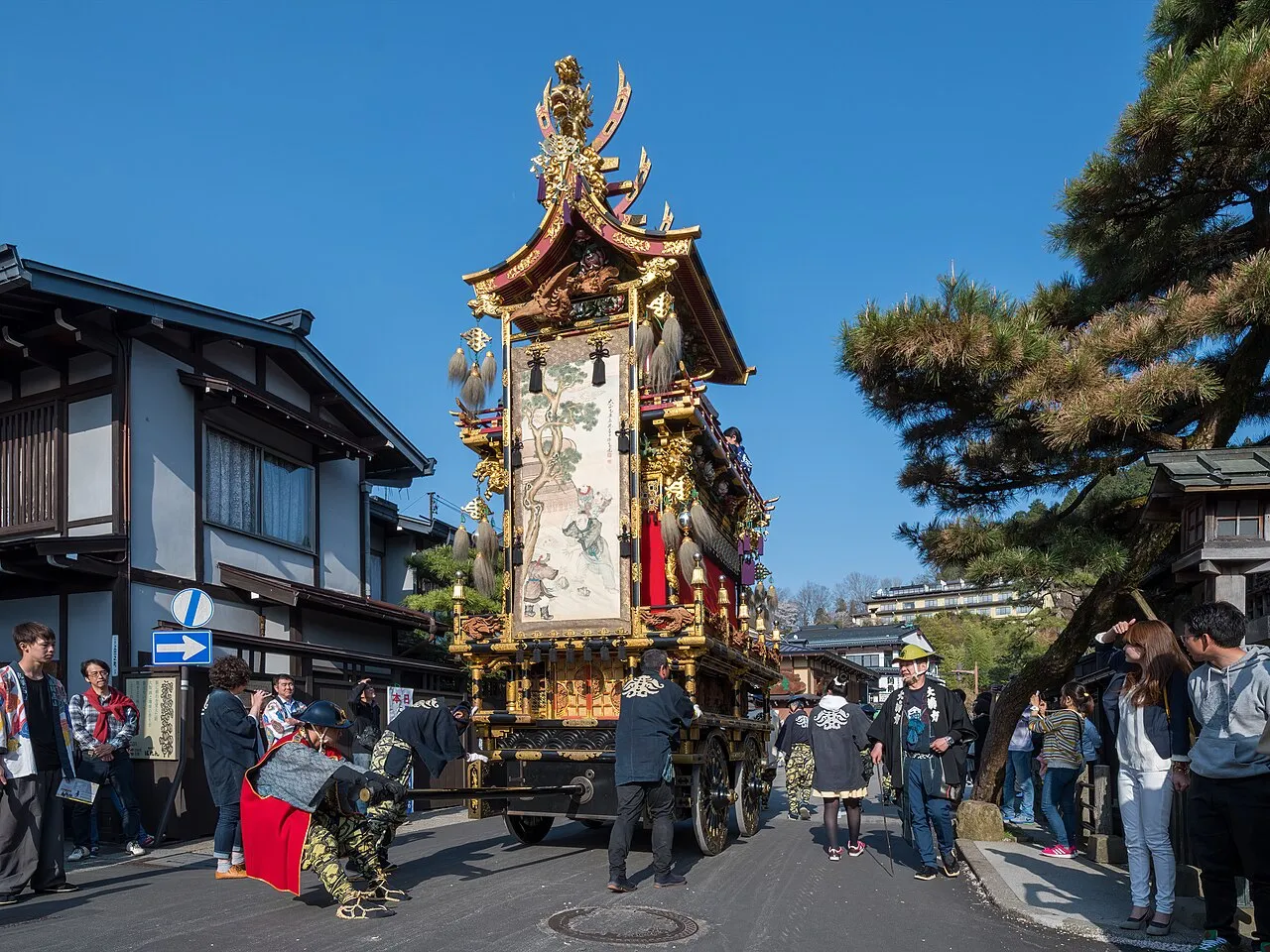
Takayama holds two festivals a year, each for a different shrine. The spring festival, also called the Sannō Matsuri, belongs to Hie Shrine in the south of the old town. The autumn festival in October belongs to Sakurayama Hachimangū in the north.
The floats were built from the 17th to the 19th centuries by Takayama’s wealthy merchants and master carpenters. On festival days they stand in the streets, some perform with mechanical puppets, and on the evening of April 14 they are pulled through town glowing with lanterns.
The festival at a glance
| Date | What happens |
|---|---|
| Apr 14–15 | Floats on display: The twelve floats stand in the southern old town |
| Apr 14–15 | Karakuri performances: Floats perform mechanical puppet shows near the kami's temporary lodging |
| Apr 14, evening | Yomatsuri (night festival): Floats hung with lanterns are pulled through the streets |
| Apr 14–15 | Mikoshi procession: A procession in old costume with lion dancers escorts the kami through town |
Which day should you go?
Apr 14
See the floats and puppets by day, then stay for the lantern-lit night festival.
Apr 15
The floats and puppet shows continue, without the evening crowds.
What to look for

The floats
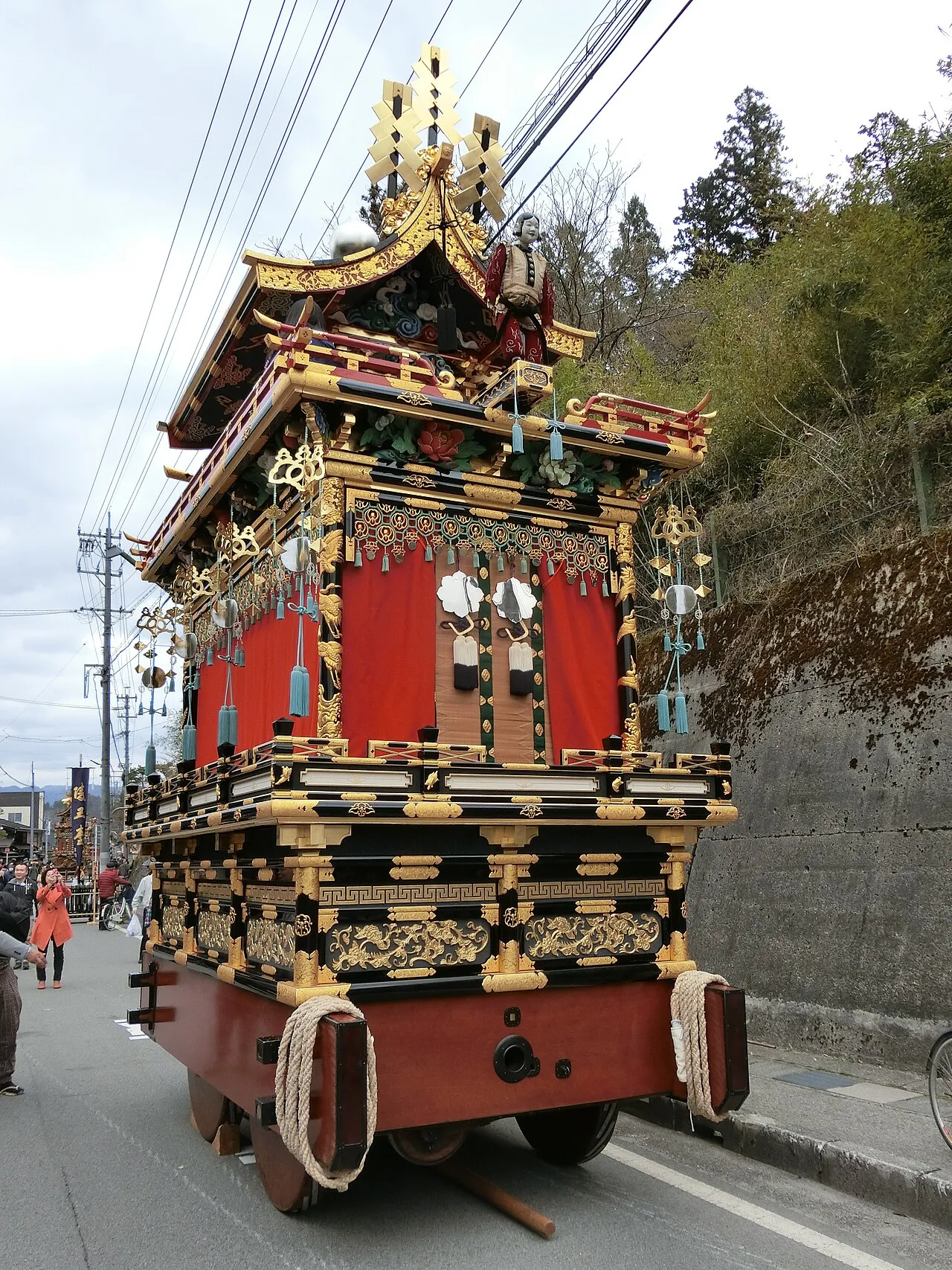
Called yatai, they are covered in carving, lacquer and metalwork by the craftsmen Takayama is famous for.
Karakuri puppets
String-operated puppets that swing, turn and transform on top of the floats, worked by hidden puppeteers.
The old town
Takayama's preserved streets of wooden merchant houses and sake breweries make a perfect backdrop.
Getting there & where to stay
| From | How | Time |
|---|---|---|
| Nagoya | JR Limited Express Hida to Takayama | about 2 h 30 min |
| Tokyo | Tōkaidō Shinkansen to Nagoya, then Limited Express Hida | about 4 h 30 min |
| Kanazawa | Highway bus to Takayama | about 2 h 15 min |
On the day. The spring festival centres on Hie Shrine in the south of the old town, about 15 minutes on foot from Takayama Station.
Crowds. The old streets are packed during the day, and the evening parade of lantern-lit floats draws the biggest crowds.
Where to stay
Takayama old town
Walk to the floats in the morning and back after the evening parade. Many ryokan with dinner included.
Hida-Furukawa
A quiet town about 15 minutes away by JR.
Gero Onsen
A famous hot-spring town about 45 minutes away by limited express.
When to book. Takayama is small and fills quickly for the festival. Book 3–6 months ahead.
Times are typical fastest routes. Check current timetables before you travel.
Practical tips
- Rain. In rain the floats are kept under cover to protect them. Check the forecast.
- Book early. Takayama's inns fill up for both festivals. Book several months ahead.
- Year-round. If you can't come in April, the Takayama Festival Floats Exhibition Hall shows real floats all year.
Glossary
Yatai屋台
A festival float with a roof, often carrying musicians or a small stage. The same word also means a street food stall.
Karakuriからくり
Mechanical puppets worked by strings and springs, performed on top of festival floats in towns such as Takayama.
Mikoshi神輿
A portable shrine. During the festival the kami rides inside while people carry it through the neighborhood.
Matsuri祭り
A Japanese festival, usually held for the kami of a local shrine. The word comes from the idea of serving and entertaining the gods.
References
- Hida Takayama Tourism Association: Takayama Festival.
- UNESCO: “Yama, Hoko, Yatai, float festivals in Japan” (2016).
Last checked 2026-10-12.