What it is
Ebisu is the smiling god of fishermen and merchants, usually shown holding a fishing rod and a large sea bream. In Osaka, a city built on trade, he is one of the most loved kami of all. Every January, business owners and families visit his shrines to pray for a prosperous year, and Imamiya Ebisu Shrine is the busiest of them.
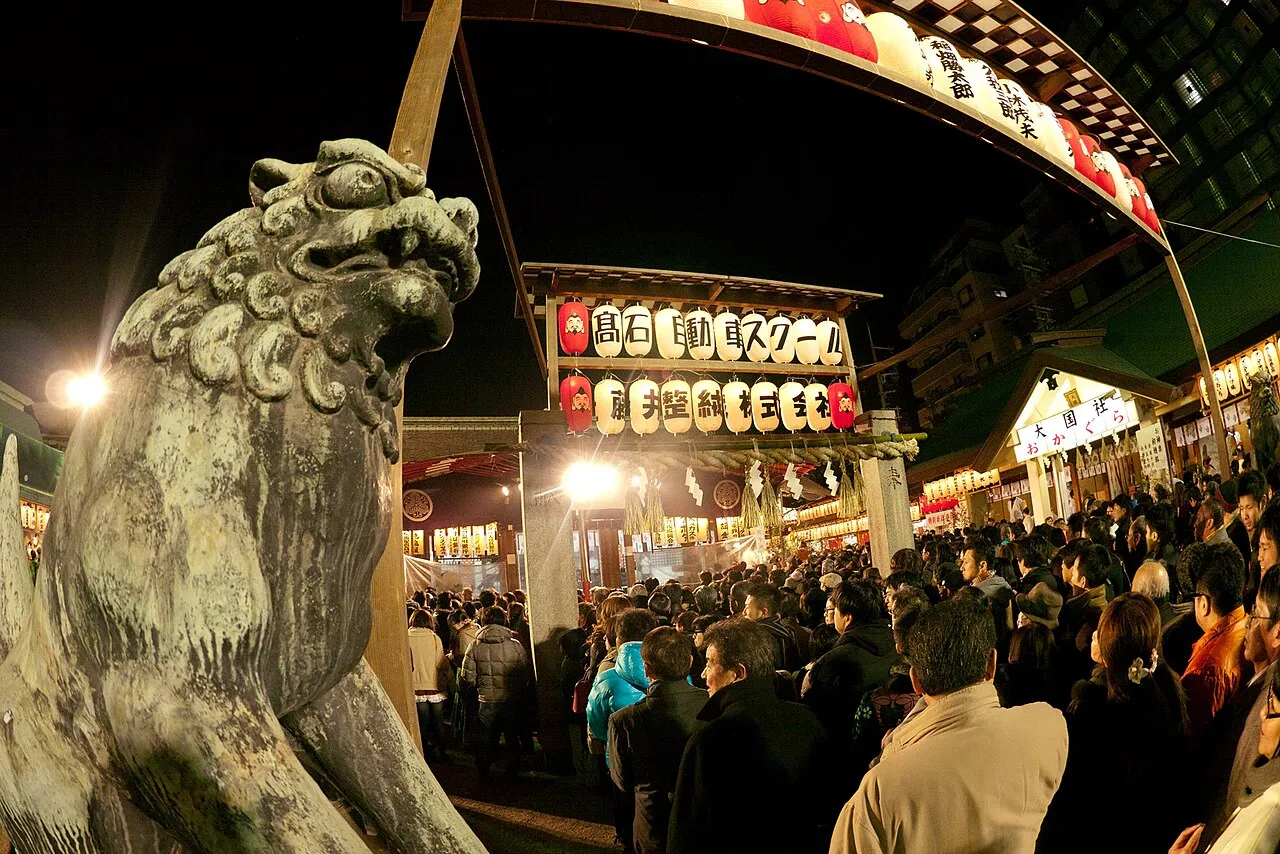
Over three days, about a million people pass through its small grounds. The shrine maidens, called fuku-musume or “luck girls”, hand each visitor a branch of bamboo, and visitors decorate it with lucky charms to take home and display at their shop or home for the year.
The Hōe-kago procession
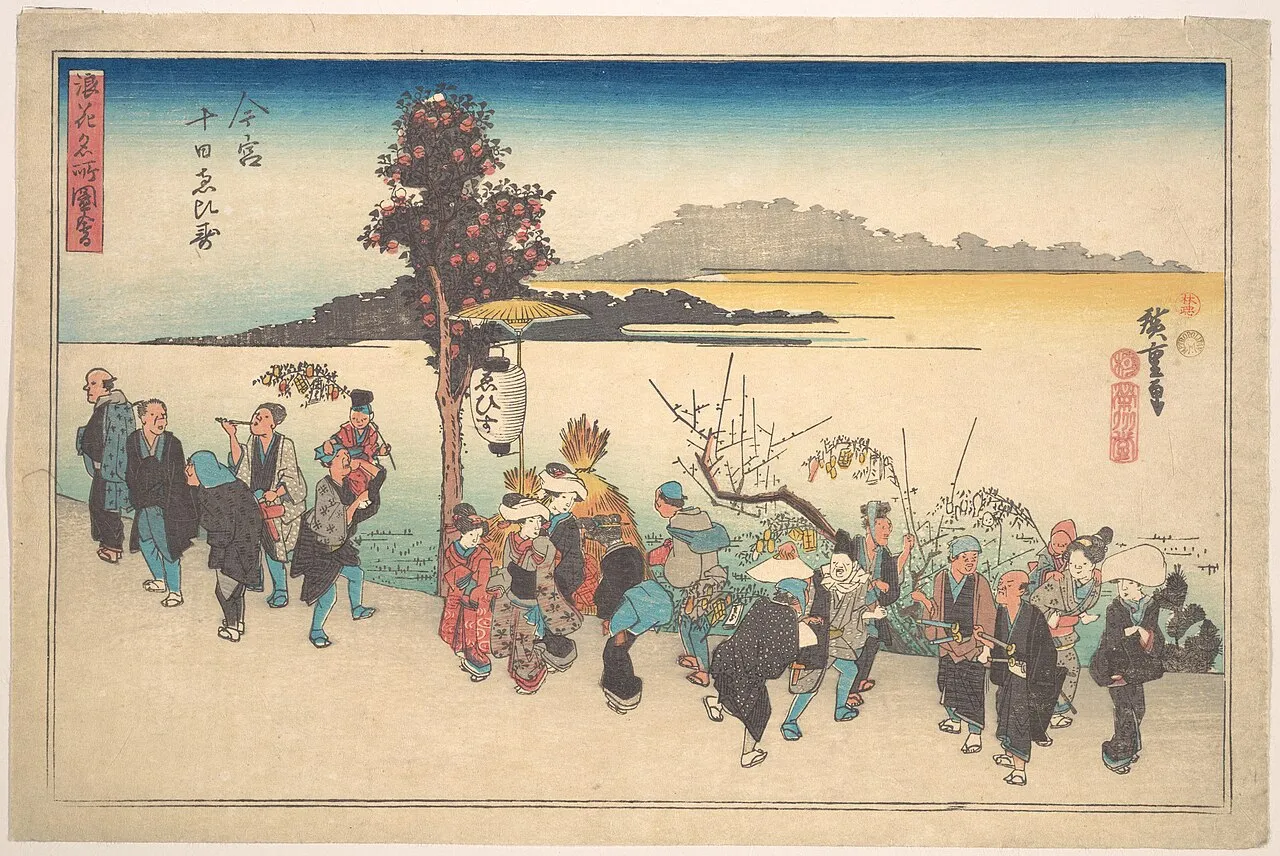
On January 10, a procession of palanquins carries geiko, actors and local celebrities through the streets of Minami to the shrine. It recalls the days when the geisha of Osaka’s entertainment districts made a showy annual visit to Ebisu.
The festival at a glance
| Date | What happens |
|---|---|
| Jan 9 | Yoi-Ebisu (eve): The festival opens; crowds build into the night |
| Jan 10 | Hon-Ebisu (main day): The busiest day, with the Hōe-kago palanquin procession |
| Jan 11 | Nokori-fuku (leftover luck): The last day, said to bring the luck that is left over |
Which day should you go?
Evening of Jan 9 or 11
Lively but a little less packed than the main day. The stalls and lanterns look best after dark.
Jan 10
The fullest atmosphere and the Hōe-kago procession, but also the biggest crowds.
What to look for
.jpg)
Fuku-sasa
A branch of bamboo handed out free by the shrine maidens. Bamboo grows straight and strong and stays green all winter, so it stands for steady prosperity.
The fuku-musume
Shrine maidens in matching kimono and gold headdresses who hand out the bamboo. They are chosen each year from thousands of applicants.
Lucky charms
Visitors buy small charms, such as gold coins, rice bales and sea bream, and have them tied to their bamboo.
The chant
Listen for “Shōbai hanjō de sasa motte koi!” (“For good business, bring your bamboo!”) repeated over loudspeakers all day.
Practical tips
- Crowds. Expect queues to enter the shrine grounds, especially on the evening of Jan 10. Police direct the flow on the surrounding streets.
- Etiquette. Legend says Ebisu is hard of hearing, so some visitors knock on the boards at the back of the shrine to make sure their prayer is heard.
- Combine. Shinsekai and Tsūtenkaku tower are a short walk away for street food after your visit.
Glossary
Omamoriお守り
A small cloth charm sold at shrines and temples for protection, health, safe travel or success. Keep it closed and carry it with you.
Matsuri祭り
A Japanese festival, usually held for the kami of a local shrine. The word comes from the idea of serving and entertaining the gods.
References
- Osaka Convention & Tourism Bureau (Osaka Info): Imamiya Ebisu Tōka Ebisu, https://osaka-info.jp/event/imamiyaebisu-tokaebisu/
- Imamiya Ebisu Shrine, official website: Tōka Ebisu.
Last checked 2026-10-12.