What it is
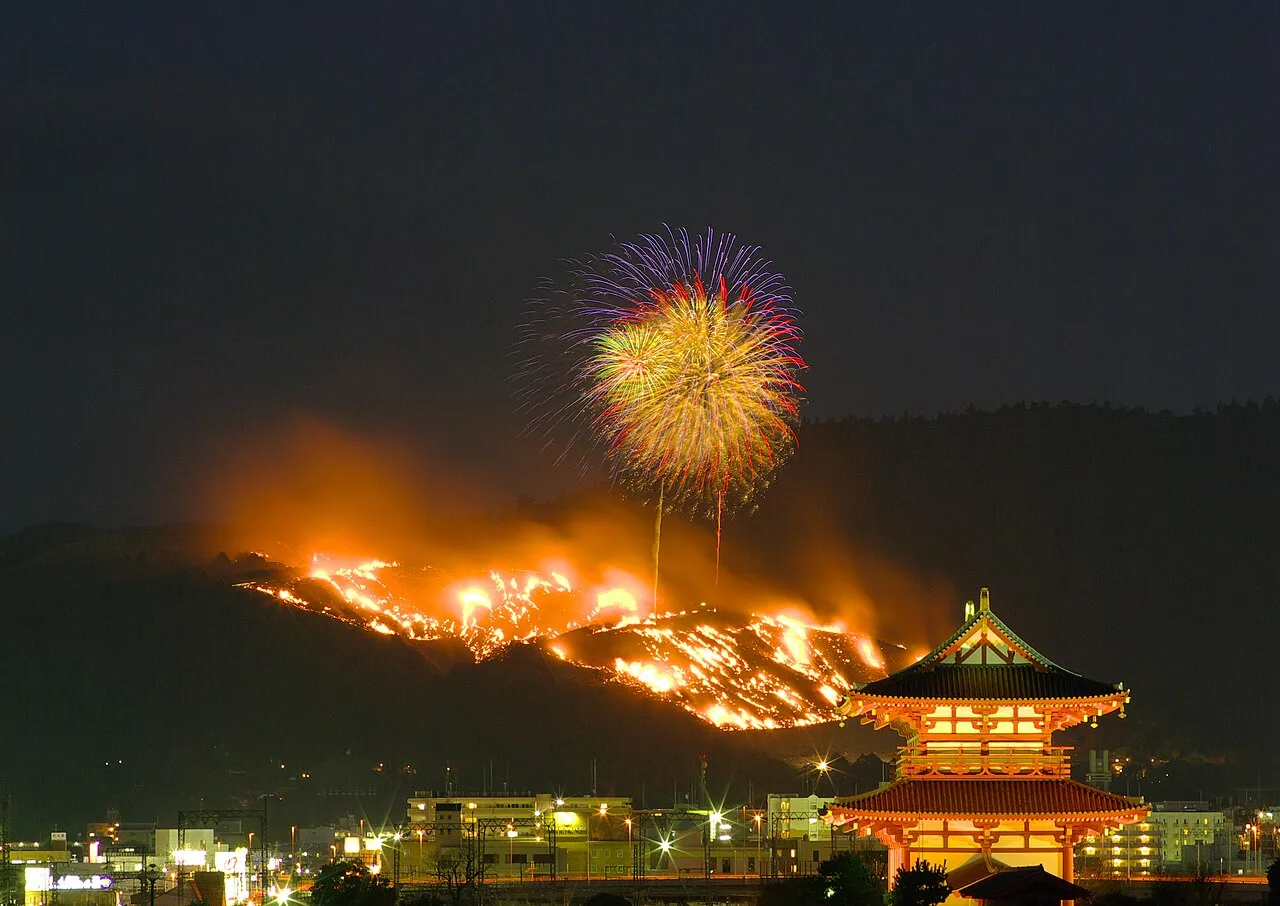
Every January, Nara sets one of its own hills on fire. After a torch procession and fireworks, the dry winter grass on Mount Wakakusa is lit, and the flames spread up the whole slope above Nara Park.
Nobody is quite sure how it began. The best supported explanation is that it was a rite to calm the spirit of an ancient burial mound at the summit. A popular story says it settled a boundary dispute between the great temples Tōdai-ji and Kōfuku-ji, but historians doubt it. Today it is held with the shrines and temples of Nara as a prayer for peace and safety.
The festival at a glance
| Date | What happens |
|---|---|
| Daytime | Events in Nara Park: Stalls and events at the foot of the mountain |
| Evening | Torch procession: A sacred flame is carried to the foot of the mountain |
| Evening, about 18:15 | Fireworks: About 15 minutes of fireworks from the mountain, the signal for the burning |
| Evening, about 18:30 | The burning: Firefighters light the dry grass across about 33 hectares of the slope |
Which day should you go?
The evening of the festival
Watch from the foot of the mountain for the full heat and noise, or from a distance across Nara for the view of the glowing hill.
What to look for
The glowing mountain
Mount Wakakusa is a 342-meter hill covered in grass, not trees. When lit, the whole slope glows orange against the night.
Distant views
The burning is visible across the city. Many people watch from the Heijō Palace site or other open spaces.
The deer
The famous deer of Nara Park live around the mountain. Keep your distance from them in the crowd.
Getting there & where to stay
| From | How | Time |
|---|---|---|
| Kyoto | Kintetsu Limited Express from Kyoto to Kintetsu-Nara | about 35 min |
| Osaka | Kintetsu Nara Line from Osaka-Namba to Kintetsu-Nara | about 40 min |
On the day. Mount Wakakusa is about 30 minutes on foot from Kintetsu-Nara Station. Fireworks start around 18:00, and then the hillside is set alight.
Crowds. The best spots in Nara Park fill by late afternoon. Trains back are crowded after 19:00.
Where to stay
Day trip from Kyoto or Osaka
The fire ends early in the evening, so getting back is easy.
Nara
Stay to explore Nara Park without the day-trip crowds.
When to book. January is quiet in Nara. Booking 2–4 weeks ahead is usually enough.
Times are typical fastest routes. Check current timetables before you travel.
Practical tips
- Weather. Burning depends on the weather. In rain or strong wind it may be postponed, and how much grass burns varies each year.
- Cold. It is a winter night. Dress warmly and bring something to sit on.
- Dates. The date follows the rule of the fourth Saturday of January. Check the Nara tourism association for the year's schedule.
Glossary
Matsuri祭り
A Japanese festival, usually held for the kami of a local shrine. The word comes from the idea of serving and entertaining the gods.
Taimatsu松明
A torch made from bundled wood or bamboo. Giant taimatsu are the centerpiece of fire festivals such as the Omizutori.
References
- Nara City Tourism Association: Wakakusa Yamayaki, https://www.nantokanko.jp/gyoji/729.html
Last checked 2026-10-12.