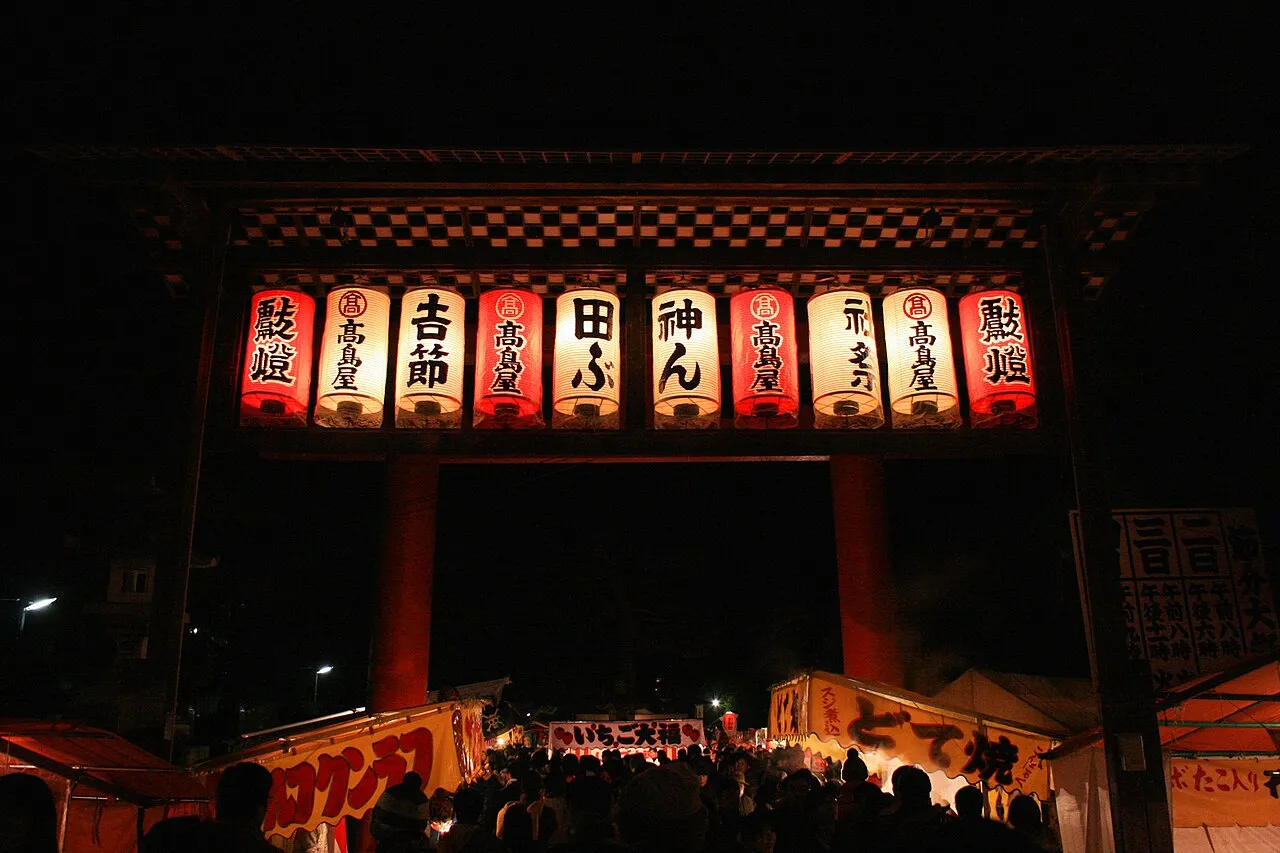
What it is
Setsubun means “seasonal division”. It falls on the day before risshun, the first day of spring in the old calendar, usually February 3. At the turn of the season, evil spirits were thought to slip into the world, so households throw roasted beans out of the door, shouting “Oni wa soto! Fuku wa uchi!”, “Demons out! Luck in!”
Shrines and temples across Japan hold Setsubun events, often with celebrities throwing beans to the crowd. Yoshida Shrine in Kyoto keeps one of the oldest and most theatrical forms, the tsuina-shiki, a demon-chasing ritual inherited from the court of the Heian period.
The bonfire
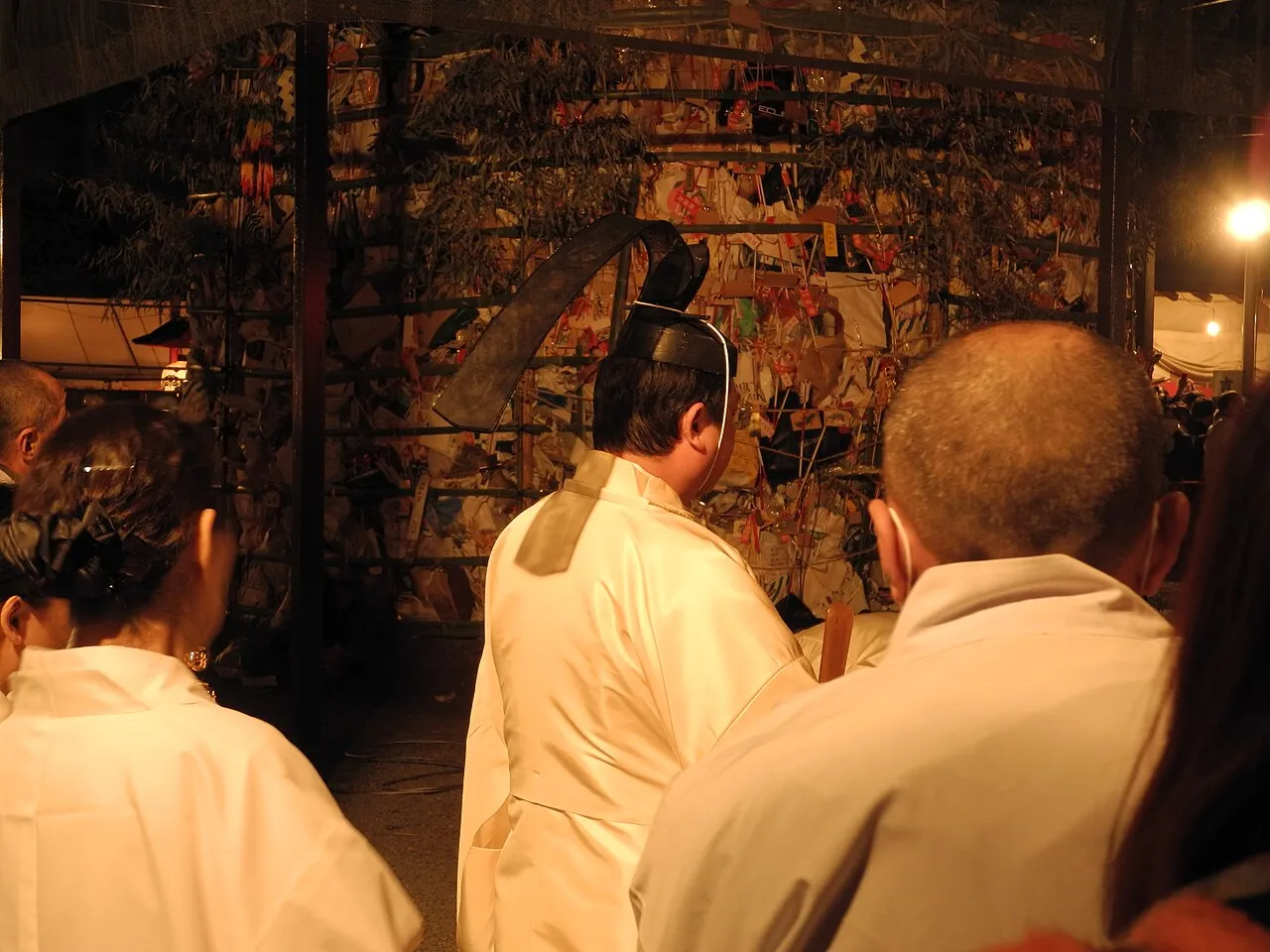
On the night of Setsubun itself, visitors bring their old charms and talismans from the past year. At 23:00 they are piled into a great fire pit and burned, sending the year’s bad luck up in flames.
The festival at a glance
| Date | What happens |
|---|---|
| Day before Setsubun, 18:00 | Tsuina-shiki (demon chasing): The exorcist Hōsōshi drives red, blue and yellow demons out of the shrine |
| Setsubun, 23:00 | Karo-sai (fire festival): Old charms and talismans brought by visitors are burned in a huge bonfire |
| Day after Setsubun | Closing rites: Festival rituals and a lucky-bean prize draw; no stalls |
Which day should you go?
Evening before Setsubun
The demon-chasing ritual at 18:00, with hundreds of food stalls along the approach. Arrive by 17:00 for a view.
Setsubun night
The 23:00 bonfire of old charms. Late, cold and crowded, but spectacular.
What to look for
.JPG)
The Hōsōshi
The exorcist wears a golden mask with four eyes and carries a spear and shield. The ritual comes from a ceremony held at the imperial palace in the Heian period.
Three colors of demon
The red, blue and yellow oni stand for the misfortunes and evils that the new season should leave behind. They rampage through the crowd before the exorcist drives them off.
Food stalls
About 800 stalls line the approach and the streets nearby on the first two days.
Beans
Roasted soybeans are thrown to drive out demons. Eat one bean for each year of your age, plus one, for good health.
Practical tips
- Setsubun date. Setsubun is usually February 3, but falls on February 2 in some years. The festival always runs from the day before to the day after.
- Crowds. Around half a million people visit over the three days. The narrow approach is very crowded in the evening.
- Ehōmaki. In Kansai, people eat a thick sushi roll called ehōmaki on Setsubun, facing the year's lucky direction in silence.
Glossary
Oni鬼
A horned demon or ogre of Japanese folklore, often red or blue. At Setsubun, oni are driven out with roasted beans.
Mamemaki豆まき
Throwing roasted soybeans at Setsubun while shouting "Demons out! Luck in!" to drive bad luck from the home.
Ofudaお札
A paper or wooden talisman from a shrine, kept in the home for protection and returned to be burned after a year.
Matsuri祭り
A Japanese festival, usually held for the kami of a local shrine. The word comes from the idea of serving and entertaining the gods.
References
- Kyoto City Tourism Association: Yoshida Shrine Setsubun Festival, https://www.kyoto-kankou.or.jp/event/1207
- Yoshida Shrine, official website: Setsubun festival notices, https://yoshidajinja.jp/post-4350/
- Kyoto Tourist Information Center: February events list (2026).
Last checked 2026-10-12.