Who Inari is
Inari began as the kami of rice, the crop that fed Japan and once served as its currency. Fushimi Inari Taisha in Kyoto, the head shrine, traces its founding to the year 711 and the Hata clan. As towns and trade grew, a god of good harvests became a god of good business. Today merchants, companies and factories pray to Inari for success.
Inari is worshipped in many forms. Some shrines describe a single deity, others a group of five, and Inari is shown as a man, a woman or neither. At some places, such as Toyokawa Inari in Aichi, Inari is honored in a Buddhist temple.
Foxes, gates and fried tofu
The foxes
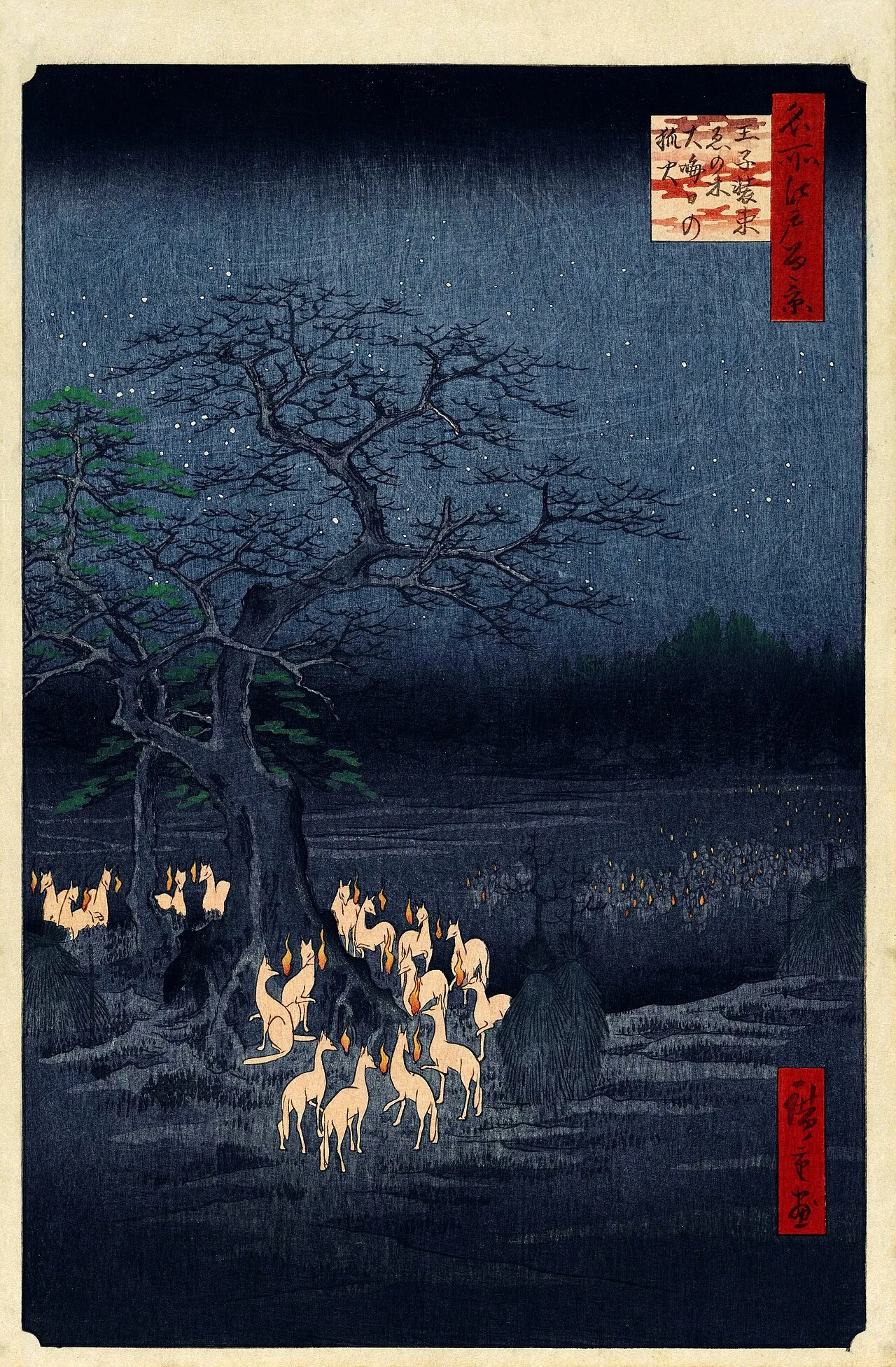
The stone foxes guarding every Inari shrine are messengers, not the god itself. Look at what they hold in their mouths: often a key to the rice storehouse, a jewel, a scroll or a sheaf of rice.
The gates
The famous tunnels of orange torii at Fushimi Inari are gifts. Each gate was donated by a person or company, whose name and date are painted on the back, as thanks or as a prayer for success. There are thousands of them on the mountain behind the shrine. A full walk to the summit of Mount Inari, 233 meters high, and back takes about two to three hours.
The tofu
Foxes are said to love abura-age, fried tofu, so it is left as an offering. That is where inarizushi, rice in a pouch of sweet fried tofu, and kitsune udon, “fox noodles”, get their names.
When to visit Fushimi Inari
- Hatsu-uma Taisai (first Day of the Horse in February): the day the kami is said to have descended on the mountain. Visitors take home a sprig of cedar for luck.
- Motomiya-sai (a weekend in late July): thousands of lanterns light the gates in the evening.
- Hitaki-sai (November 8): a fire festival of thanks for the harvest, when prayer sticks are burned in great bonfires.
The shrine is open 24 hours a day and free to enter. To avoid the crowds, go early in the morning or after dark.
Glossary
Kami神
A Shinto deity or sacred presence. Kami can be gods from myth, spirits of nature, or deified people.
Torii鳥居
The gate at the entrance to a shrine. Passing through it means stepping from the everyday world into a sacred space.
Ema絵馬
A small wooden plaque on which visitors write a wish and hang it at the shrine. Exam wishes fill the racks at Tenmangū shrines.
Omamoriお守り
A small cloth charm sold at shrines and temples for protection, health, safe travel or success. Keep it closed and carry it with you.
References
- Fushimi Inari Taisha, official website: history, deities and annual festivals.
- Kokugakuin University, Encyclopedia of Shinto: “Inari shinkō”.
Last checked 2026-10-12.