Who the gods of Kumano are
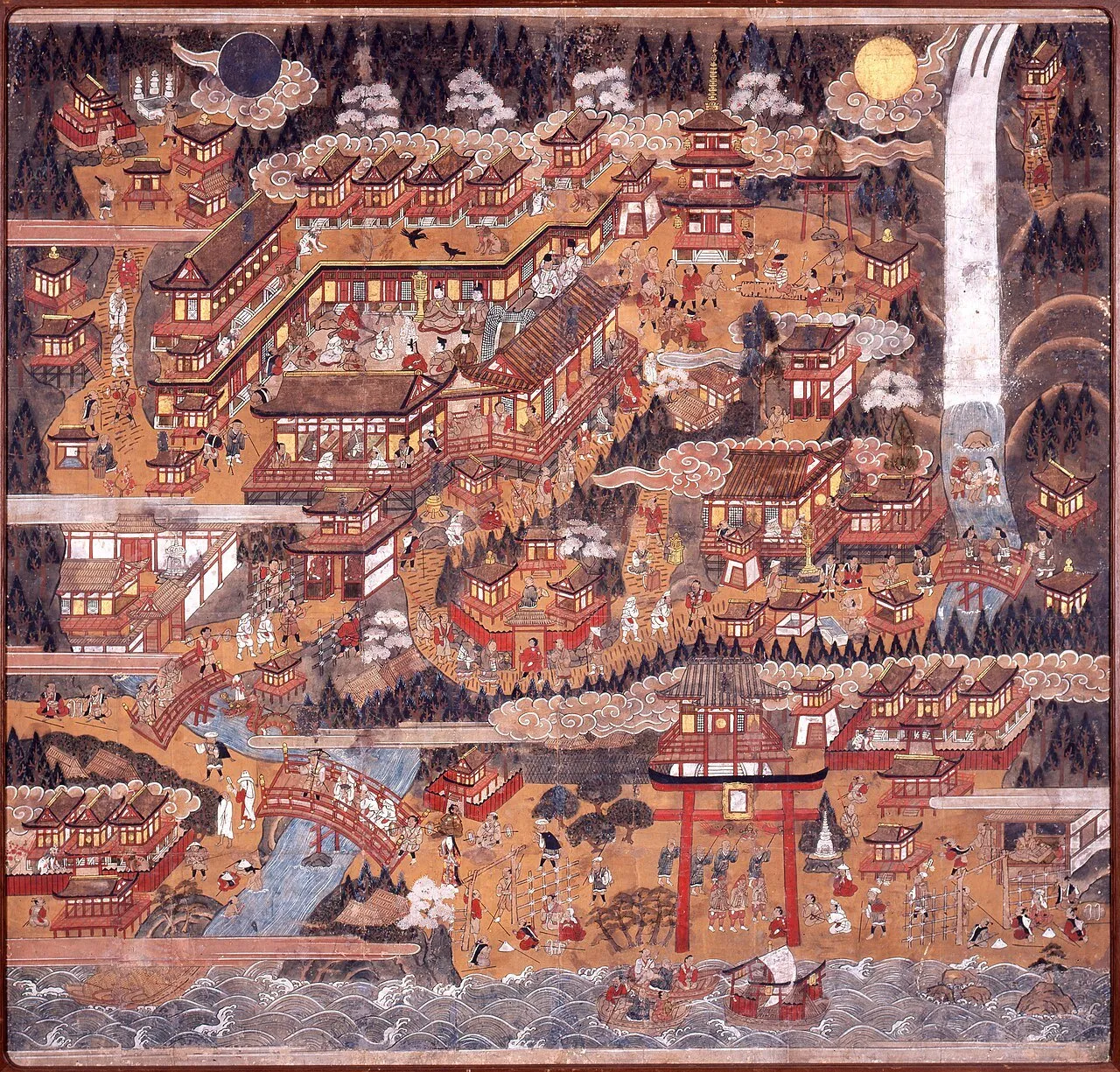
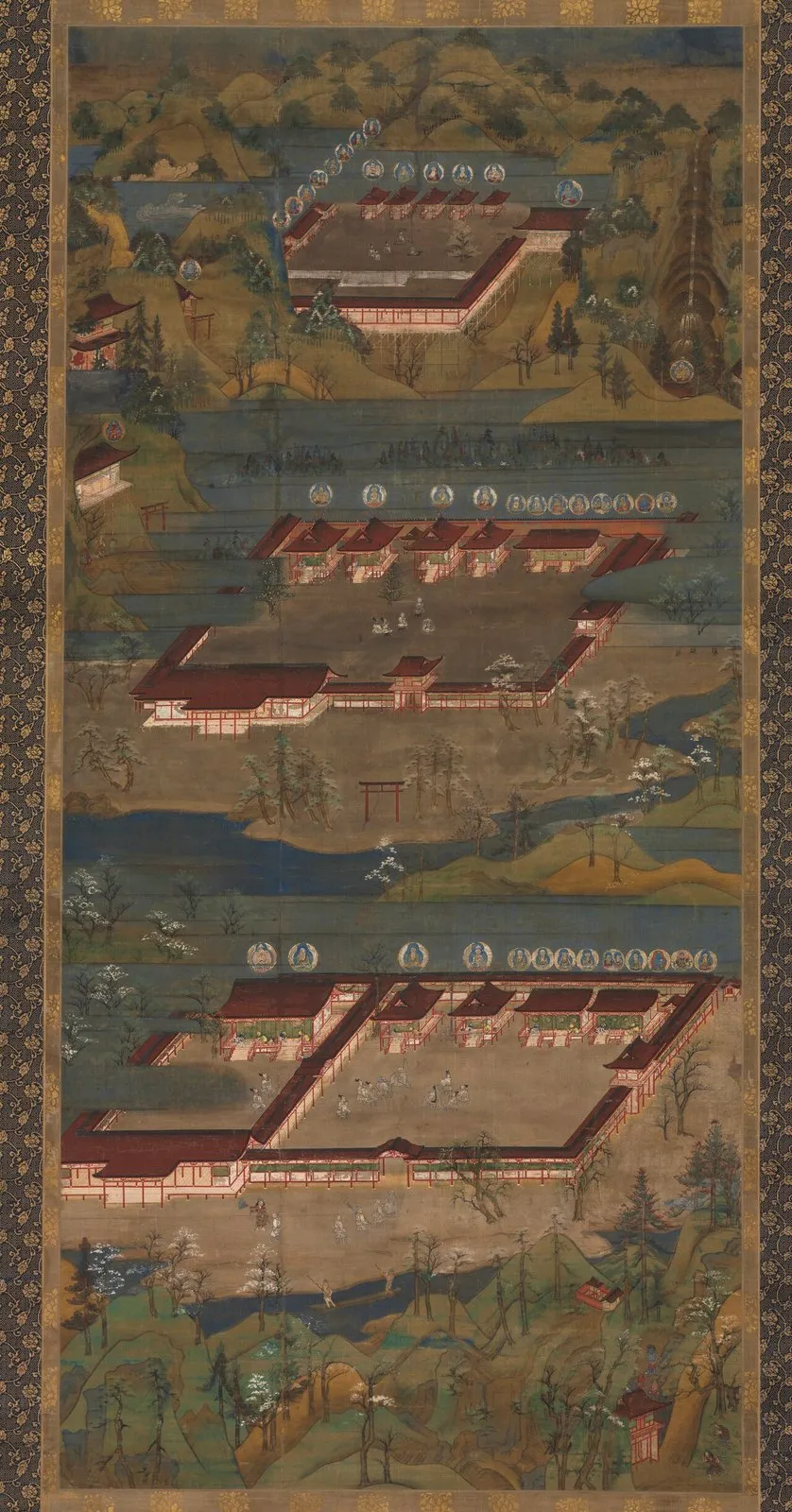
Kumano is a region of steep, forested mountains, rivers and waterfalls in the south of the Kii Peninsula. From ancient times it was thought of as a land of the dead and of rebirth, a place where people went to be renewed. Three great shrines, the Kumano Sanzan, grew up there: Hongū Taisha in the mountains, Hayatama Taisha at the mouth of the Kumano River, and Nachi Taisha above Nachi Falls.
Each shrine has its own main god. Hongū honours Ketsumimiko, identified with Susanoo; Hayatama honours Kumano Hayatama, identified with Izanagi; and Nachi honours Kumano Fusumi, identified with Izanami, the mother of the gods. Together with other gods, they are counted as the twelve deities of Kumano.
Gods who were also Buddhas
For centuries, until the separation of Shinto and Buddhism in 1868, the Kumano gods were worshipped as gongen, Buddhas who had “appeared in the form” of kami. The god of Hongū was Amida, the Buddha of the Pure Land; the god of Nachi was the thousand-armed Kannon. This is why the Buddhist temple Seiganto-ji still stands beside Kumano Nachi Taisha.
Because the gods of Kumano welcomed everyone, rich or poor, men or women, the pilgrimage to Kumano became one of the most popular in Japan. Retired emperors made the journey many times, and so many people walked the mountain paths that the lines of pilgrims were compared to processions of ants. Those paths, the Kumano Kodō, are now a World Heritage Site.
The crow and the waterfall
The messenger of the Kumano gods is Yatagarasu, a crow with three legs. In the chronicles, a great crow sent by heaven guided the legendary first emperor, Jimmu, through the mountains of Kumano. Today the crow appears on Kumano charms, and on the emblem of the Japan Football Association.
At Nachi, the falls themselves are a god. Nachi Falls, the highest single-drop waterfall in Japan at 133 metres, is the sacred body of Hirō Shrine, the place where worship at Nachi began.
Why they matter for festivals
Every year on July 14, the deities of Nachi are carried down to the waterfall in twelve tall ōgi mikoshi, decorated with fans. On the stone steps, bearers carrying twelve huge burning torches meet them and purify their path: the Nachi Fire Festival, one of the most dramatic sights in Japan.
Festivals
Nachi Fire Festival
Kumano Nachi Taisha and Hirō Shrine at Nachi FallsJuly 14★★★ Overnight trip. About 25 minutes by bus from JR Kii-Katsuura Station to Nachisan, then a walk. Kii-Katsuura is about 3 hours 30 minutes from Osaka by limited express.
Glossary
Kami神
A Shinto deity or sacred presence. Kami can be gods from myth, spirits of nature, or deified people.
Kojiki古事記
Japan's oldest surviving book, compiled in 712. It records the myths of the kami.
Taimatsu松明
A torch made from bundled wood or bamboo. Giant taimatsu are the centerpiece of fire festivals such as the Omizutori.
Matsuri祭り
A Japanese festival, usually held for the kami of a local shrine. The word comes from the idea of serving and entertaining the gods.
References
- Wakayama Prefecture: Kumano Nachi Taisha (deities).
- Kumano Nachi Taisha and Kumano Hongū Taisha: deities and history.
- Japan Tourism Agency multilingual commentary database: Kumano Sanzan, Nachi Falls, Yatagarasu.
- UNESCO World Heritage Centre: Sacred Sites and Pilgrimage Routes in the Kii Mountain Range.
Last checked 2026-10-15.