What it is
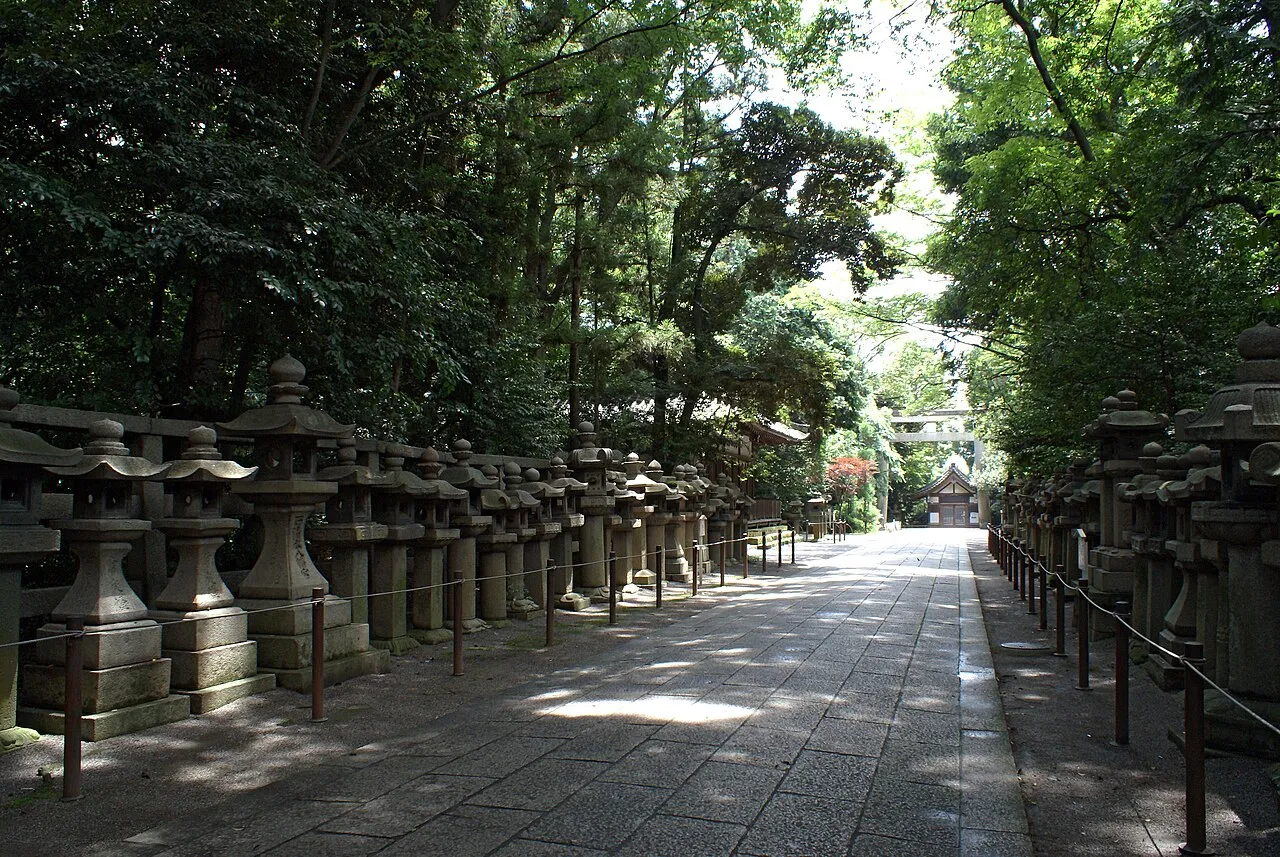
Iwashimizu Hachimangū was founded in 860 to protect the capital, Kyoto, from the southwest. Its great festival, the Iwashimizu-sai, is one of three in Japan attended by an envoy of the emperor.
At around two in the morning on September 15, the kami of Hachiman are carried down the mountain in three palanquins, lit only by torches, in a rite closed to the public. In the morning, at the foot of the mountain, fish are released into the river in the hōjō-e, a rite that reflects the long blending of Shinto and Buddhism at this shrine.
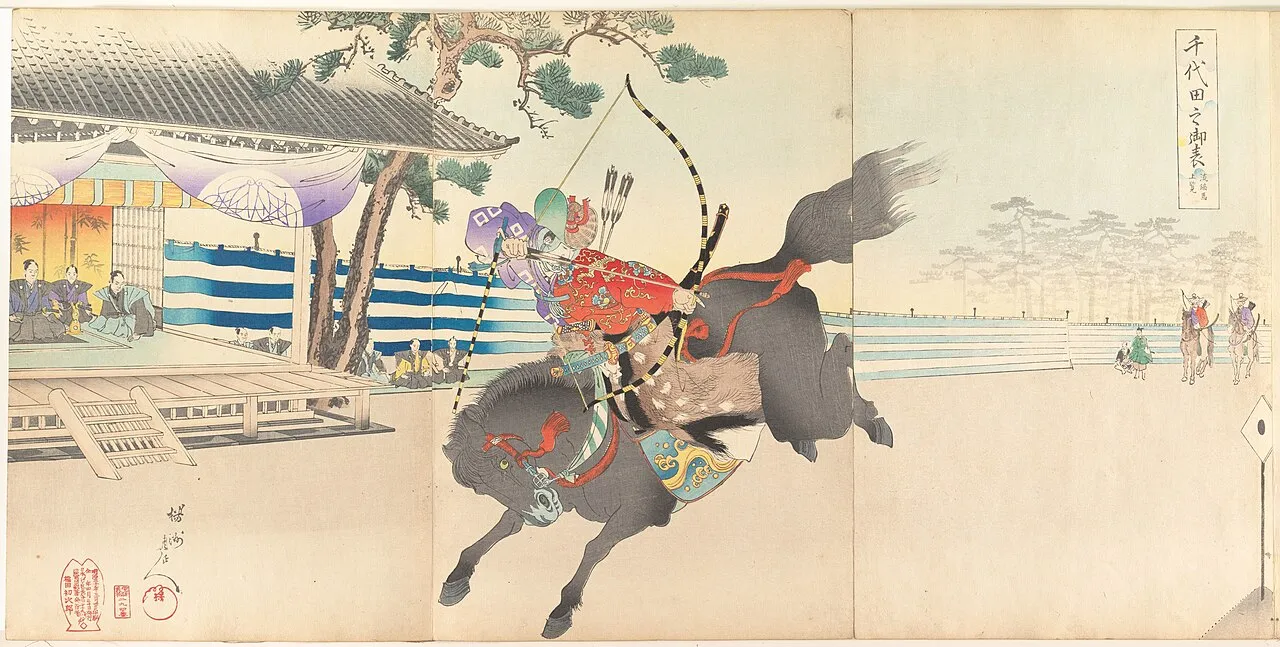 Kami of this festivalHachimanThe kami of archery and protection, guardian of the samurai and of the nation. Tens of thousands of Hachiman shrines stand across Japan. Read the story →
The festival at a glance
| Date | What happens |
|---|---|
| Sep 15, from 2:00 | Night procession: About 500 people in court dress escort three palanquins down the mountain by torchlight; not open to the public |
| Sep 15, from about 8:00 | Hōjō-e: Fish are released into the river below the shrine, with the butterfly dance and other court dances; free to watch |
Which day should you go?
Sep 15, morning
Watch the release rites and court dances at the foot of the mountain. They are free and start around 8:00.
What to look for
Court dress
About 500 people in Heian-period costume take part.
Hōjō-e
The release of living creatures, a Buddhist rite of compassion kept at this Shinto shrine.
The shrine
Iwashimizu's main halls, a National Treasure, stand on Mount Otokoyama overlooking three rivers.
Getting there & where to stay
| From | How | Time |
|---|---|---|
| Kyoto | Keihan Line from Gion-shijō to Iwashimizu-hachimangū | about 30 min |
| Osaka | Keihan Line from Yodoyabashi to Iwashimizu-hachimangū | about 40 min |
On the day. From Iwashimizu-hachimangū Station, take the cable car or walk about 30 minutes up the mountain to the shrine.
Crowds. The night procession is not open to the public. Visit for the daytime rites and the release of birds and fish.
Where to stay
Central Kyoto (Shijō–Karasuma)
Direct Keihan trains to Yawata.
Osaka (Yodoyabashi or Kyōbashi)
Direct Keihan trains to Yawata.
When to book. Booking 1 month ahead is usually enough.
Times are typical fastest routes. Check current timetables before you travel.
Practical tips
- Viewing. The night procession cannot be watched by the public. Joining the evening return rite requires booking and a donation.
- Getting there. Take an early Keihan train to arrive for the morning rites.
Glossary
Matsuri祭り
A Japanese festival, usually held for the kami of a local shrine. The word comes from the idea of serving and entertaining the gods.
Kami神
A Shinto deity or sacred presence. Kami can be gods from myth, spirits of nature, or deified people.
References
- Iwashimizu Hachimangū, official website: Iwashimizu-sai.
Last checked 2026-10-12.