
Who Ebisu is
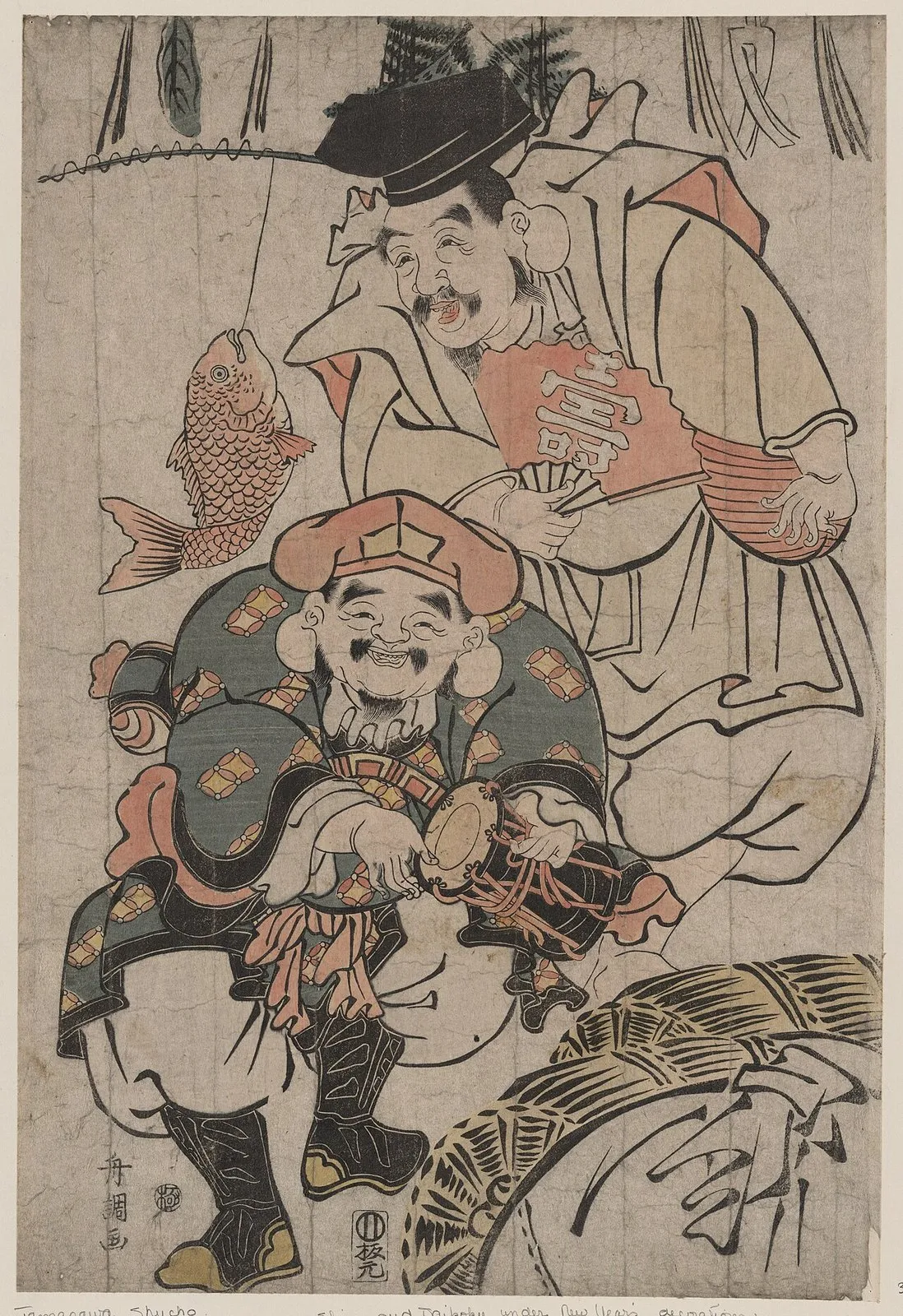
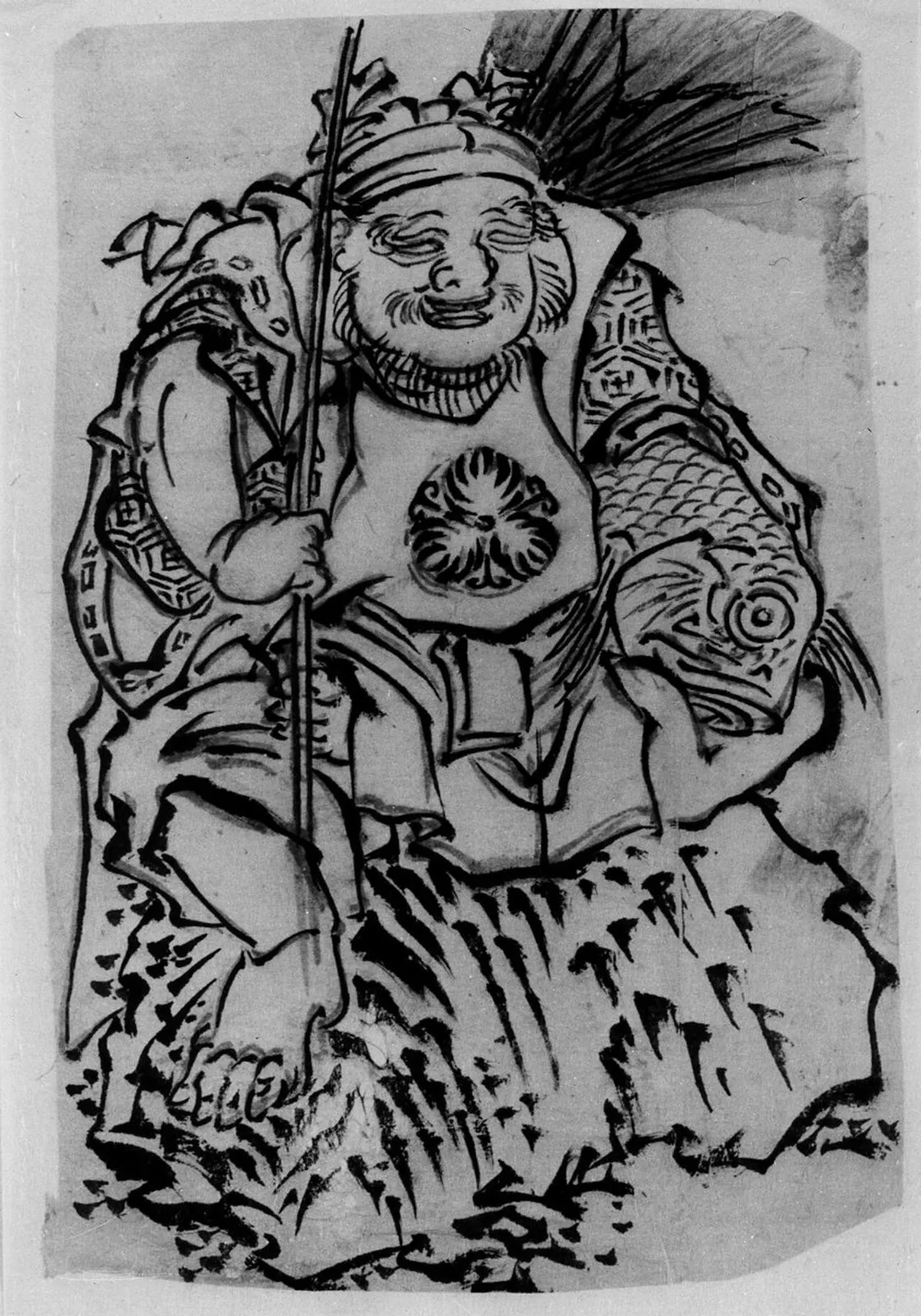
Ebisu is a cheerful, round-faced god in a fisherman’s tall hat, holding a rod in one hand and a fat red sea bream under his arm. He began as a god of the sea and of fishermen, bringing good catches. As markets grew, he also became a god of trade, and today shopkeepers and companies across Japan pray to him for business.
He is one of the Seven Lucky Gods, a group that came together in the Muromachi period. The others came from India and China; Ebisu alone is Japanese.
Two stories of where he came from
The child set adrift
In the Kojiki, the first child of the creator gods Izanagi and Izanami was born without bones and was put in a boat of reeds and set adrift. In later tradition this drifting child, Hiruko, came to be identified with Ebisu. Nishinomiya Shrine near Kobe, the head of Ebisu shrines, worships him in this form. The shrine’s own story tells of fishermen from nearby Naruo who caught a statue of the god in their net and enshrined it.
The son who was fishing
Other shrines identify Ebisu with Kotoshironushi, a son of Ōkuninushi, lord of Izumo. When the gods of heaven sent Takemikazuchi to ask for the land, Kotoshironushi was away fishing at Cape Miho. He was called back, agreed to hand over the land, and withdrew. Miho Shrine in Shimane and Imamiya Ebisu in Osaka honour him as Ebisu.
Why he matters for festivals
Ebisu’s great festival is Tōka Ebisu, the “tenth-day Ebisu”, held from January 9 to 11. At Imamiya Ebisu in Osaka, around a million people, by common estimates, come to pray for business in the new year and receive fukuzasa, bamboo branches hung with lucky charms. Young women chosen as fuku-musume, “luck maidens”, hand them out, and the crowd chants “Shōbai hanjō de sasa motte koi!”: “For good business, bring the bamboo!”
Festivals
Tōka Ebisu
Imamiya Ebisu Shrine, Naniwa, OsakaJanuary 9–11★ Easy access. Next to Imamiya-Ebisu Station (Nankai Line), or a short walk from Ebisuchō or Daikokuchō subway stations.
Glossary
Kami神
A Shinto deity or sacred presence. Kami can be gods from myth, spirits of nature, or deified people.
Kojiki古事記
Japan's oldest surviving book, compiled in 712. It records the myths of the kami.
Matsuri祭り
A Japanese festival, usually held for the kami of a local shrine. The word comes from the idea of serving and entertaining the gods.
Omamoriお守り
A small cloth charm sold at shrines and temples for protection, health, safe travel or success. Keep it closed and carry it with you.
References
- Kojiki (712). English translation: Basil Hall Chamberlain, 1882.
- Imamiya Ebisu Shrine and Nishinomiya Shrine: deities and Tōka Ebisu.
- Kokugakuin University, Encyclopedia of Shinto: “Ebisu shinkō”.
- Kotobank (Japanese reference dictionaries): Nishinomiya Shrine.
Last checked 2026-10-15.