Japan Festival Atlas
Guides / A festival field guide

Mikoshi, floats and lanterns

What is being carried, pulled and lit up at a Japanese festival, and what it means. A short guide to mikoshi, festival floats, lanterns, torches and the music you will hear.

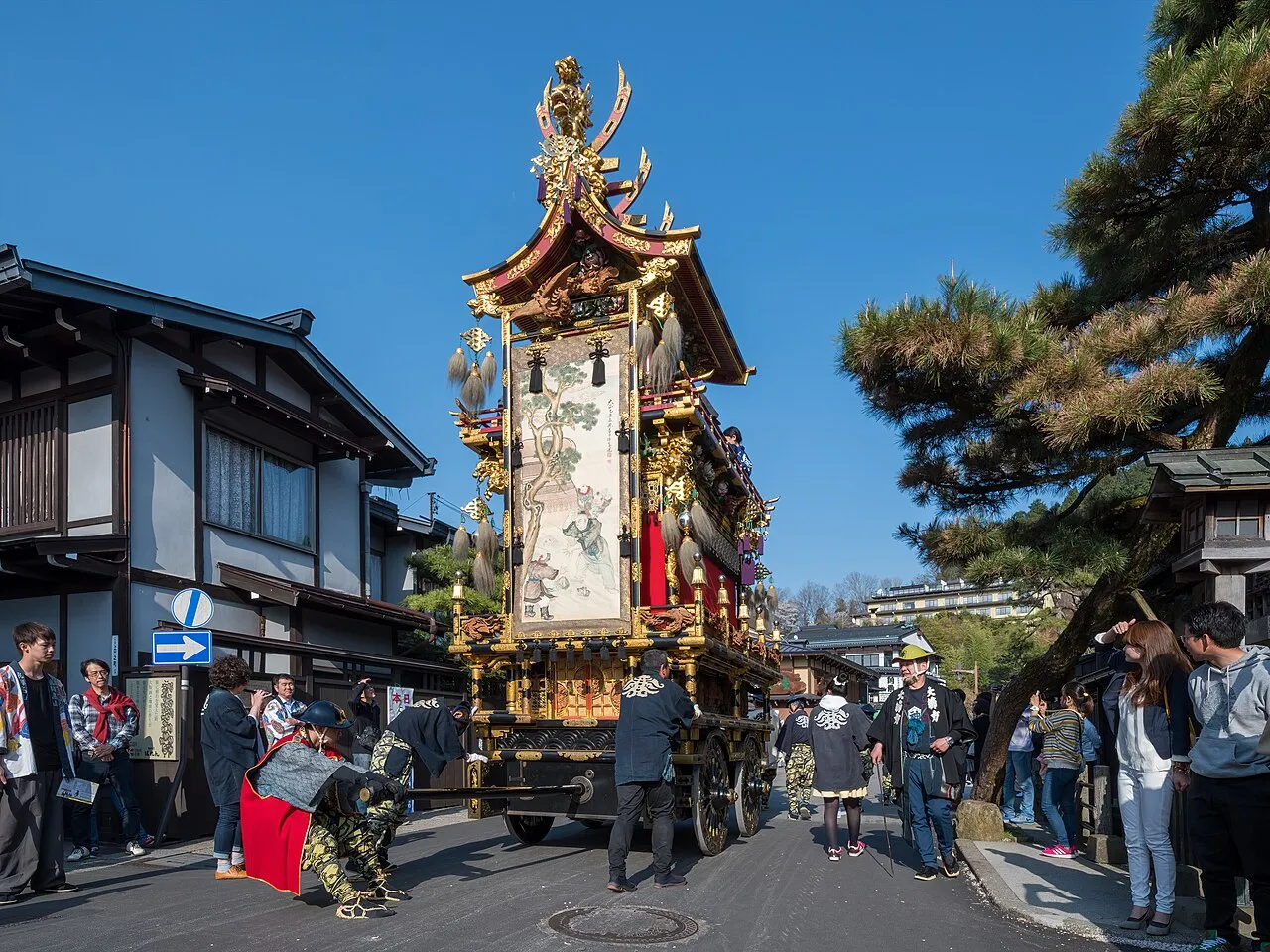
The tall red and gold Kongō-tai float in a Takayama street.
The Kongō-tai float during the spring festival, April 14, 2018. Photo: 大野 一将, CC0. Source

The mikoshi: the kami on the move

At the heart of most festivals is a journey. The kami of a shrine is taken out of its sanctuary and carried through the streets it protects, often to a temporary resting place, the otabisho, and back again. Nearly every shrine festival has some form of this procession.

The kami travels in a mikoshi, a portable shrine. Most are made of black-lacquered wood with gilt metal fittings, square, hexagonal or octagonal, with a roof topped by a golden phoenix or an onion-shaped finial. The shrine rests on long wooden poles, and the carriers lift it on their shoulders. Small ones need a handful of people, large ones dozens.
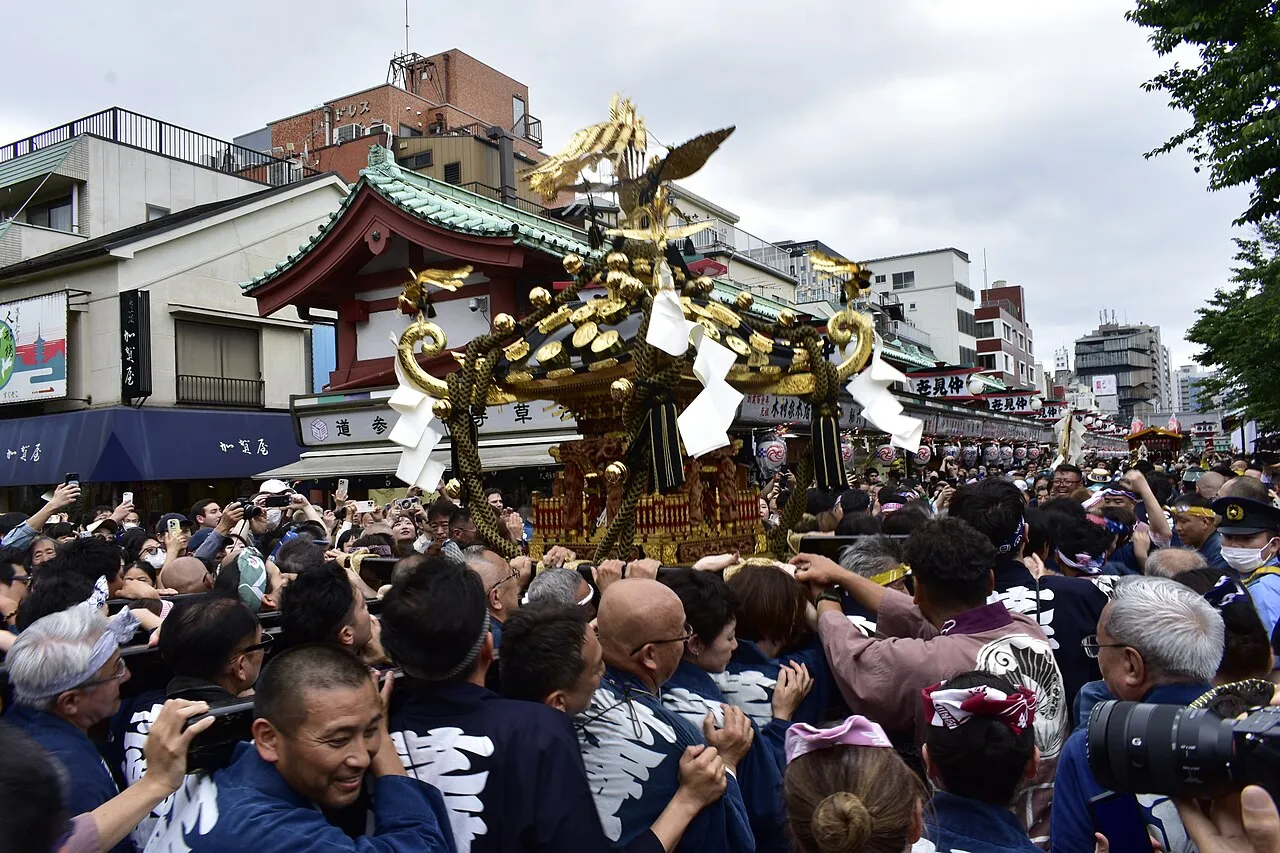
A golden mikoshi topped with a phoenix carried through a packed street in Asakusa.
A mikoshi in the streets of Asakusa during the Sanja Matsuri, May 2023. Photo: 江戸村のとくぞう, CC BY-SA 4.0. Source

Watch how it moves. At the Sanja Matsuri in Asakusa, about a hundred mikoshi are bounced up and down and swung from side to side as the carriers chant, shaking up the kami’s power. Elsewhere the procession is slow and solemn. The rule for visitors is the same everywhere: the mikoshi has right of way.

The idea is old. When the Great Buddha of Nara was completed in the 8th century, the kami of Usa Hachiman Shrine was carried all the way from Kyushu to the capital in an imperial palanquin.

Floats: dashi, yamaboko, danjiri, yatai

Where the mikoshi carries the kami, the floats are offerings that go with it: gifts of music, craft and pride from each neighbourhood. The general word is dashi, but every region has its own name and style:

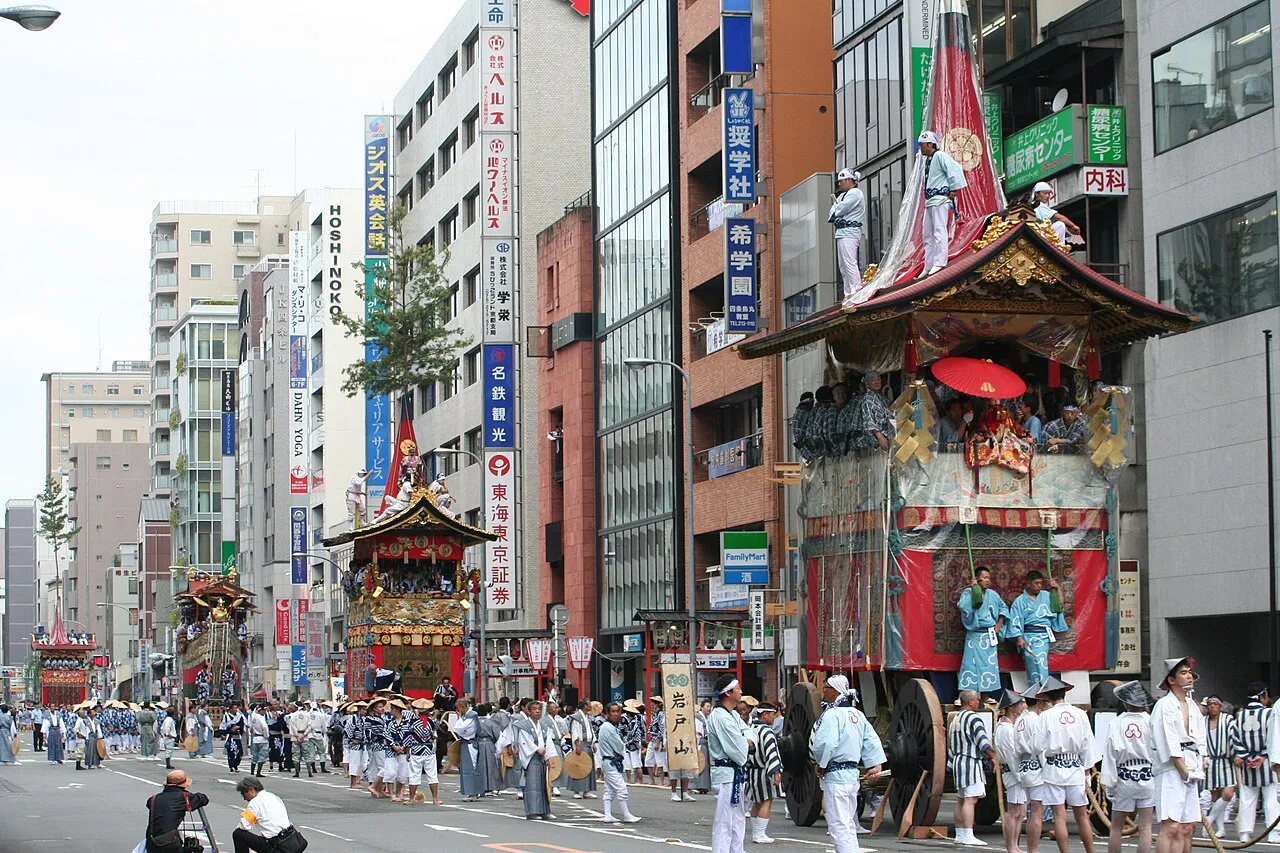
  • Yamaboko — the towering floats of Kyoto’s Gion Matsuri, with a tall spear-like pole on top, assembled before the festival and taken apart right after the parade, because they gather up the spirits of disease and carry them out of the city.
  • Yatai — floats with a roof, often carrying musicians, as in Takayama. (The same word also means a food stall.)
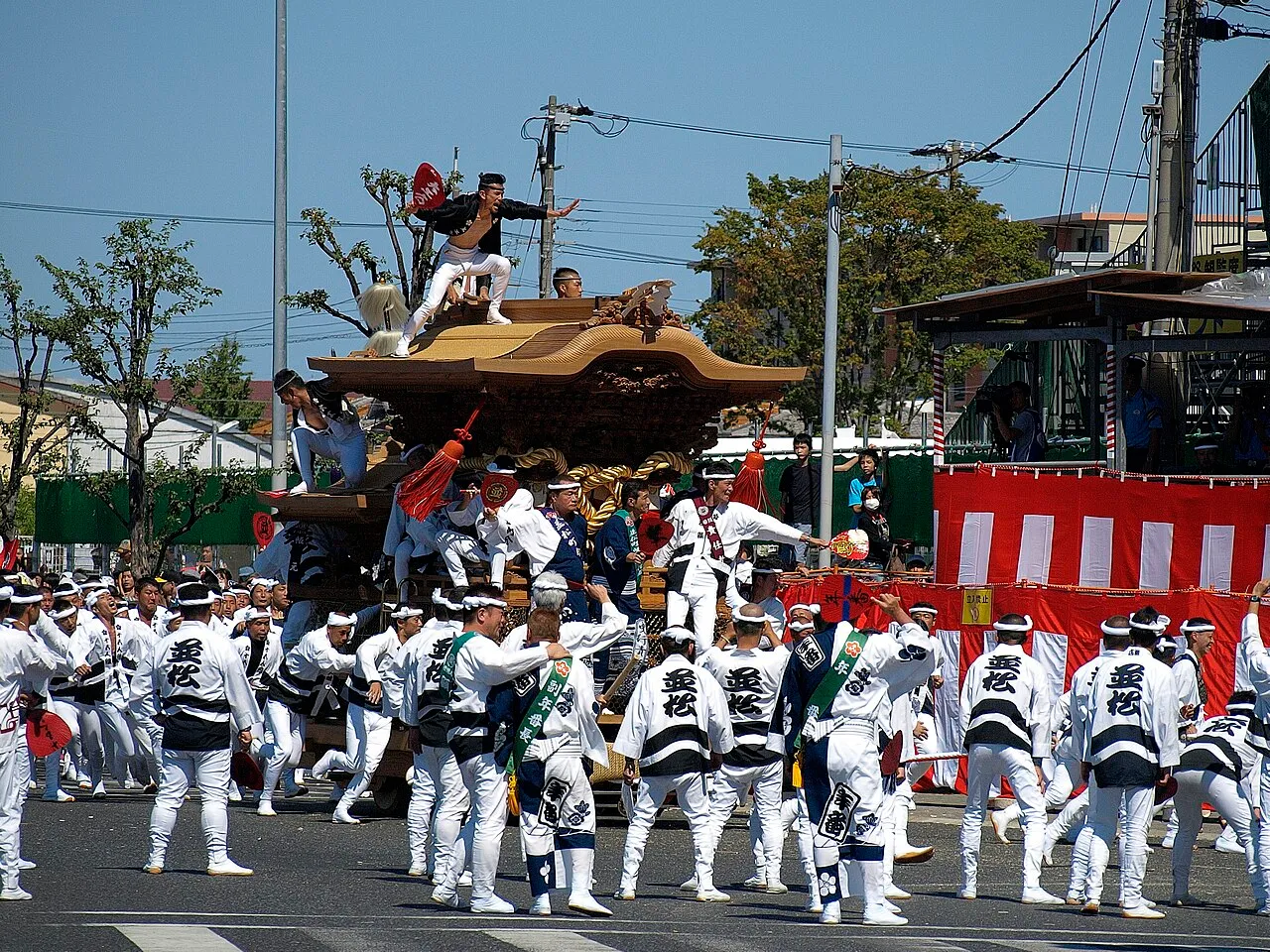
  • Danjiri — heavy carved wooden carts of the Osaka area, hauled at a run and swung around corners at Kishiwada.
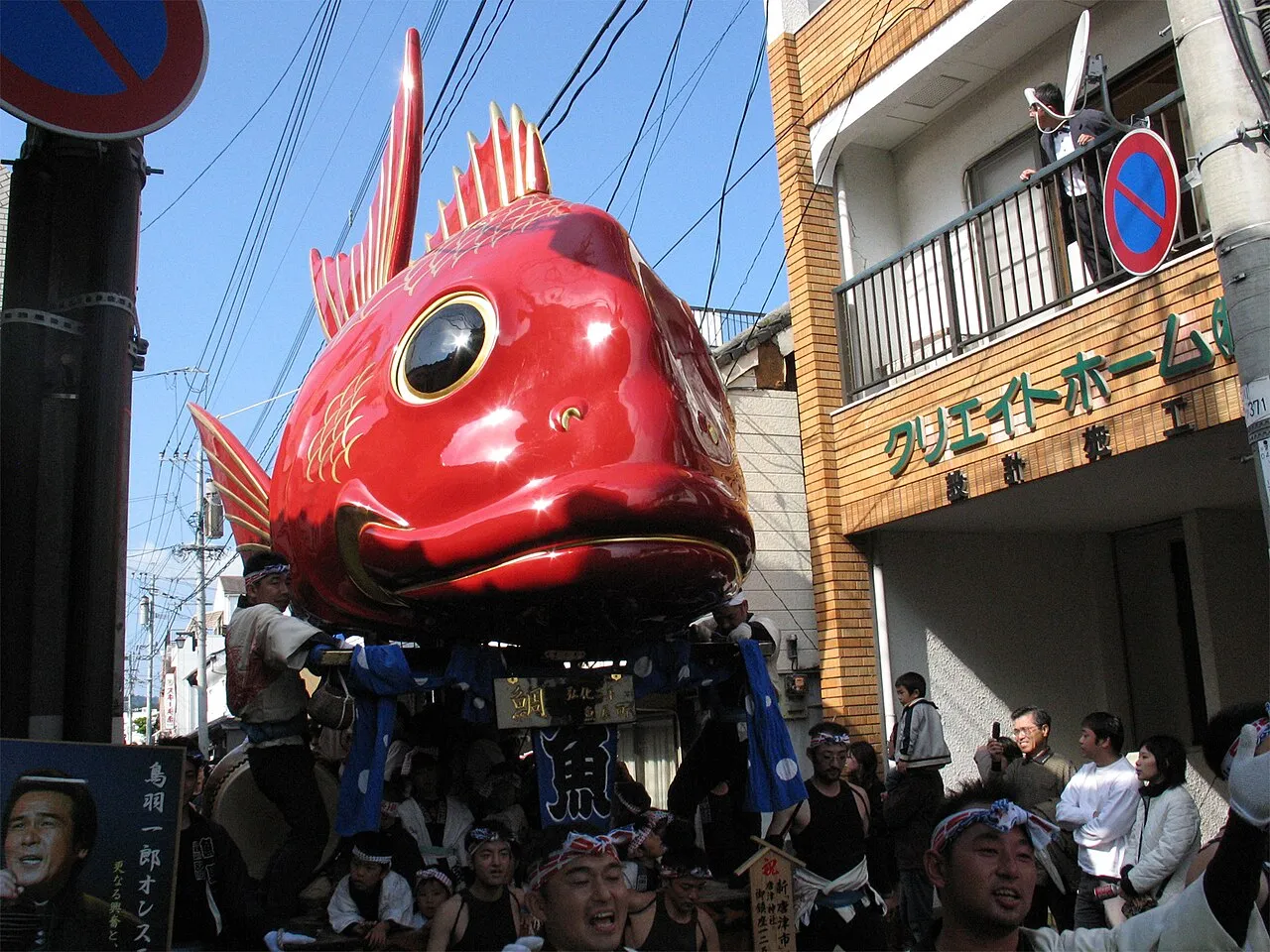
  • Hikiyama — “pulled mountains”, the name used in many towns, such as Karatsu.
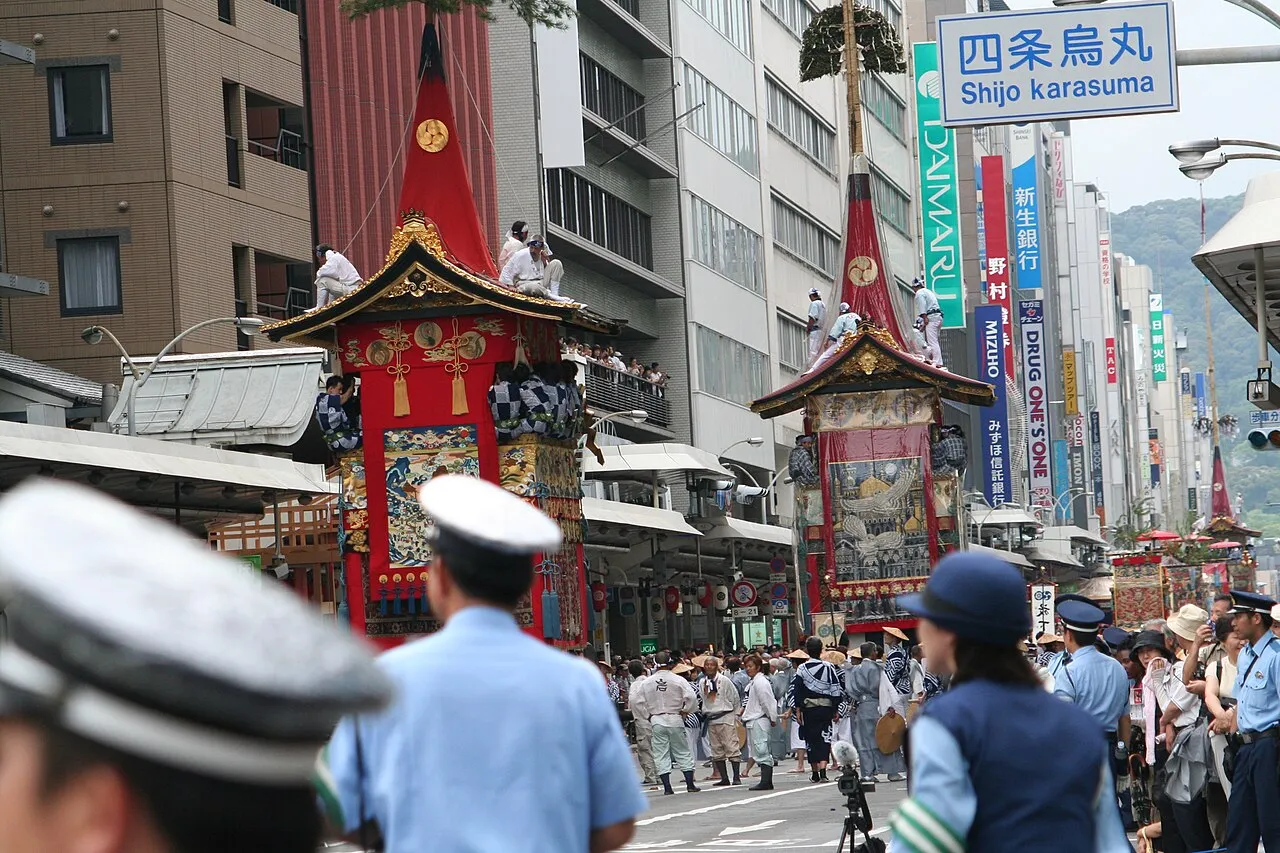
Two tall red hoko floats move along Shijō Street at the Shijō Karasuma intersection, with crowds and police lining the road.
Hoko floats at Shijō Karasuma, July 17, 2009. Photo: Corpse Reviver, CC BY 3.0. Source
A wooden danjiri cart with a man standing on its roof, pulled by a team in white and black happi coats.
A danjiri on the streets of Kishiwada, September 20, 2009. Photo: Kounosu, CC BY-SA 3.0. Source
A giant red sea bream float with a staring eye rises above a crowd in a narrow street.
The Tai (sea bream) float at Karatsu Kunchi, November 3, 2005. Photo: MC MasterChef, CC BY-SA 2.5. Source

Many floats are works of art, covered in carving, lacquer, metalwork and embroidered hangings, and are owned and cared for by their neighbourhoods for centuries. At Takayama and Inuyama, karakuri, mechanical puppets worked by hidden strings, perform on the top tier. Several towns keep real floats on show all year in museums; the festival pages list them under “Around the festival”.
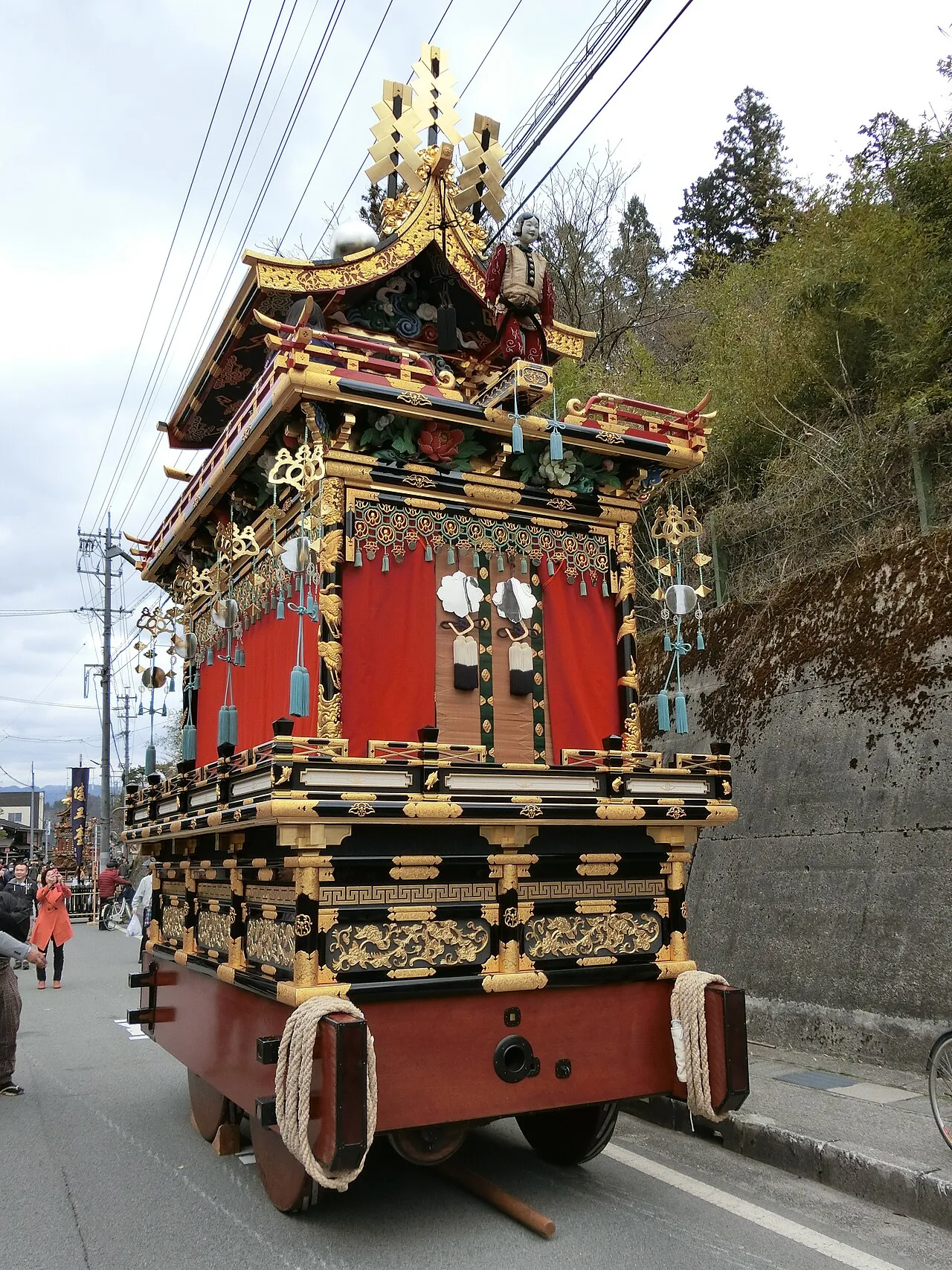
The tall red and gold Kongō-tai float in a Takayama street.
The Kongō-tai float during the spring festival, April 14, 2018. Photo: 大野 一将, CC0. Source

Music: hayashi

Floats and mikoshi move to hayashi, festival music of flutes, drums and small gongs. Each festival has its own tunes. In Kyoto, the slow Gion-bayashi played on the floats is the sound of July; in Chichibu, drummers inside the floats play at full force as teams haul them up a steep slope.

Lanterns and light

Many of the most famous festivals happen at night:

  • Nebuta — in Aomori, huge figures of painted paper over a frame, lit from inside, are pulled through the streets.
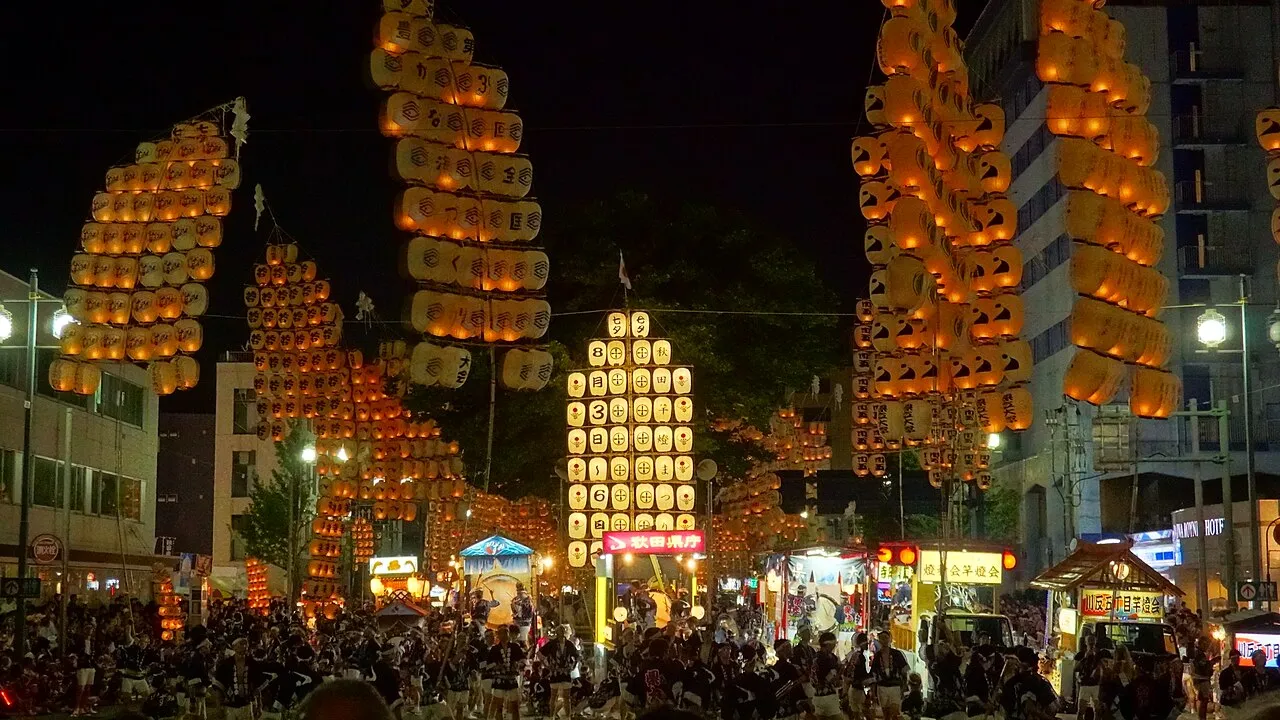
  • Kantō — in Akita, performers balance tall bamboo poles hung with dozens of lit lanterns on their palms, foreheads and shoulders.
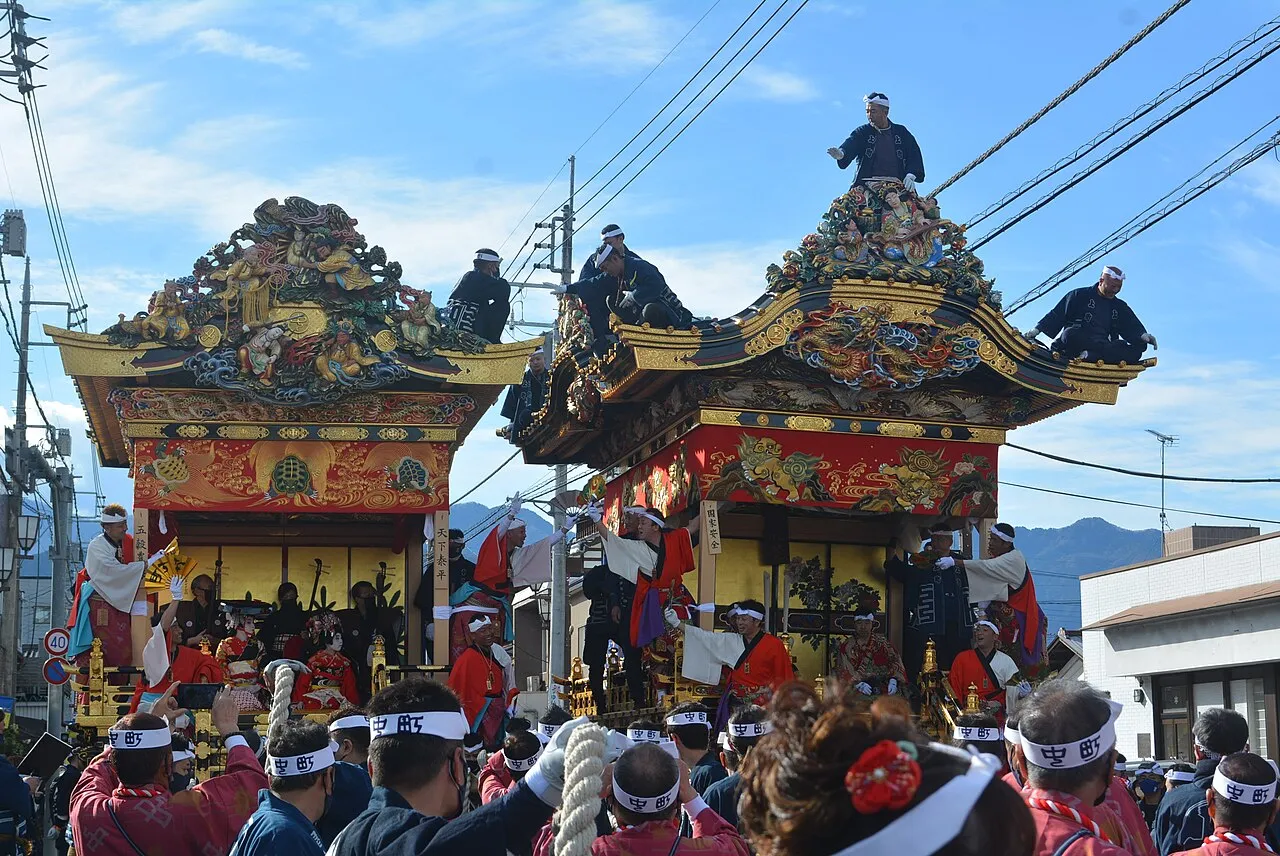
  • Lantern floats — at Chichibu and many other night festivals, floats glow with paper lanterns.
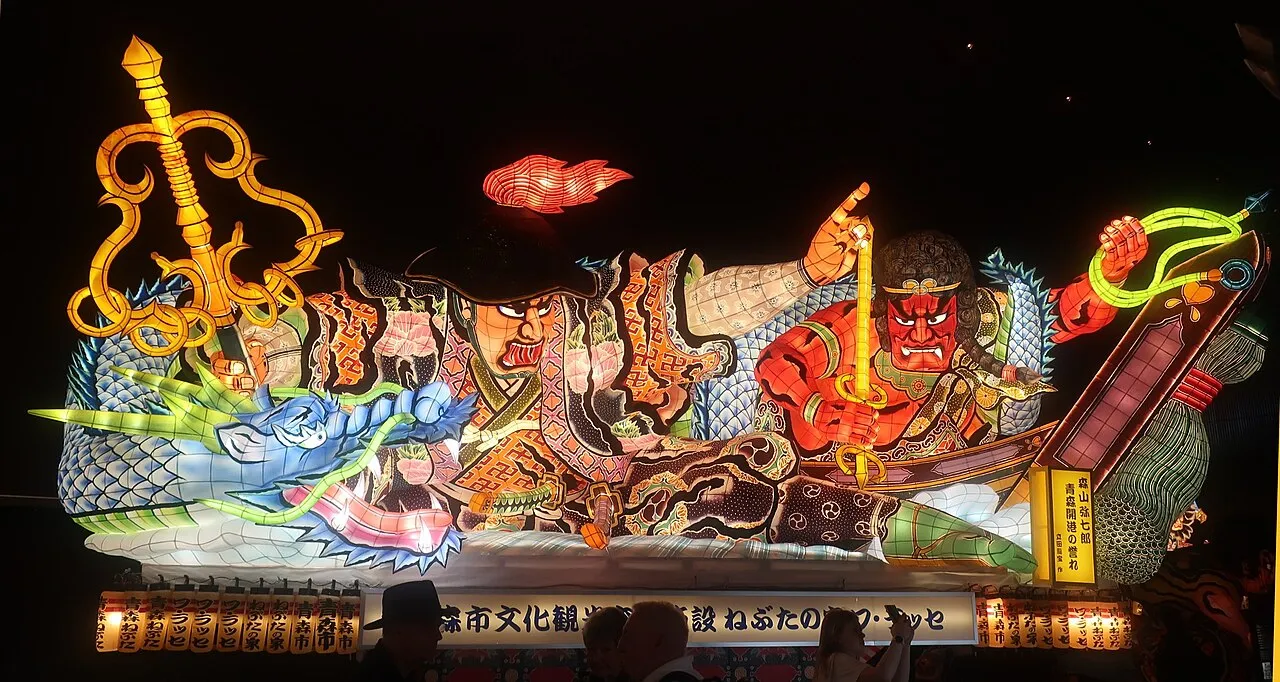
A giant illuminated nebuta float of a red-faced warrior and a dragon, glowing against the night.
A large nebuta float at the 2025 Aomori Nebuta Matsuri. Photo: Hiart, CC0. Source
Dozens of tall bamboo poles hung with glowing lanterns rise above a crowd on Kantō Ōdōri at night.
Kantō poles raised over Kantō Ōdōri, August 3, 2019. Photo: 掬茶, CC BY-SA 4.0. Source
The Nakamachi and Kamimachi yatai floats, carved and lacquered, with crew members riding on their roofs above a crowd in festival coats.
The Nakamachi and Kamimachi floats in the streets of Chichibu, December 2, 2022. Photo: Katorisi, CC BY 4.0. Source

Fire

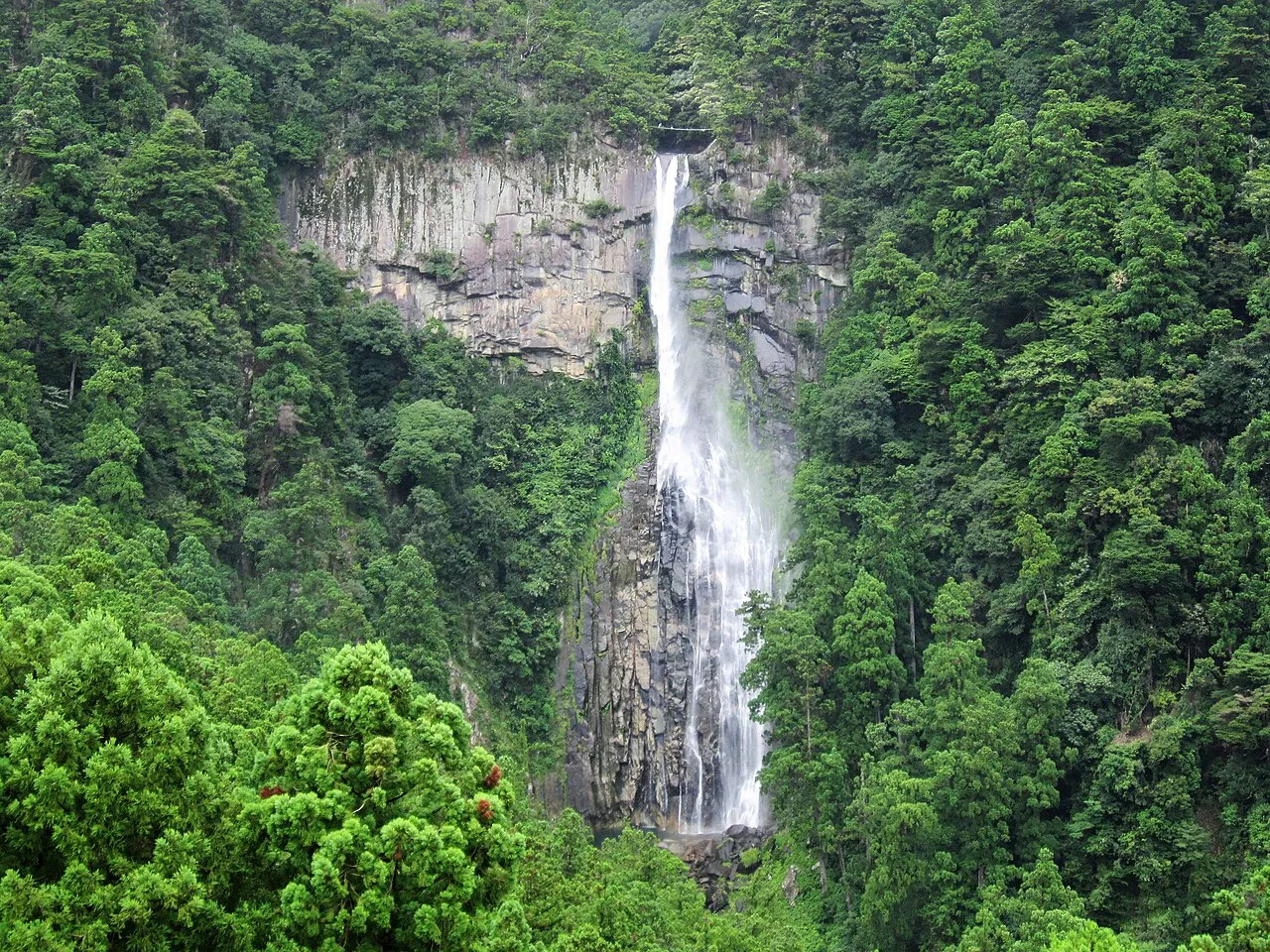
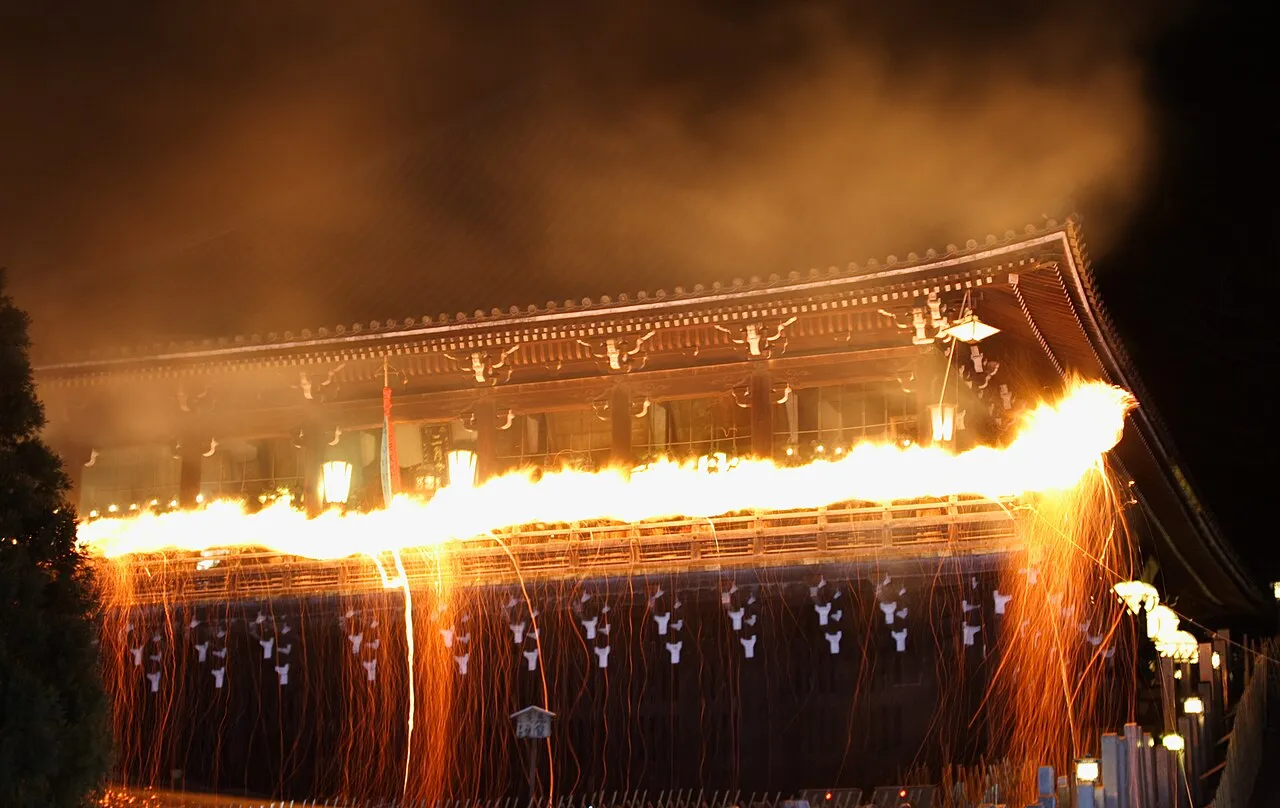
Fire purifies. At the Kurama Fire Festival, villagers carry blazing pine torches, taimatsu, through the streets of a mountain village; at Nachi, giant torches meet the fan-decorated mikoshi on the steps below the waterfall; at Tōdai-ji’s Omizutori, embers rain down from torches carried along the balcony of a hall.
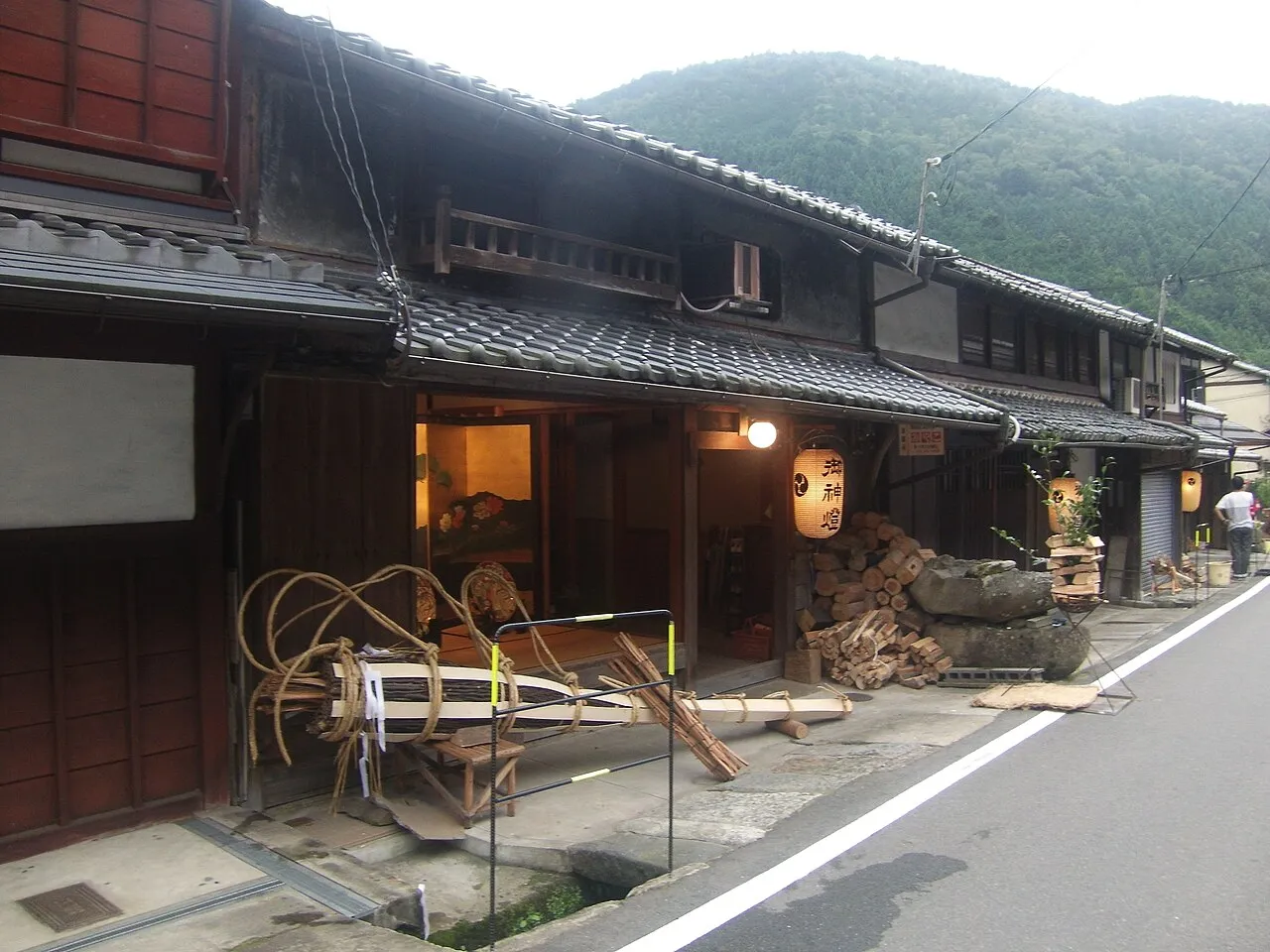
Large pine torches stand ready outside old wooden houses on the village street of Kurama.
Torches prepared outside houses in Kurama on the day of the Fire Festival, October 22, 2016. Photo: Indiana jo, CC BY-SA 4.0. Source
A torch blazes along the balcony of Nigatsu-dō Hall at night, showering sparks down the wooden walls.
An otaimatsu torch on the balcony of Nigatsu-dō, Tōdai-ji, March. Photo: ignis, CC BY-SA 3.0. Source

Dances and rites for the kami

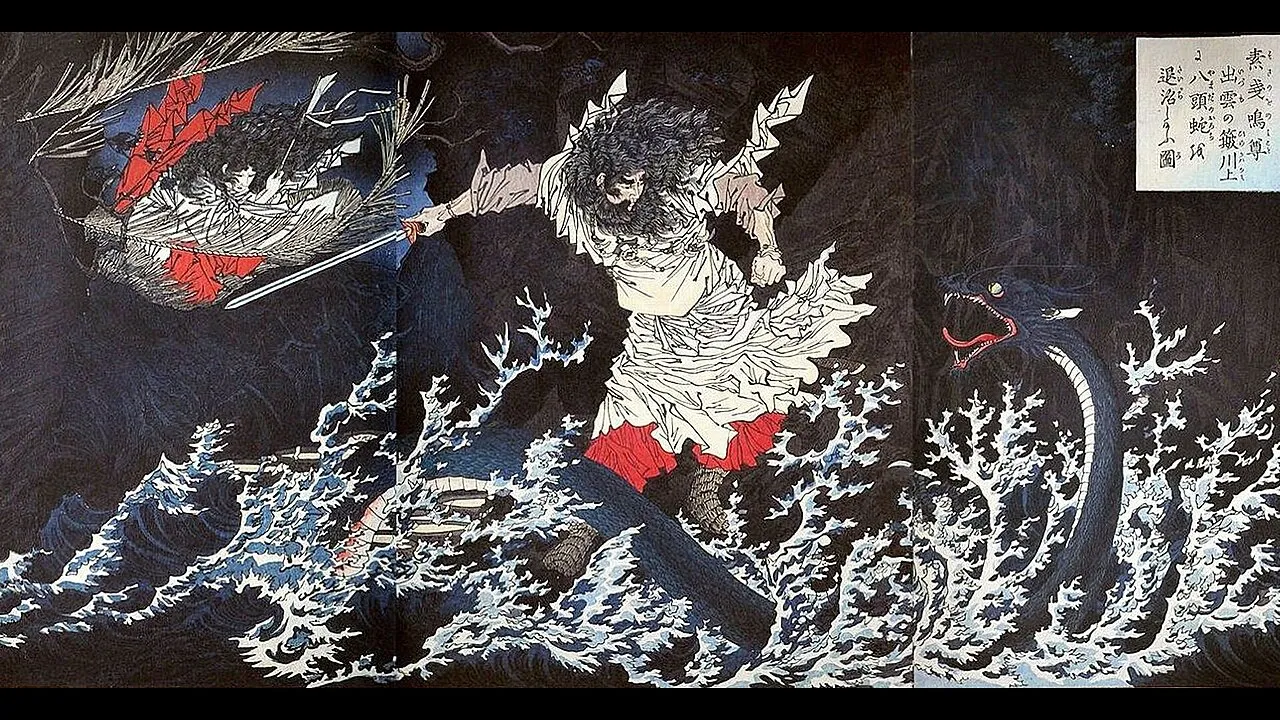
  • Kagura — sacred music and dance performed for the kami, often retelling myths.
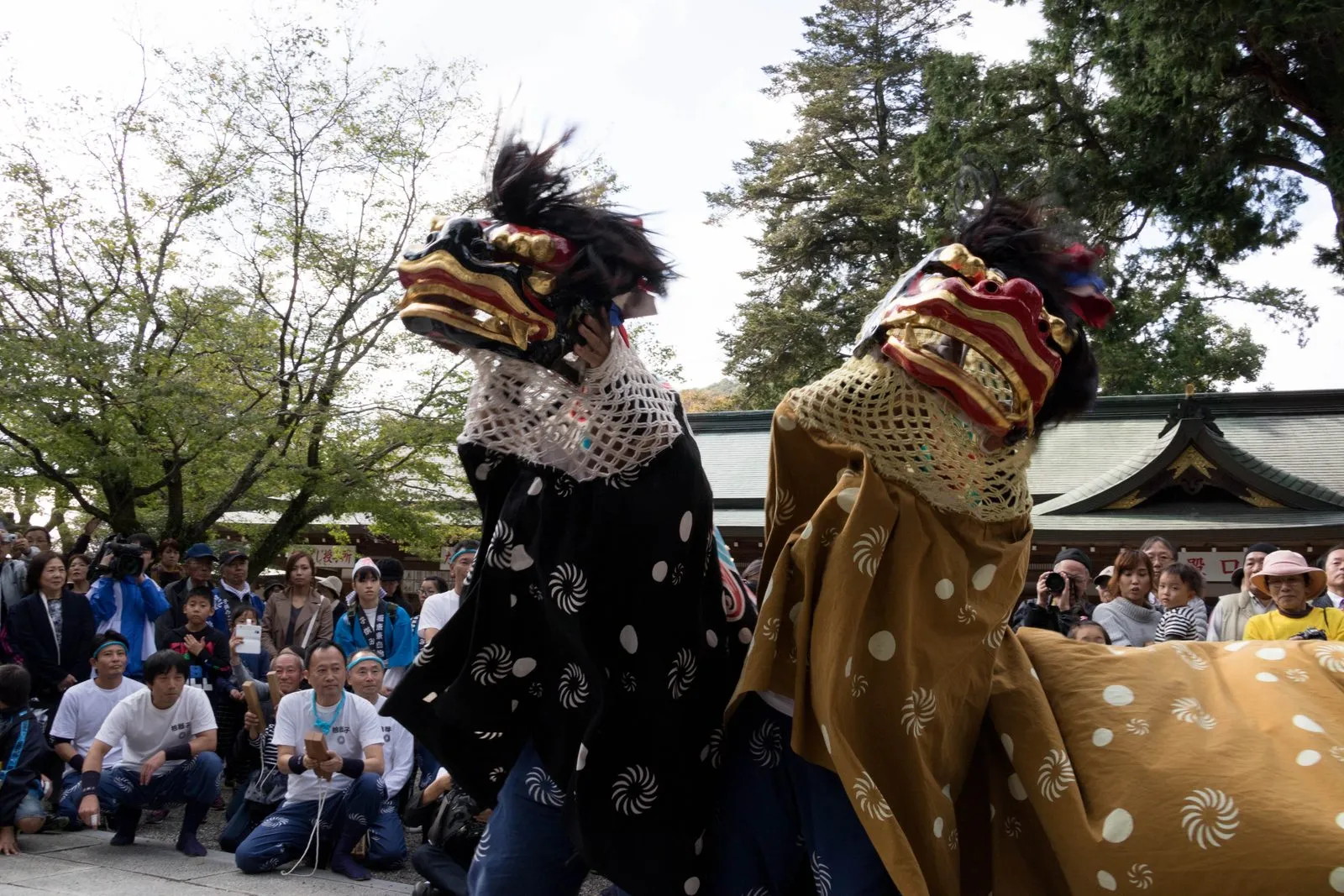
  • Shishimai — the lion dance, in which dancers inside a lion costume with a large wooden head drive away evil.
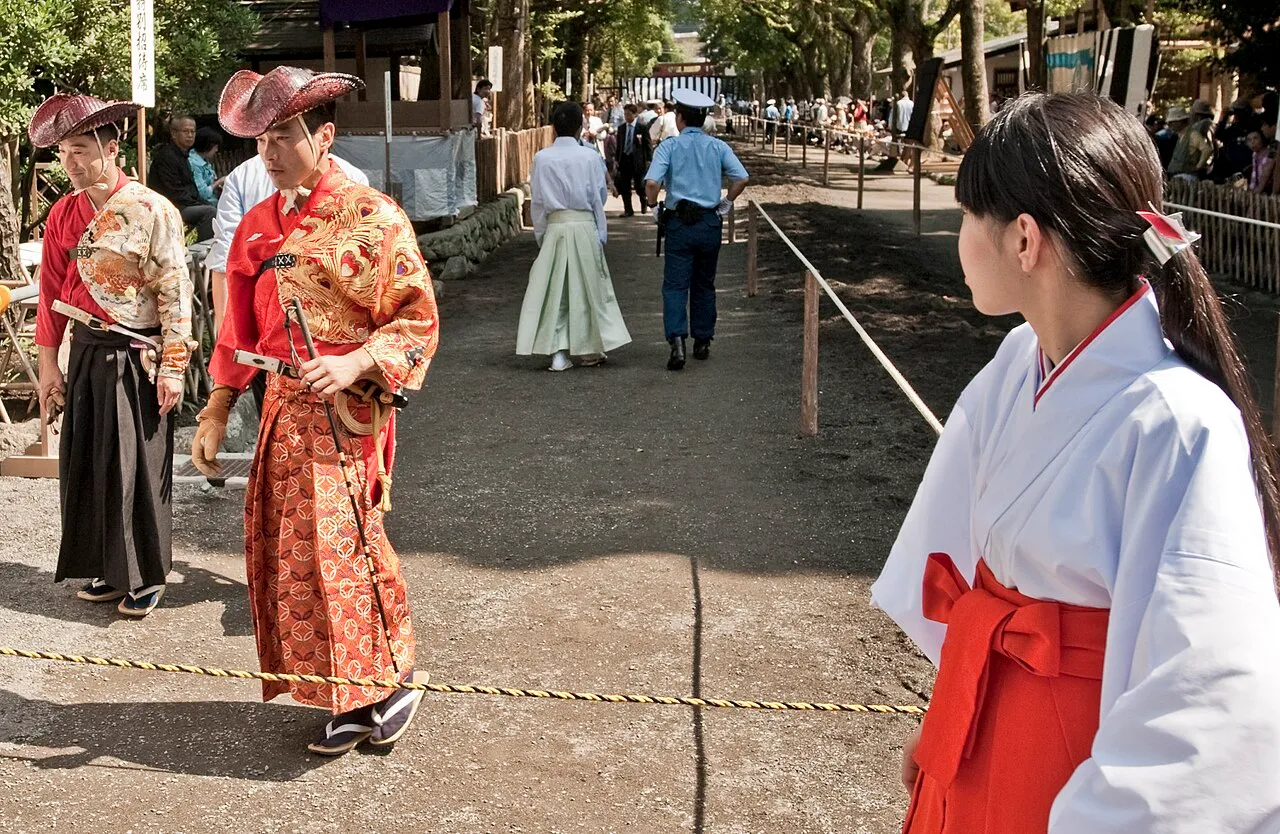
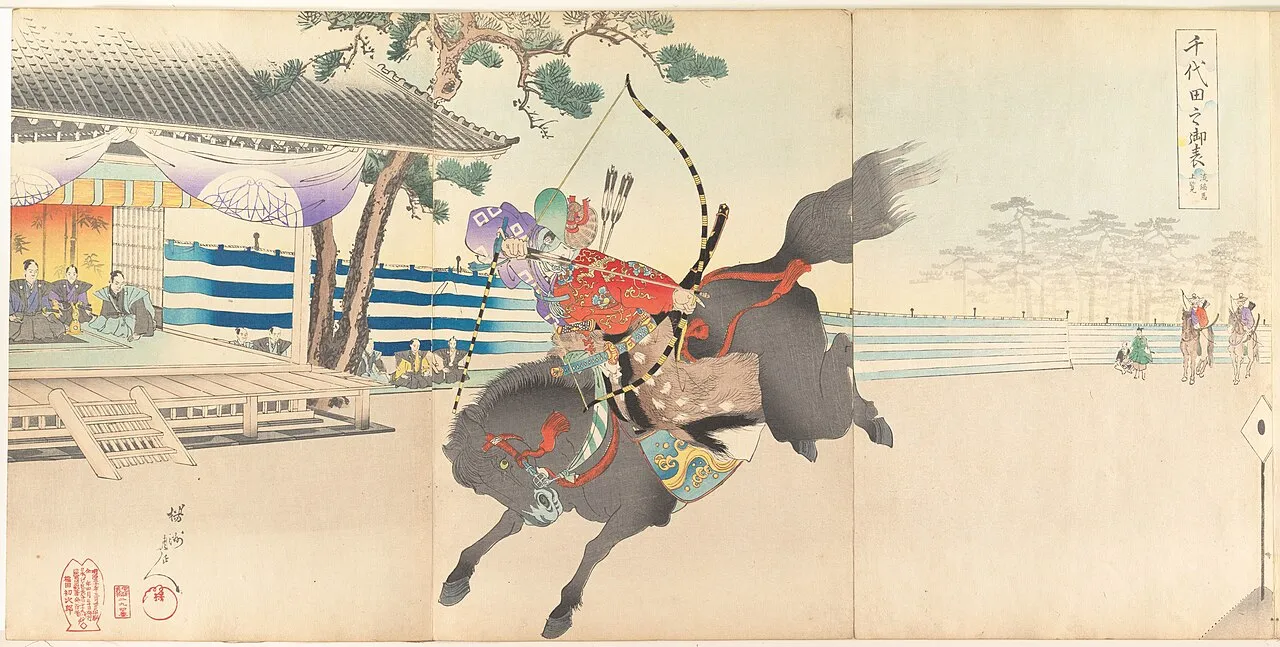
  • Yabusame — mounted archery, offered at Hachiman shrines and others.
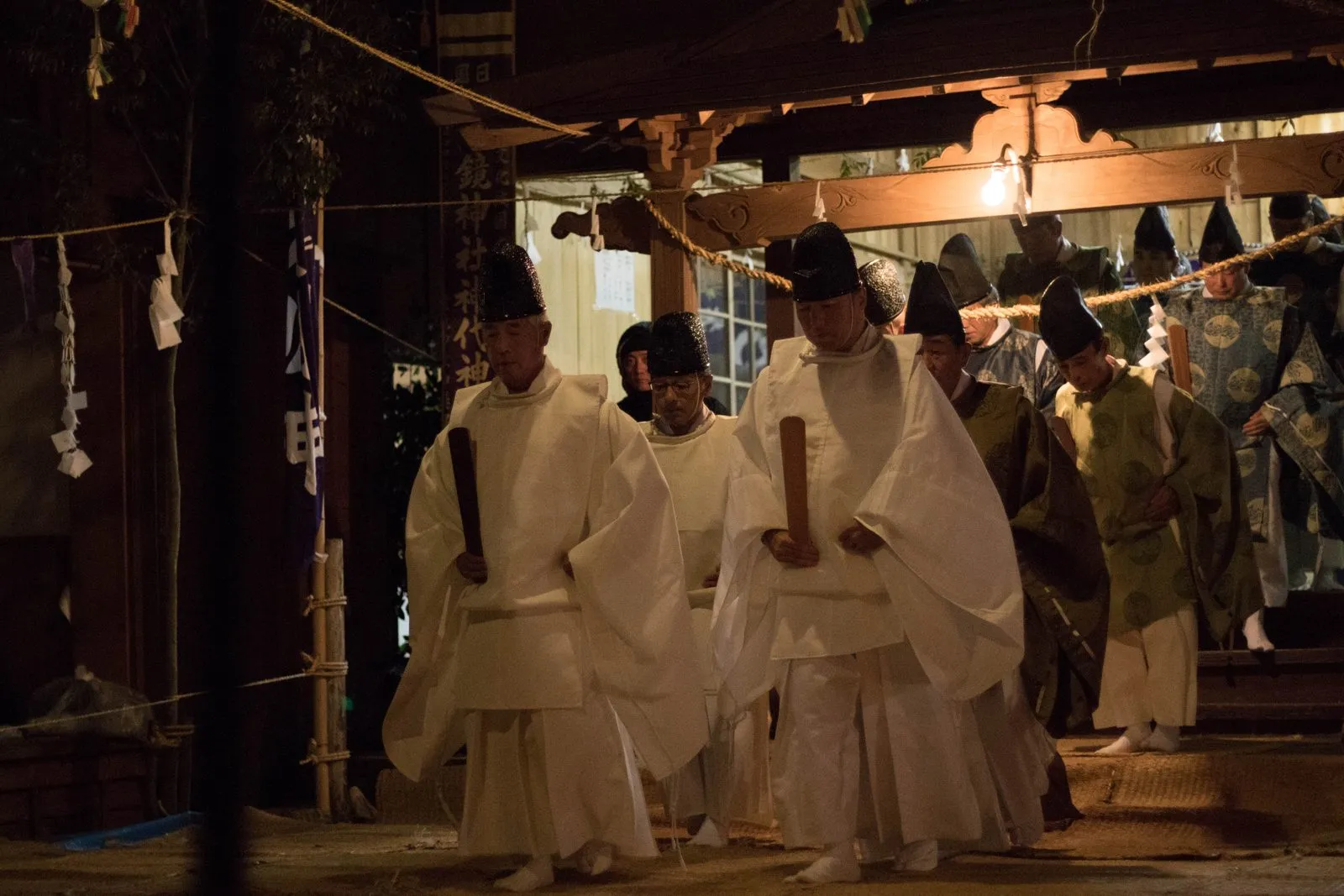
Performers in white robes and tall black hats dance inside a dim wooden shrine hall.
Kagura performed in the hall of Shiromi Shrine. Photo: Nippon Matsuri Network (matsuri-stream.jp), CC BY 4.0. Source
Two lions with large black and gold heads dance in front of a crowd in the shrine grounds.
The Hinoki lion dance at Ōasahiko Shrine. Photo: Nippon Matsuri Network (matsuri-stream.jp), CC BY 4.0. Source
Archers in red hunting robes and wide hats walk along the yabusame track lined with spectators.
Archers on the track before the yabusame at Tsurugaoka Hachimangū, September 16, 2009. Photo: Urashimataro, Public domain. Source

Next time you see a procession, ask the three questions that explain most festivals: where is the kami, where is it going, and what is being offered to it?
Festivals in this guide

Plan your visit

Third weekend of May (Friday to Sunday) · Tokyo · ★

Sanja Matsuri

Asakusa's wild three-day festival, when about 100 portable shrines are bounced and chanted through the streets around Sensō-ji.

July 1–31 · Kyoto · ★

Gion Matsuri

A month-long summer festival in Kyoto, over 1,100 years old, where giant wooden floats roll through the city to keep plague away.

April 14–15 · Takayama · ★★★

Takayama Spring Festival

In an old merchant town in the Japanese Alps, twelve ornate floats line the streets, mechanical puppets perform, and lanterns glow on the floats at night.

Weekend before Respect for the Aged Day (mid-September) · Kishiwada · ★★

Kishiwada Danjiri Matsuri

Four-tonne carved wooden carts are hauled at a run through the streets of Kishiwada and swung around corners, with a man dancing on the roof.

August 2–7 · Aomori · ★★★

Aomori Nebuta Matsuri

Giant glowing paper floats of warriors, gods and demons roll through Aomori at night, surrounded by thousands of leaping dancers that anyone can join.

August 3–6 · Akita · ★★★

Akita Kantō Matsuri

Performers balance tall bamboo poles hung with dozens of lit lanterns on their palms, foreheads, shoulders and hips, filling a whole avenue with swaying light.

October 22 · Kyoto · ★★

Kurama Fire Festival

On a single October night, villagers in a mountain valley north of Kyoto carry blazing pine torches through their narrow streets, chanting “Sairei, sairyō!”

July 14 · Nachikatsuura · ★★★

Nachi Fire Festival

Twelve huge burning torches are carried down the stone steps beside Japan's highest single-drop waterfall to purify the path of the gods.

Kami you’ll meet

Who is worshipped there

Words you’ll hear

Glossary

Mikoshi神輿

A portable shrine. During the festival the kami rides inside while people carry it through the neighborhood.

Otabisho御旅所

The kami's temporary lodging during a festival, often in the busiest part of town.

Dashi山車

A general word for a festival float that is pulled through the streets.

Yamaboko山鉾

The general name for the Gion Matsuri floats, both the tall hoko and the smaller yama. Listed as UNESCO Intangible Cultural Heritage.

Danjiriだんじり

A heavy carved wooden festival cart pulled at speed by teams with ropes, famous in the Osaka region.

Yatai屋台

A festival float with a roof, often carrying musicians or a small stage. The same word also means a street food stall.

Karakuriからくり

Mechanical puppets worked by strings and springs, performed on top of festival floats in towns such as Takayama.

Gion-bayashi祇園囃子

The festival music of flutes, drums and small gongs, often called kon-chiki-chin after its sound.

Nebutaねぶた

A huge float of painted paper over a frame, lit from inside, paraded at night in Aomori.

Taimatsu松明

A torch made from bundled wood or bamboo. Giant taimatsu are the centerpiece of fire festivals such as the Omizutori.

Shishimai獅子舞

A lion dance, in which dancers inside a lion costume with a large wooden head perform to drive away evil and bring good fortune.

Kagura神楽

Sacred music and dance performed for the kami. Many forms retell myths, above all the story of Amaterasu and the rock cave.

Sources

References

  • Kokugakuin University, Encyclopedia of Shinto: “Shin'yo (mikoshi)”, https://d-museum.kokugakuin.ac.jp/eos/detail/?id=9632
  • Kokugakuin University, Encyclopedia of Shinto: “Dashi”, https://d-museum.kokugakuin.ac.jp/eos/detail/?id=9614
  • Kokugakuin University, Encyclopedia of Shinto: “Shinkōsai”, https://d-museum.kokugakuin.ac.jp/eos/detail/?id=9316
  • Each festival's own page on this site lists its official sources.

Last checked 2026-10-17.