Japan Festival Atlas
Guides / New Year in Japan

New Year in Japan, from temple bells to the first shrine visit

New Year is Japan's biggest holiday. Here is what happens from New Year's Eve to the first days of January, where to hear the temple bells, and how to plan around the closures.

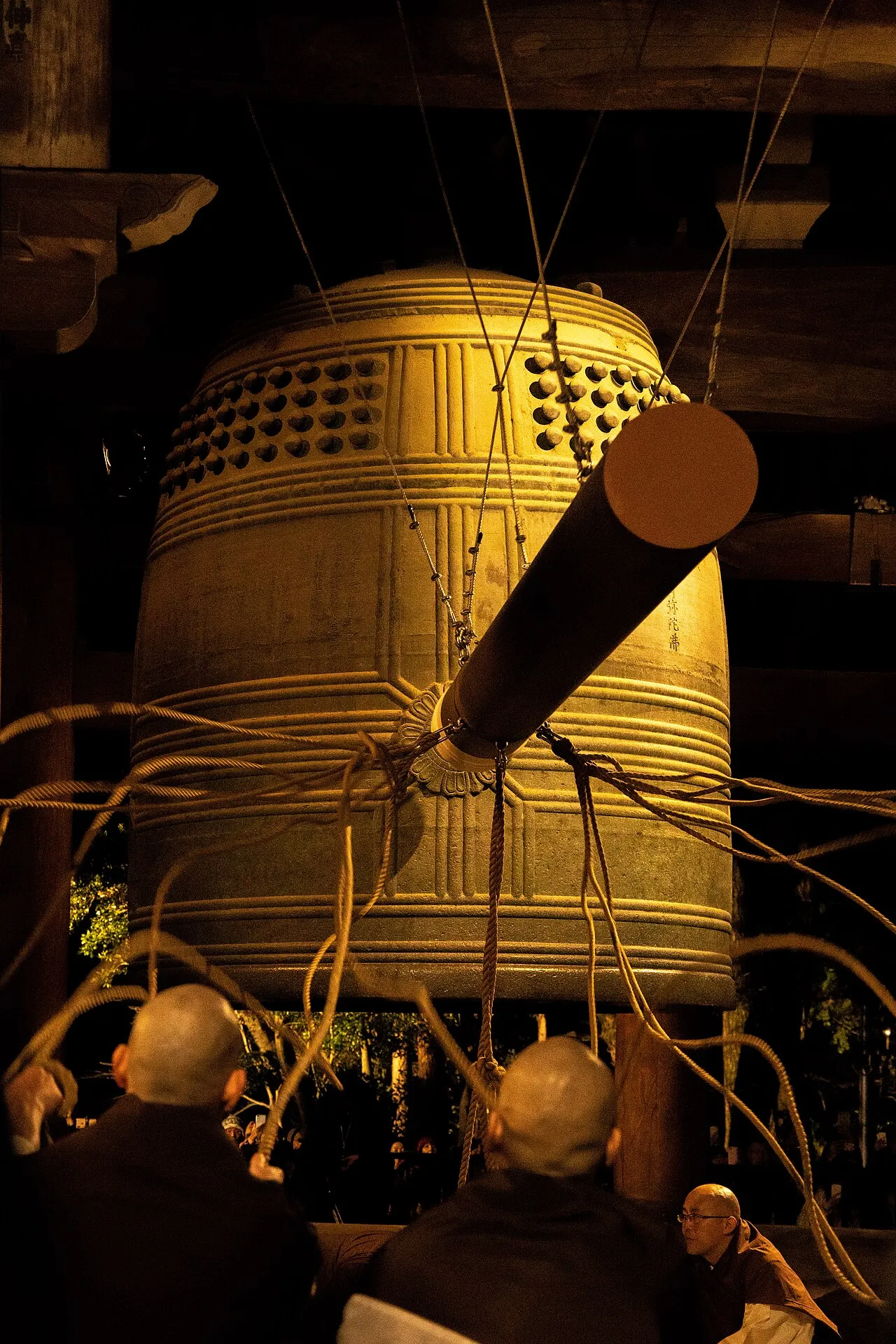
A huge bronze temple bell hangs in a dark bell tower, with a thick wooden log and ropes ready to strike it.
The great bell of Chion-in, Kyoto, on New Year's Eve 2019. Photo: Leung Ming Ho (Michael), CC BY-SA 4.0. Source

Why New Year matters

For most people in Japan, New Year, shōgatsu, is the most important time of the year: a time to close the old year cleanly and start the new one with luck. Families gather, homes are cleaned, doors are decorated with pine and straw rope, and almost everyone visits a shrine or temple in the first days of January.
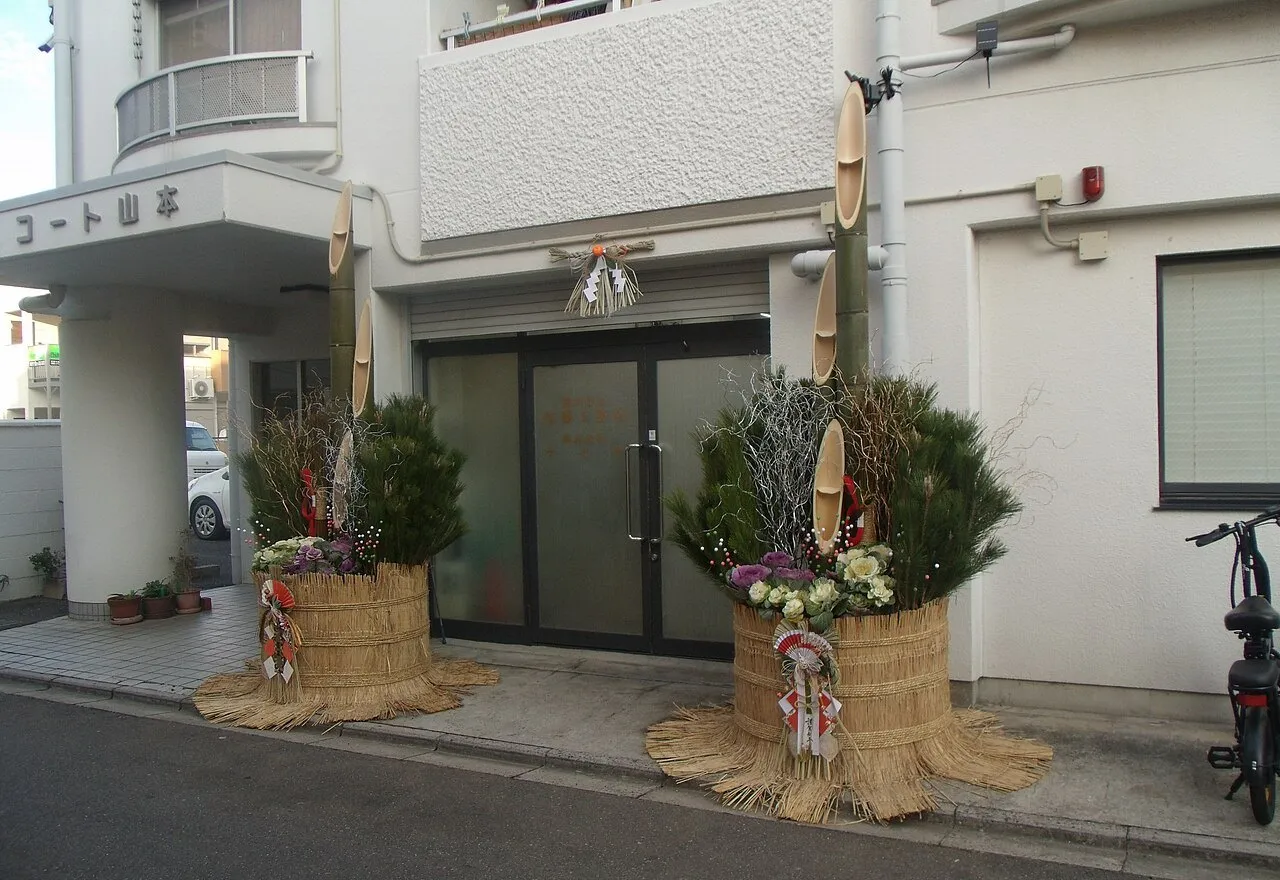
A pair of New Year decorations of cut bamboo, pine and ornamental cabbage in straw-wrapped bases, either side of a doorway with a sacred straw rope above.
Kadomatsu pine-and-bamboo decorations at a building entrance, Kadoma, Osaka Prefecture, December 28, 2023. Photo: Mr.ちゅらさん, CC0. Source

For visitors, it is a wonderful time to see Japanese traditions up close, but also a time when many things close. A little planning goes a long way.

New Year’s Eve (December 31)

  • Toshikoshi soba. People eat buckwheat noodles on the evening of December 31. The long noodles are said to stand for a long life, and they are easy to cut, like the troubles of the old year.
  • Joya no kane. Around midnight, temples across Japan ring their great bells 108 times, one for each worldly desire in Buddhist teaching. At Chion-in in Kyoto, a team of monks swings the log that strikes one of Japan’s largest bells. Some temples let visitors take a turn; queues start well before midnight.
  • Okera Mairi. At Yasaka Shrine in Kyoto, visitors light a rope from the shrine’s sacred fire and swing it in circles to keep it glowing on the way home. The fire was once used to light the first cooking fire of the new year.
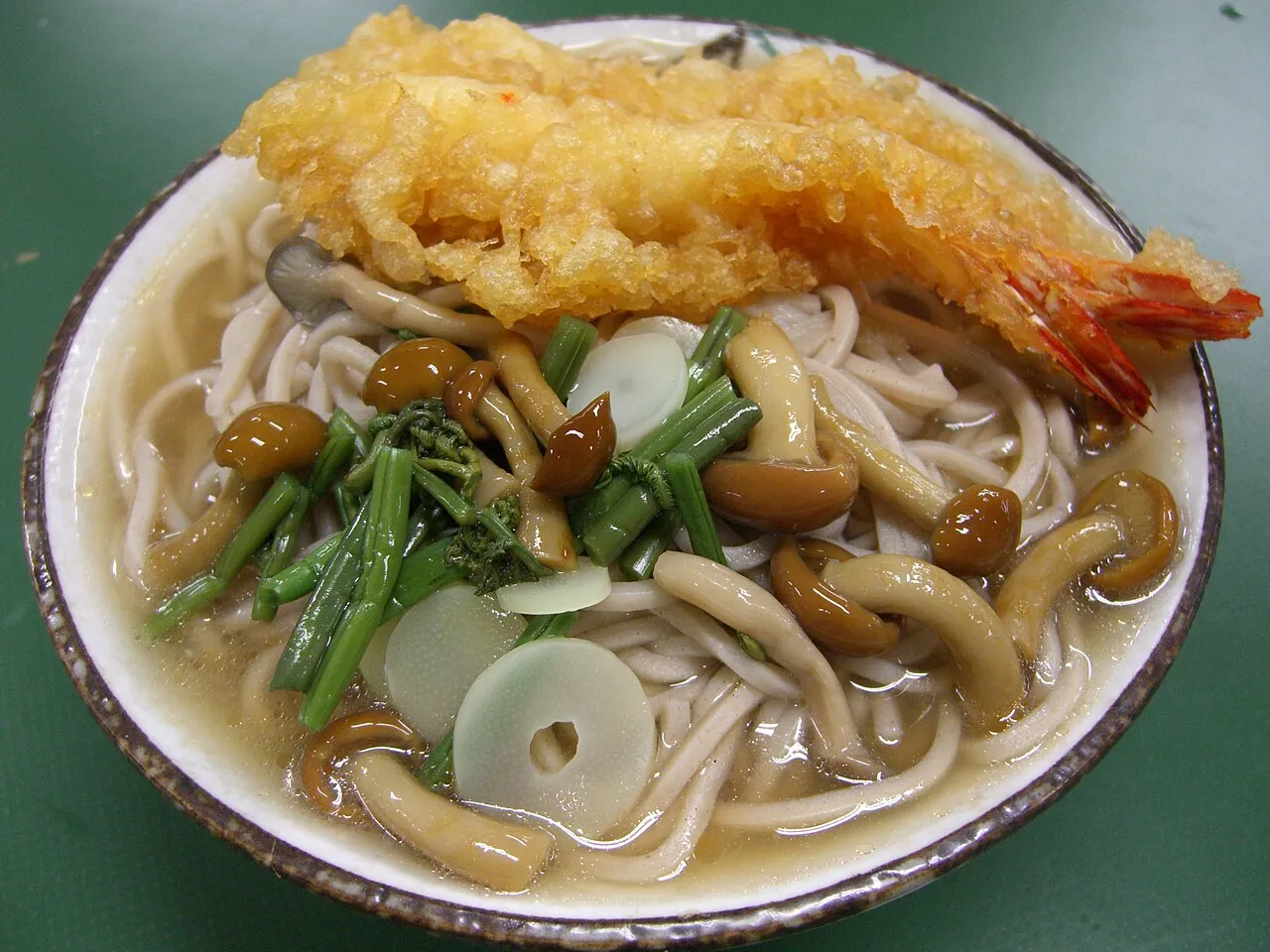
A bowl of buckwheat noodles in broth topped with a large prawn tempura, mushrooms and mountain greens.
Toshikoshi soba with prawn tempura, eaten on New Year's Eve, 2006. Photo: Kiyonobu Ito, CC BY 2.0. Source

The first days of January

  • Hatsumōde. The first shrine or temple visit of the year, made by tens of millions of people between January 1 and 3. Read our guide to hatsumōde for how to pray, buy charms and draw a fortune.
  • Hatsuhinode. Some people stay up or rise early to watch the first sunrise of the year from a mountain, the coast or a tall building.
  • Osechi. Families eat special New Year dishes packed in lacquered boxes, each with a lucky meaning.
  • Fukubukuro. Department stores open on January 1 or 2 with “lucky bags” of goods sold at a discount, and queues form early.
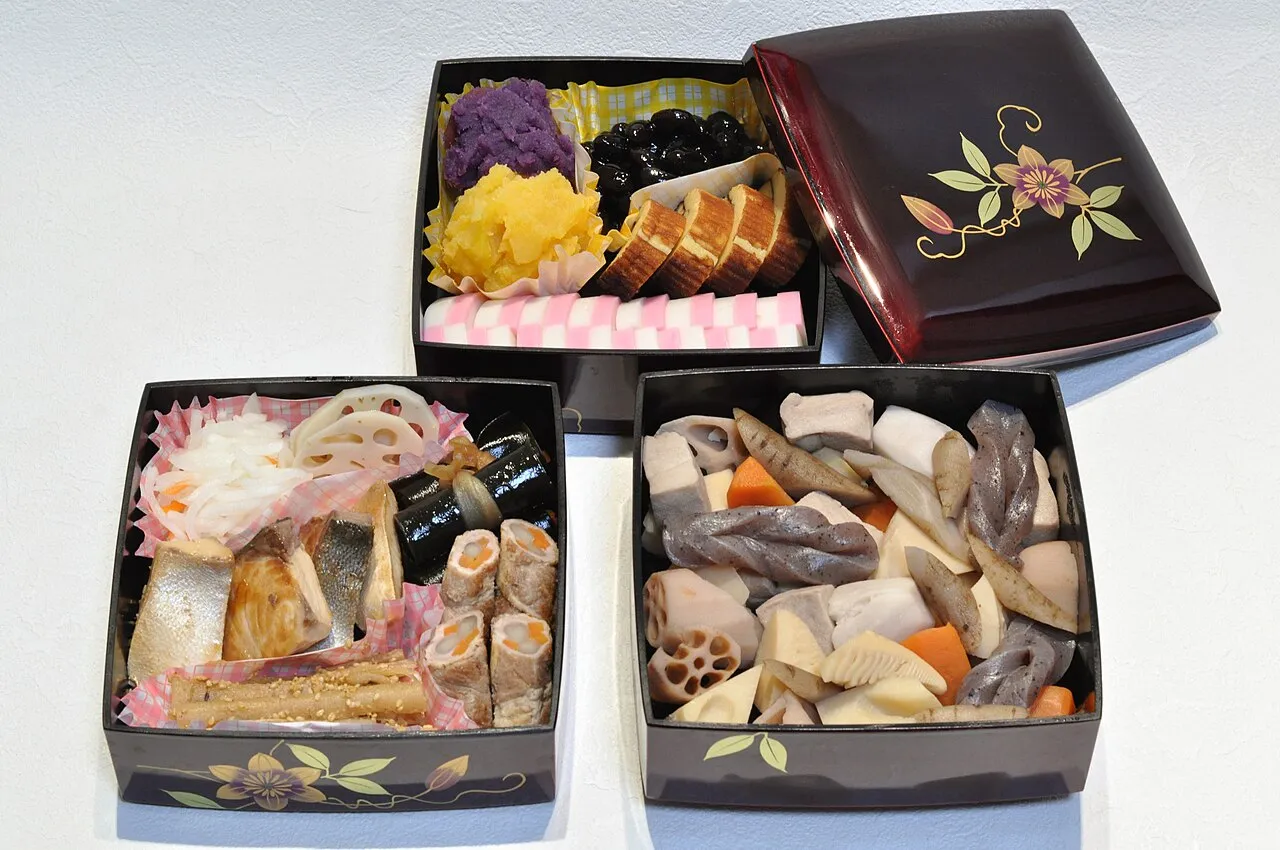
Three lacquered boxes filled with New Year dishes: black beans, rolled omelette, fish cake, sweet potato, simmered root vegetables and fish.
Osechi New Year dishes in lacquered boxes, December 31, 2013. Photo: Ocdp, CC0. Source
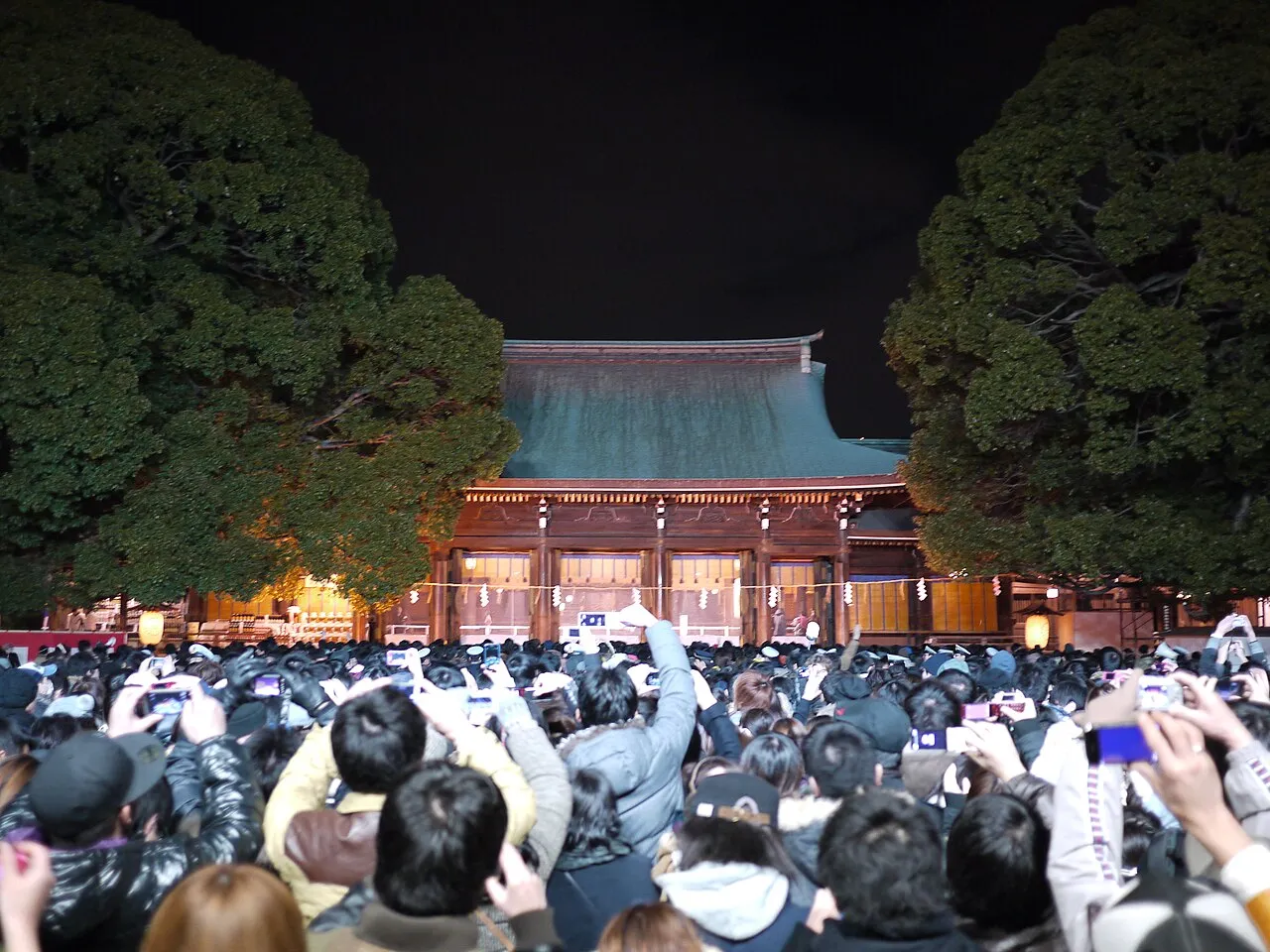
A dense crowd at night, many holding up phones, faces the lit main hall of Meiji Jingū between two large trees.
The New Year crowd at Meiji Jingū, Tokyo, on New Year's night, January 1, 2012. Photo: Yoshikazu Takada, CC BY 2.0. Source

Planning tips

  • Closures. Many museums, restaurants and small shops close from around December 29 to January 3. Big shrines, temples, department stores and convenience stores stay open.
  • Transport. Trains and flights are very full around December 29–30 and January 2–4. Some city train lines run extra trains late on New Year’s Eve; check before you go.
  • Crowds. Famous shrines can mean an hour of queuing on January 1. From January 4, it is much calmer and the decorations are still up.
  • Book early. Hotels in Kyoto and Tokyo raise prices for the New Year week. Book two to three months ahead.
Festivals in this guide

Plan your visit

Words you’ll hear

Glossary

Hatsumōde初詣

The first visit of the year to a shrine or temple, usually made between January 1 and 3 to pray for the year ahead.

Omikujiおみくじ

A paper fortune drawn by lot at a shrine or temple. Bad fortunes are tied to a rack so the bad luck stays behind.

Omamoriお守り

A small cloth charm sold at shrines and temples for protection, health, safe travel or success. Keep it closed and carry it with you.

Ofudaお札

A paper or wooden talisman from a shrine, kept in the home for protection and returned to be burned after a year.

Shimenawa注連縄

A thick rope of rice straw, often hung with zigzag paper strips, that marks a sacred boundary at a shrine, a tree or a rock.

Torii鳥居

The gate at the entrance to a shrine. Passing through it means stepping from the everyday world into a sacred space.

Hagoita羽子板

A wooden paddle for a New Year shuttlecock game. Decorated hagoita are sold as lucky charms.

Sources

References

  • Yasaka Shrine: Okera Mairi.
  • Chion-in: New Year's Eve bell ringing.
  • Japan National Tourism Organization: New Year in Japan.
  • Our guide to hatsumōde lists the shrine sources for the first visit of the year.

Last checked 2026-10-19.