What hatsumōde is
New Year is the most important holiday in Japan. Families gather, businesses close for the first three days of January, and almost everyone makes hatsumōde, the first visit of the year to a shrine or temple. People give thanks for the past year, pray for health and luck in the new one, and buy fresh charms to carry with them.
Most people go between January 1 and 3, a period called sanganichi. Visits continue through the first week, and many people go any time before mid-January.
When to go
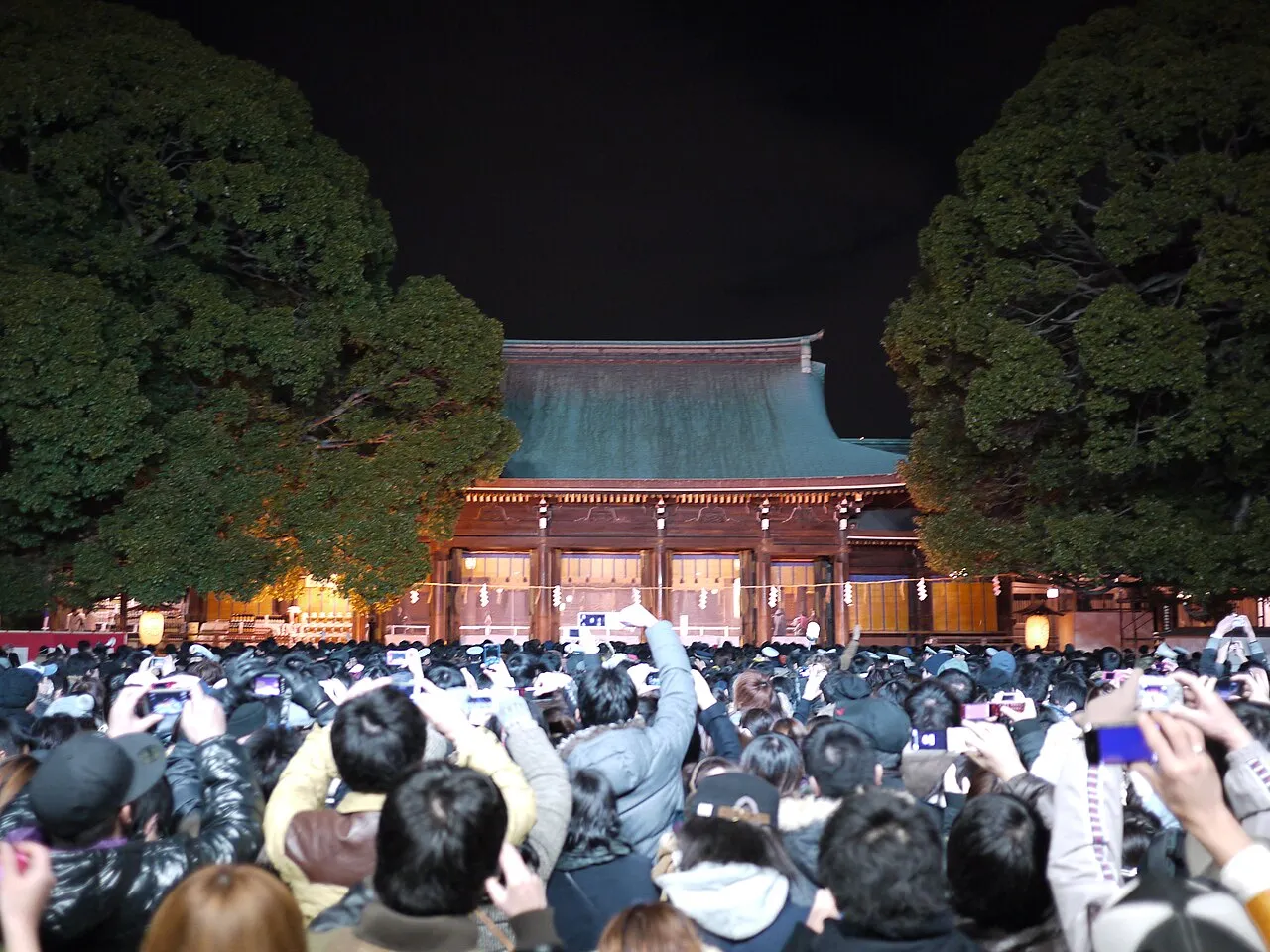
- Midnight on New Year’s Eve. Big shrines stay open all night. Crowds gather to pray as the year turns, while temple bells ring 108 times to clear away worldly desires. It is atmospheric, cold and very crowded.
- January 1 to 3. The busiest days. Famous shrines can mean an hour or more of slow queuing.
- January 4 onward. Much calmer, with the decorations still up and charms still on sale. The best choice if you dislike crowds.
Some train lines run extra or all-night services on New Year’s Eve, but this changes from year to year. Check the operator’s website in December.
How to pray at a shrine
- Bow once at the torii gate before you enter, and walk along the side of the path. The center is said to be the path of the kami.
- Purify yourself at the water basin (temizuya). Take the ladle in your right hand and rinse your left hand, then switch and rinse your right. Pour a little water into your cupped left hand, rinse your mouth, and rinse your left hand again. Do not drink from the ladle or put your lips to it.
- At the hall of worship, drop a coin into the offering box. Five-yen coins are popular because go-en also means “good connection”. If there is a bell rope, ring it.
- Bow twice, clap twice, make your wish, and bow once more. This is the standard at most shrines. A few, such as Izumo Taisha, use four claps.
At a Buddhist temple, the steps are similar but you do not clap. Press your palms together quietly and bow.
Things to buy
- Omikuji: a paper fortune drawn by lot. If it is bad, tie it to the rack at the shrine to leave the bad luck behind.
- Omamori: a small cloth charm for health, study, safe travel or love. Carry it closed.
- Hamaya: a decorated “demon-breaking arrow” sold at New Year to protect the home.
- Ofuda: a paper or wooden talisman to keep in the home.
Return last year’s charms to the shrine at New Year. They are burned in special fires in mid-January, often at events called dondo-yaki.
Where to go
| Shrine or temple | City | Why go |
|---|---|---|
| Meiji Jingū | Tokyo | Japan’s busiest hatsumōde, with about three million visitors in the first three days |
| Sensō-ji | Tokyo | A Buddhist temple in Asakusa with a festive shopping street |
| Fushimi Inari Taisha | Kyoto | The head shrine of Inari, with its tunnels of torii gates |
| Yasaka Shrine | Kyoto | The shrine of Susanoo; on New Year’s Eve visitors carry home a sacred flame on a rope |
| Sumiyoshi Taisha | Osaka | Osaka’s busiest shrine, with a famous arched bridge |
| Dazaifu Tenmangū | Fukuoka | The shrine of Tenjin, packed with students praying for exam success |
Good to know
- Many shops and restaurants close on January 1, and some on the 2nd and 3rd. Department stores often reopen on January 2 with fukubukuro lucky-bag sales.
- Street stalls at big shrines sell hot sweet amazake, grilled squid and other snacks.
- Dress warmly for a midnight visit and expect long waits for toilets.
- The festive pine and bamboo decorations (kadomatsu) and straw ropes on doors stay up until about January 7.