Who they are
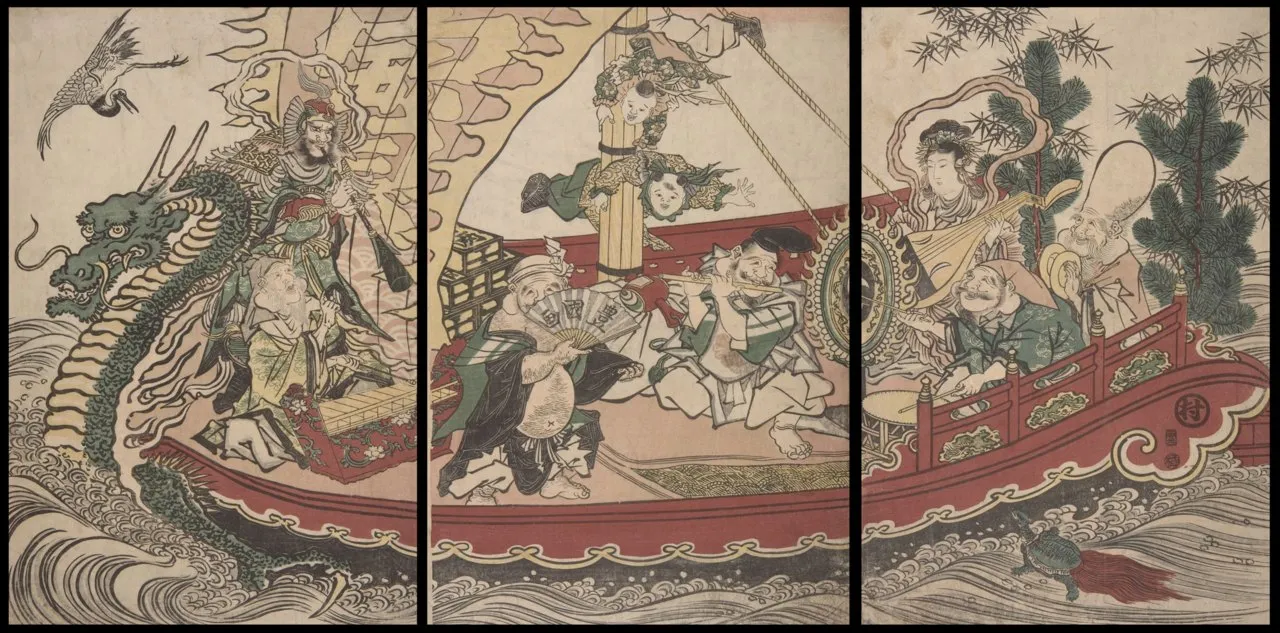
The Shichifukujin, the Seven Gods of Good Fortune, are a group of deities believed to bring luck. You will see them everywhere in Japan: on New Year cards, as small figures in shops, on charms at shrines and temples, and above all sailing together in the takarabune, the treasure ship.
They are a mixed crew. Only one comes from Japan; the others arrived from India by way of Buddhism, or from Chinese tradition. They were grouped together as seven in Japan, probably in the Muromachi period (14th–16th centuries), perhaps inspired by the Chinese theme of the Seven Sages of the Bamboo Grove. The name may come from a Buddhist sutra’s phrase “seven troubles and seven fortunes”.
The seven
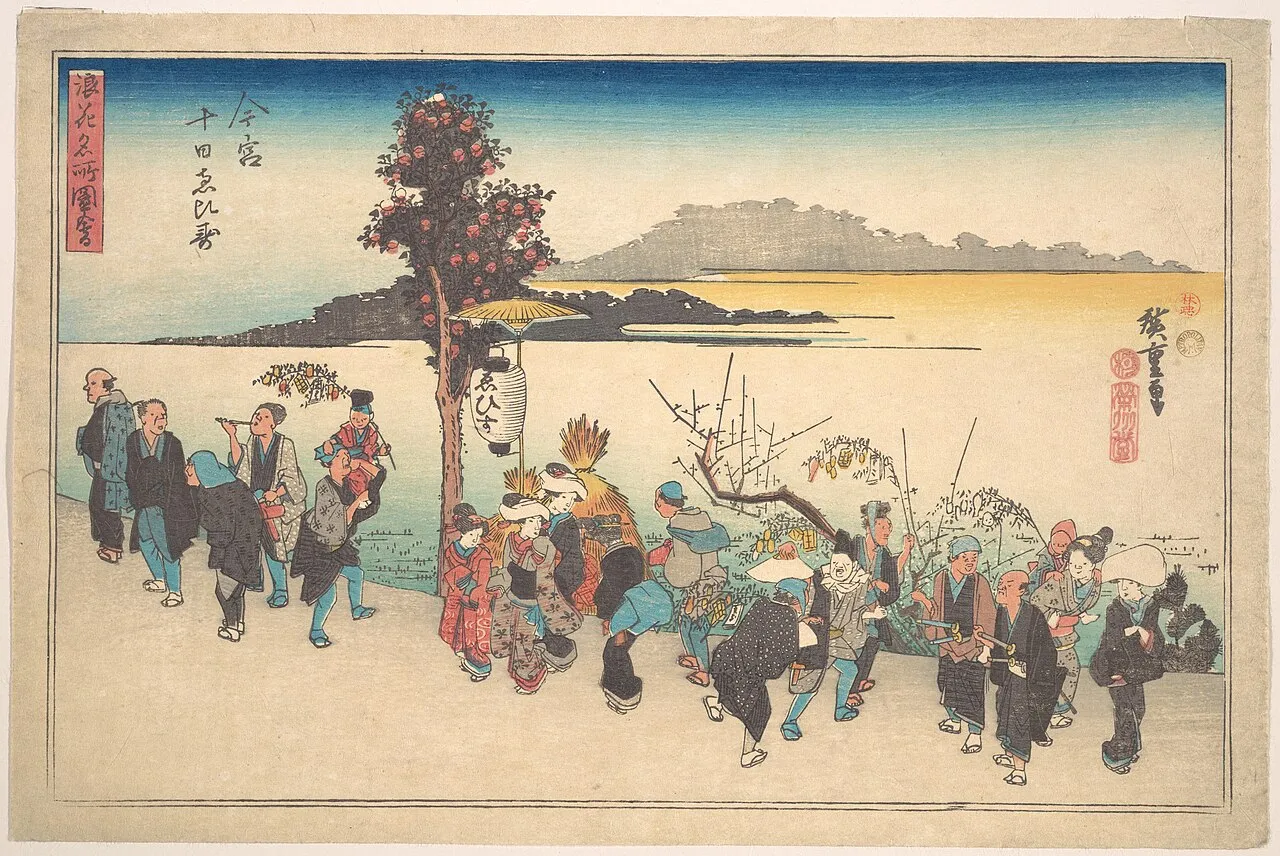
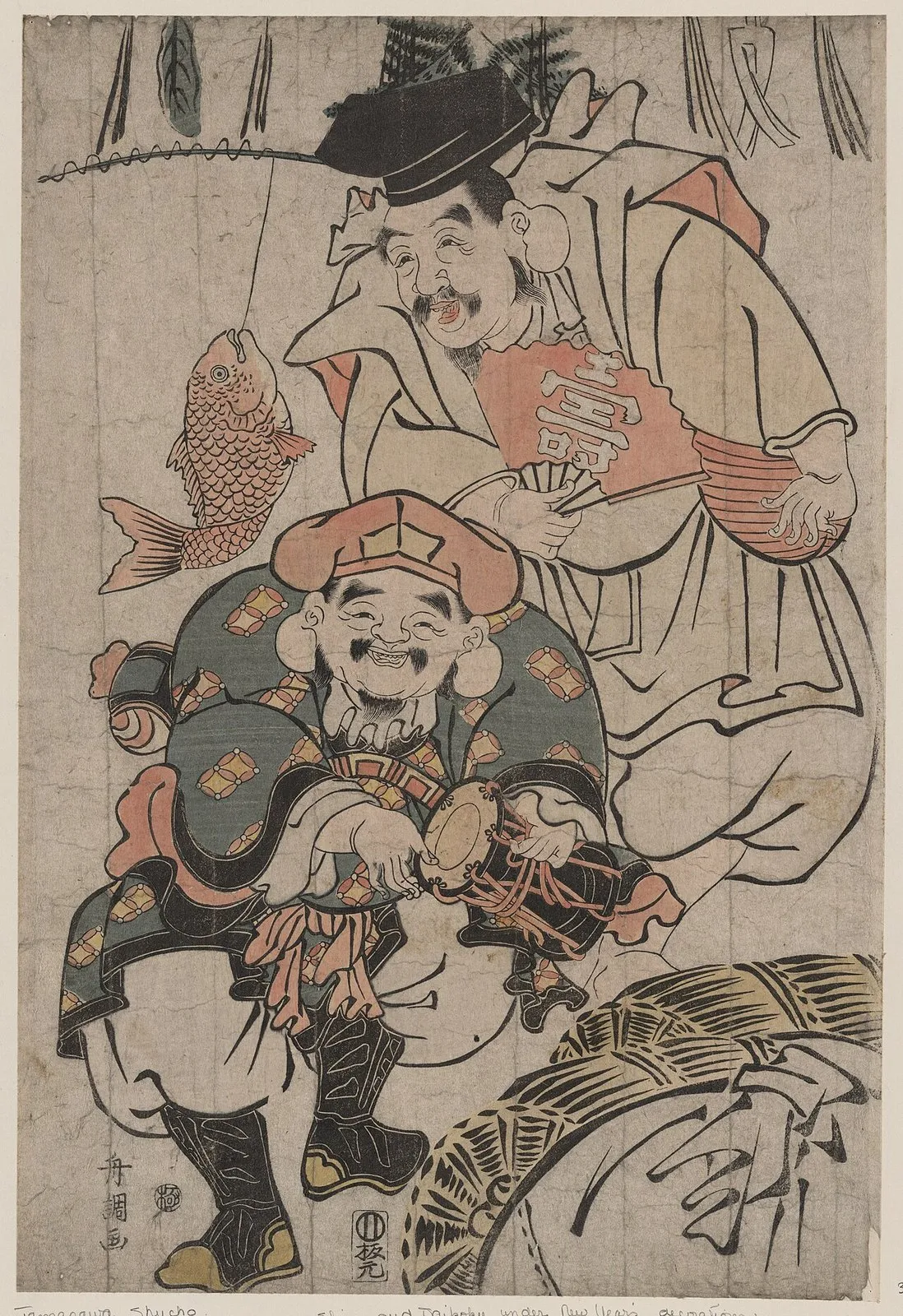
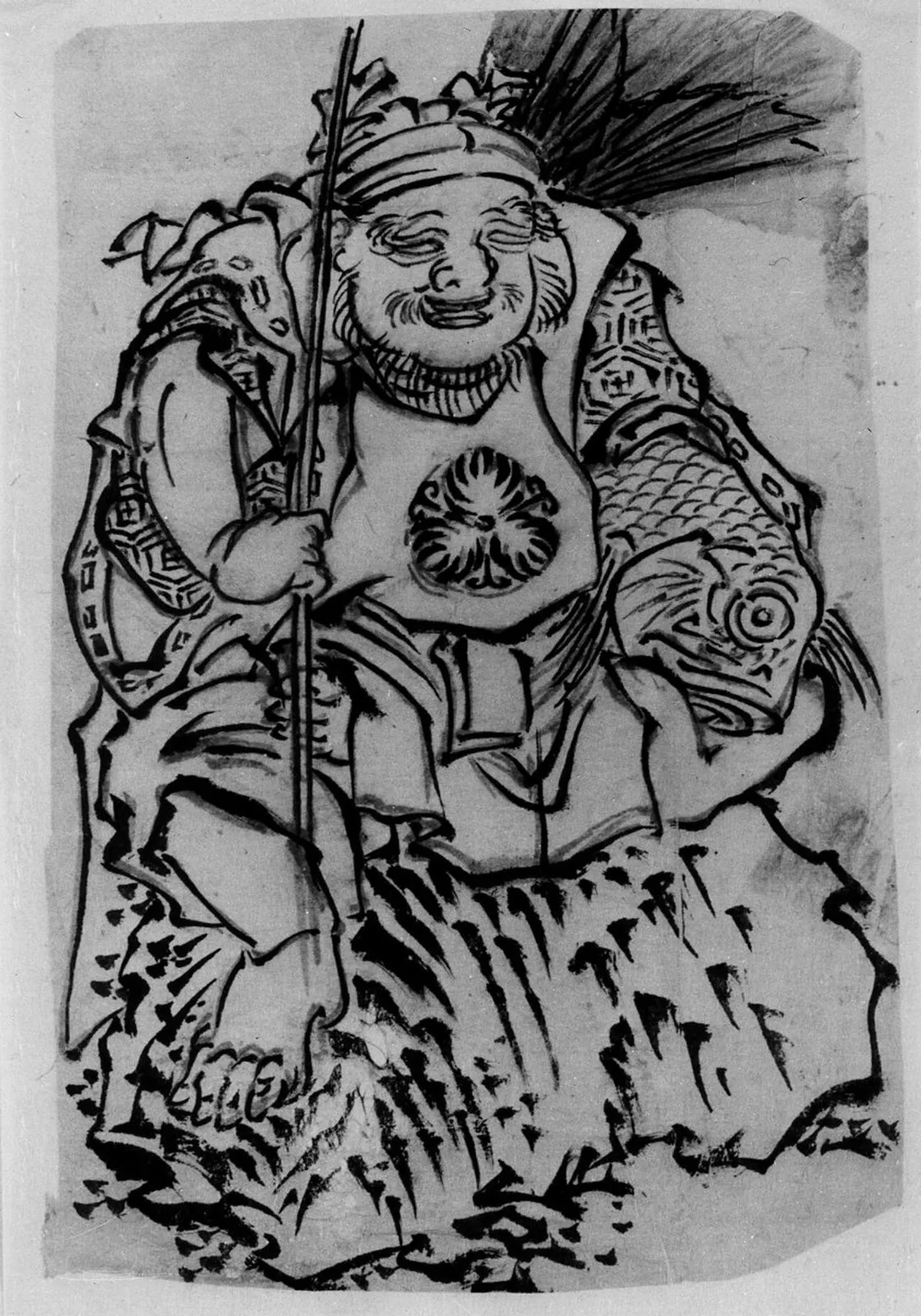
Ebisu — the smiling god with a fishing rod and a large sea bream, patron of fishermen and merchants, who brings blessings from across the sea. He is the only one of the seven from Japan, and is often identified with the kami Kotoshironushi. See our page on Ebisu and his great festival, Tōka Ebisu.
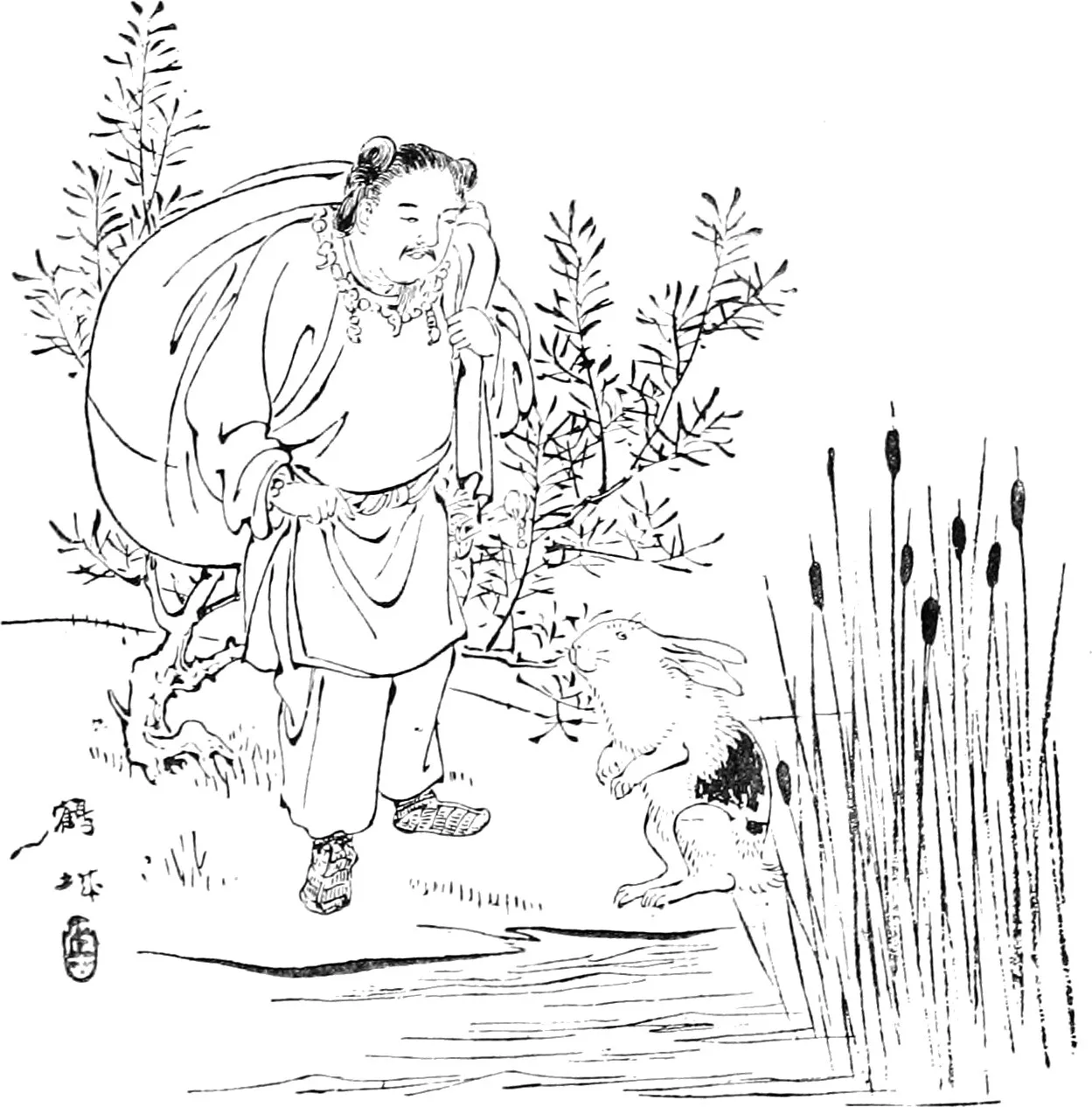
Daikoku — the god of plenty, with a magic mallet and a sack of treasure, standing on bales of rice. He came from Mahākāla, an Indian deity who guarded the kitchen, and in Japan was identified with the kami Ōkuninushi, because their names can be written alike. Ebisu and Daikoku are often shown together.
Bishamonten — a warrior in armour holding a spear and a small pagoda. In India he was Vaiśravaṇa, chief of the four heavenly kings who guard the world.
Benzaiten — the only goddess of the original seven, playing a biwa lute. She came from Sarasvatī, the Indian goddess of a sacred river, and in Japan is the patron of music, eloquence and the arts. Many of her shrines stand by water.
Fukurokuju and Jurōjin — two old men from Chinese Taoism, both linked to the star of the southern sky that was thought to govern long life. Fukurokuju has a very tall forehead; Jurōjin carries a staff and is often shown with a deer. Because they were often treated as the same god, some lists replace one of them with the goddess Kichijōten.
Hotei — the fat, laughing monk with a big cloth sack, based on a Chinese Zen monk of the 10th century. He was added for his round, contented look.
Where you will meet them
- The treasure ship. Pictures of the seven sailing in a ship full of treasure became popular in the Edo period.
- Seven Lucky Gods walks. Many towns have a circuit of seven shrines and temples, one for each god. Walking the circuit, often collecting a seal at each stop, is a popular custom, and in Tokyo many circuits are busiest in the first week of the New Year.
- Festivals. Ebisu has his own festivals, such as Tōka Ebisu in Osaka in January.