The stalls
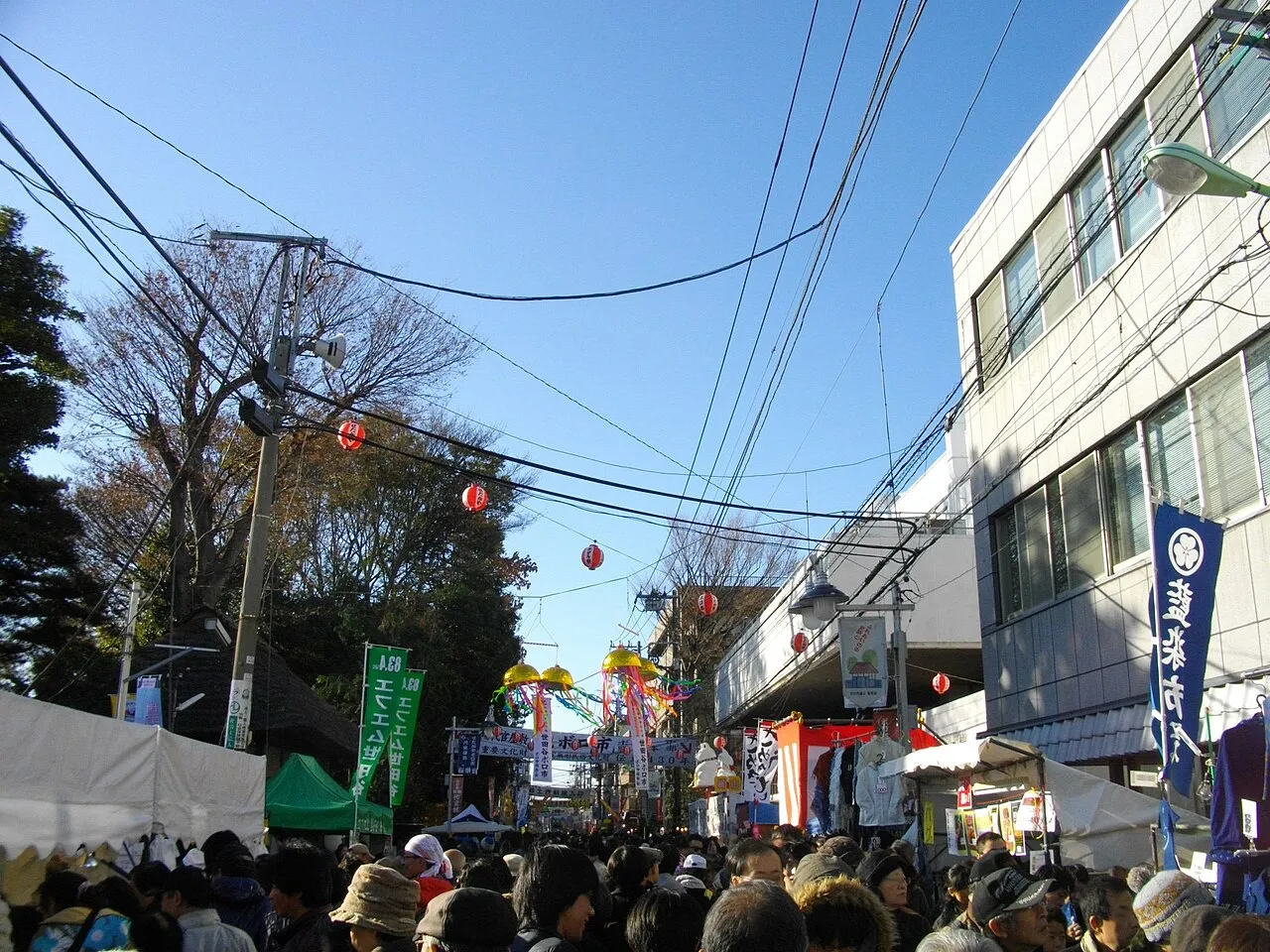
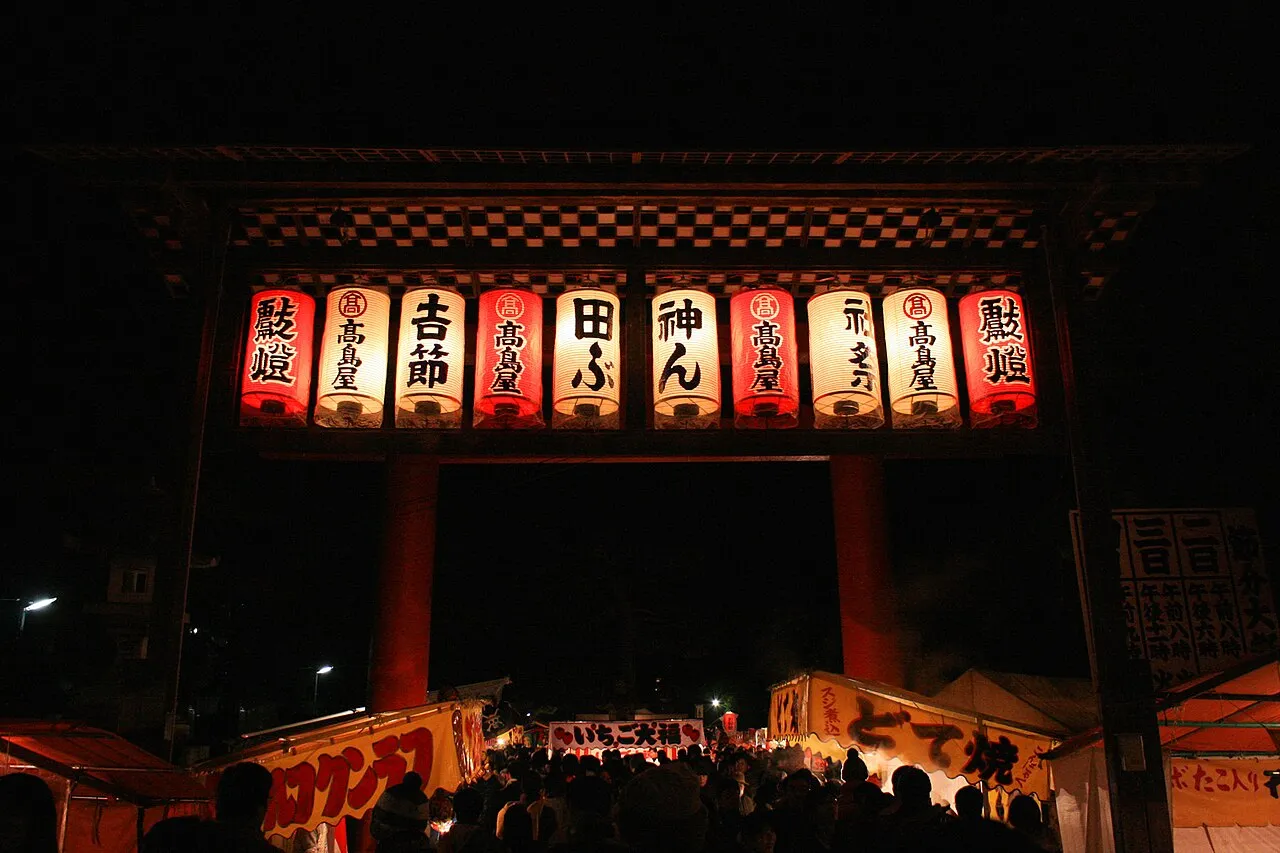
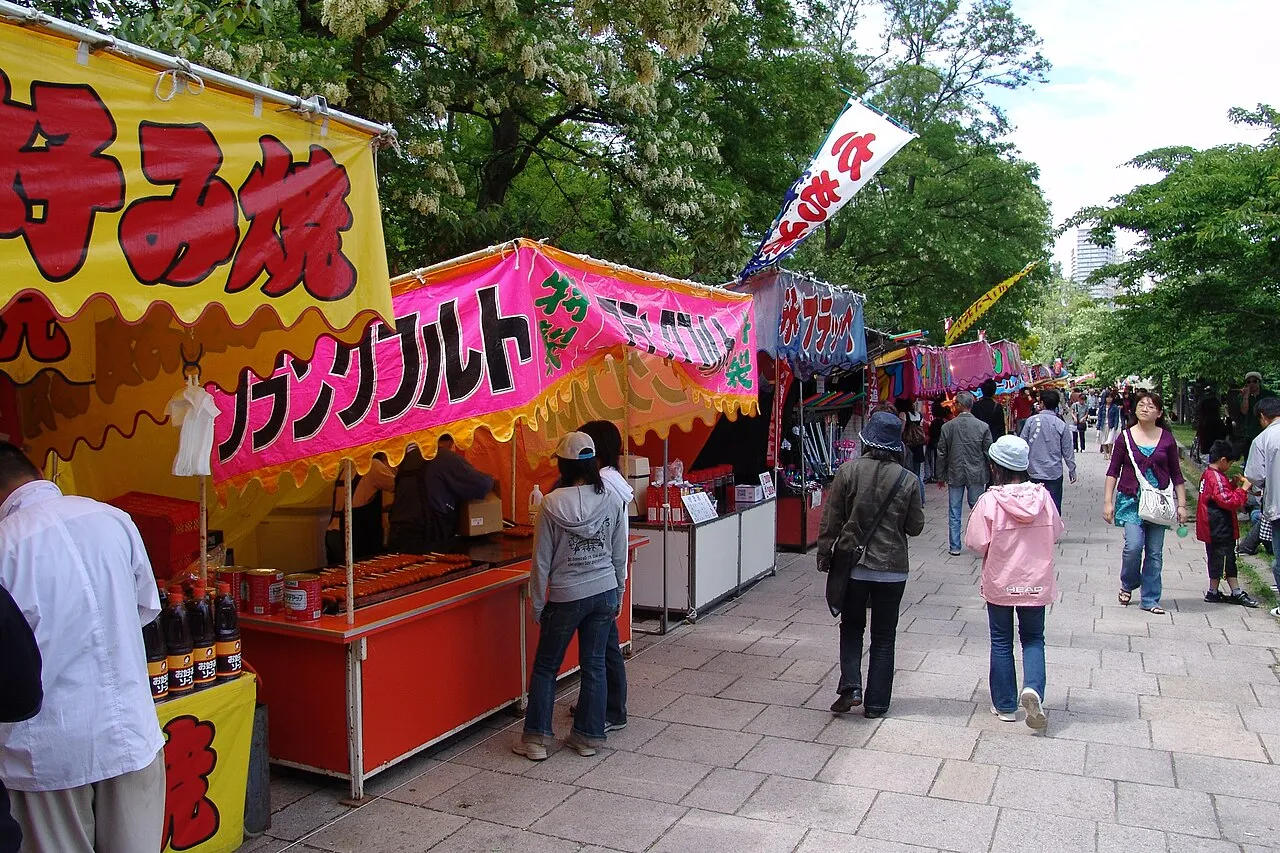
At almost every festival, rows of food stalls line the approach to the shrine and the streets nearby. They are called yatai or demise, and for many Japanese people the smell of grilled sauce is the smell of a festival. At big festivals, stalls often open in the afternoon and stay busy late into the evening, especially on the eve, the yoiyama.
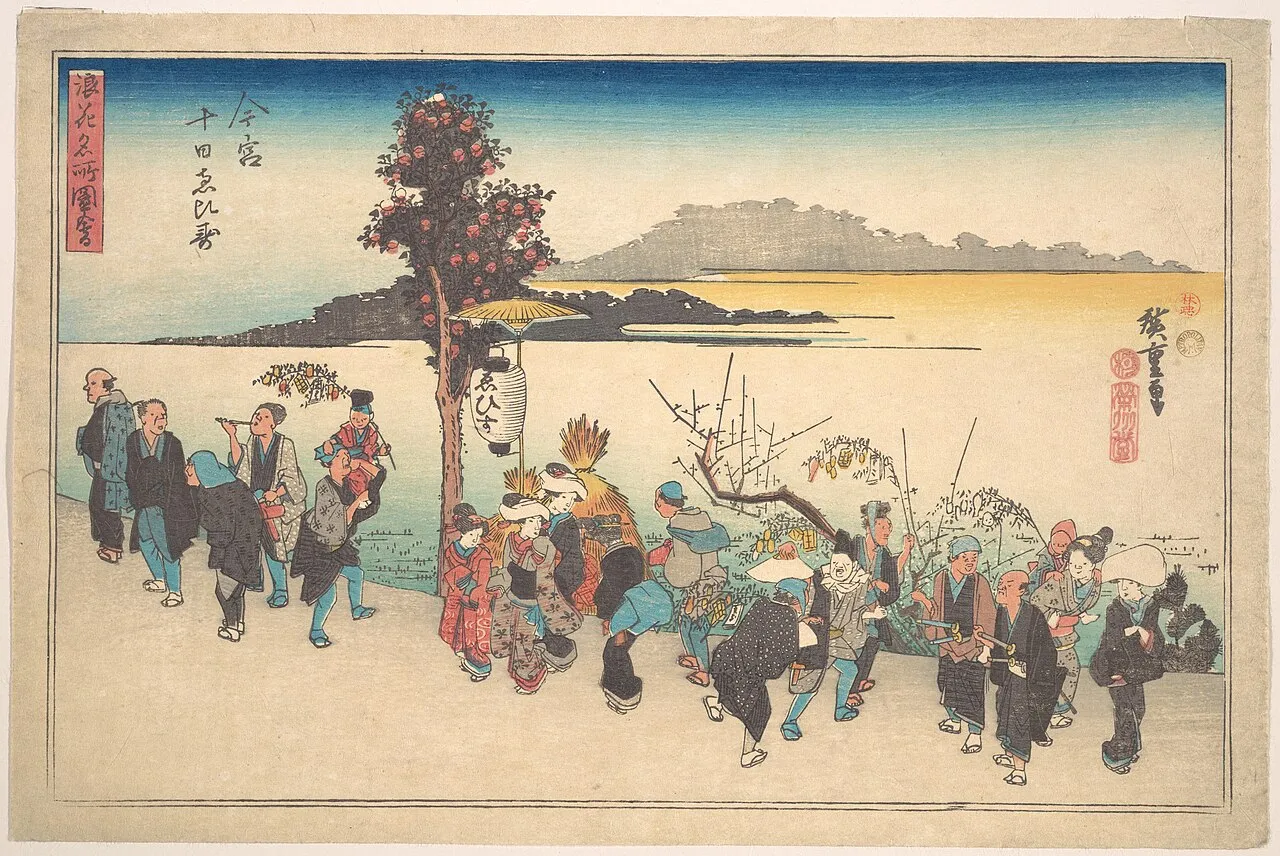
Some festivals are famous for their stalls. At Tōka Ebisu in Osaka, the streets around the shrine are packed with them. The Setagaya Boroichi in Tokyo is a street market first and a festival second.
How to buy
- Bring cash. Stalls take cash only. Coins and 1,000-yen notes make it quicker for everyone.
- Point and hold up fingers. Most stalls sell one or two things, so pointing works. Prices are on a sign.
- Queue. Popular stalls form a line. Join the end.
How to eat
Step out of the main flow of the crowd to eat, rather than eating as you walk through it. Many people stand beside the stall or find a quiet corner. Hold on to your rubbish until you find a bin, or carry it home: bins are few.
What to try
Savoury
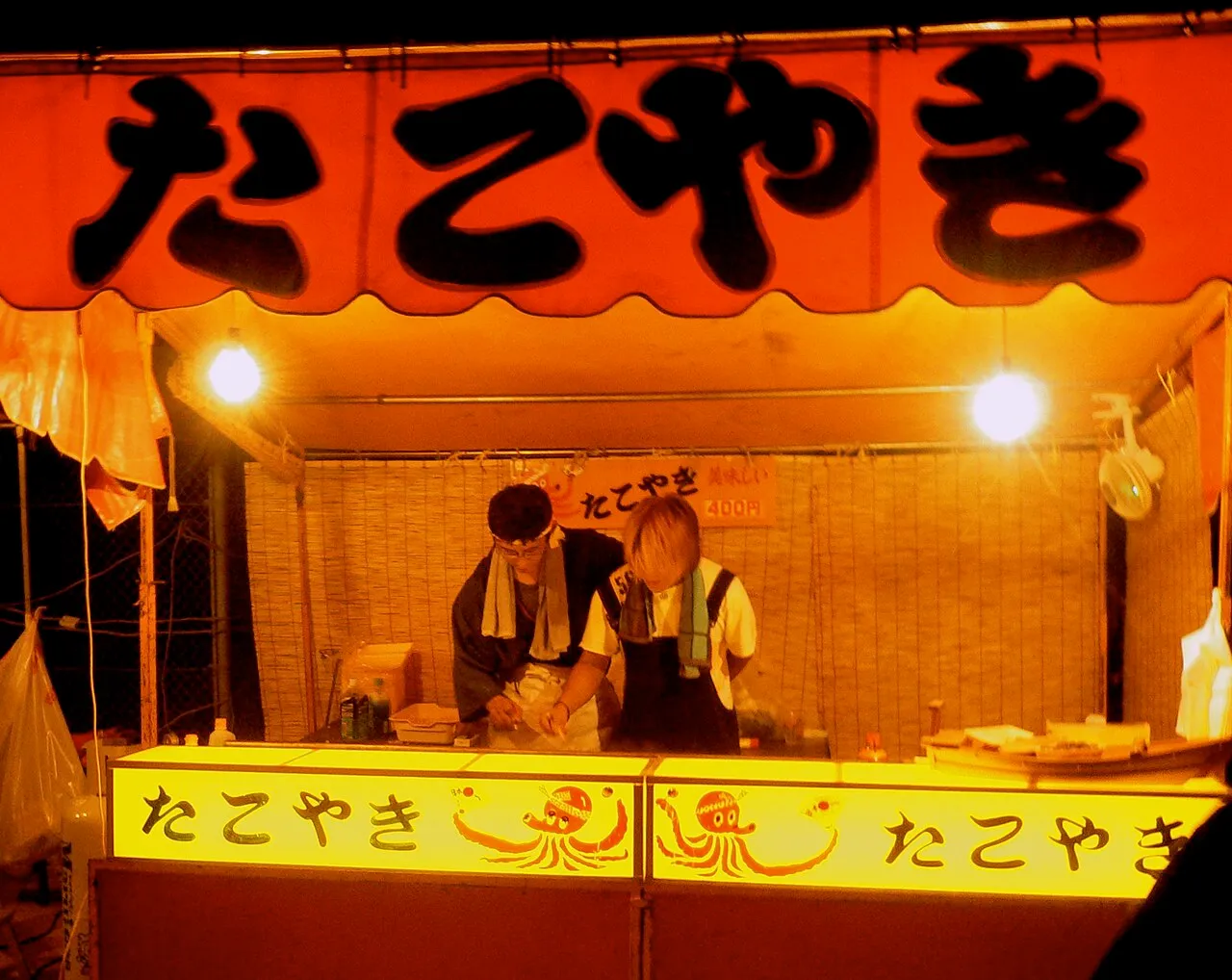
- Takoyaki. Balls of batter with a piece of octopus inside, cooked in a dimpled iron pan until golden outside and molten inside, then topped with sauce, mayonnaise and dried bonito flakes. Born in Osaka, now everywhere. Let them cool: the inside is very hot.
- Yakisoba. Fried noodles with cabbage, pork and a sweet-savoury sauce, often with red pickled ginger on top.
- Okonomiyaki and hashimaki. A savoury pancake of batter and cabbage; hashimaki is a version rolled around a pair of chopsticks so you can eat it standing up.
- Yakitori and grilled skewers. Chicken, pork or beef grilled over charcoal.
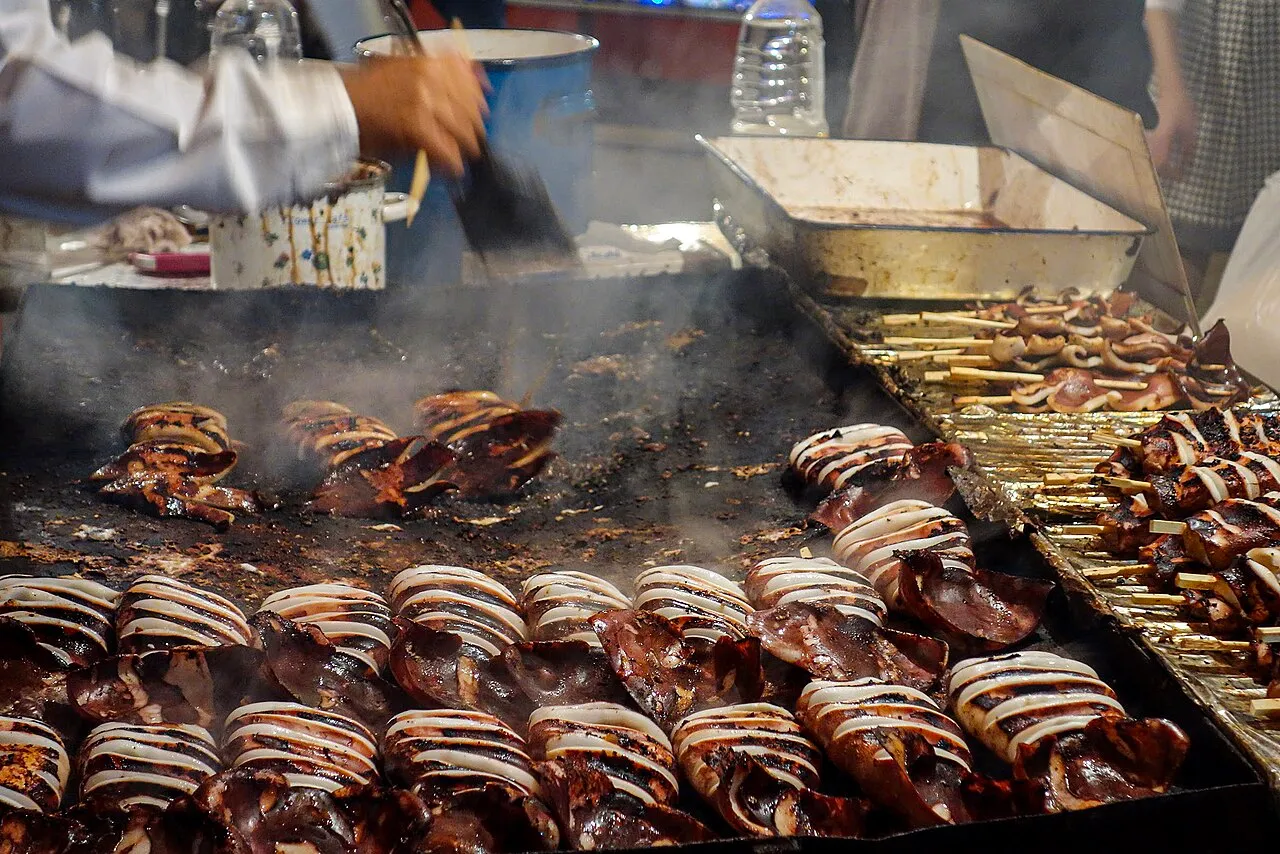
- Ika-yaki. A whole grilled squid on a stick, brushed with soy sauce.
- Karaage. Japanese fried chicken.
- Jaga-batā. A steamed potato with a lump of butter.
Sweet
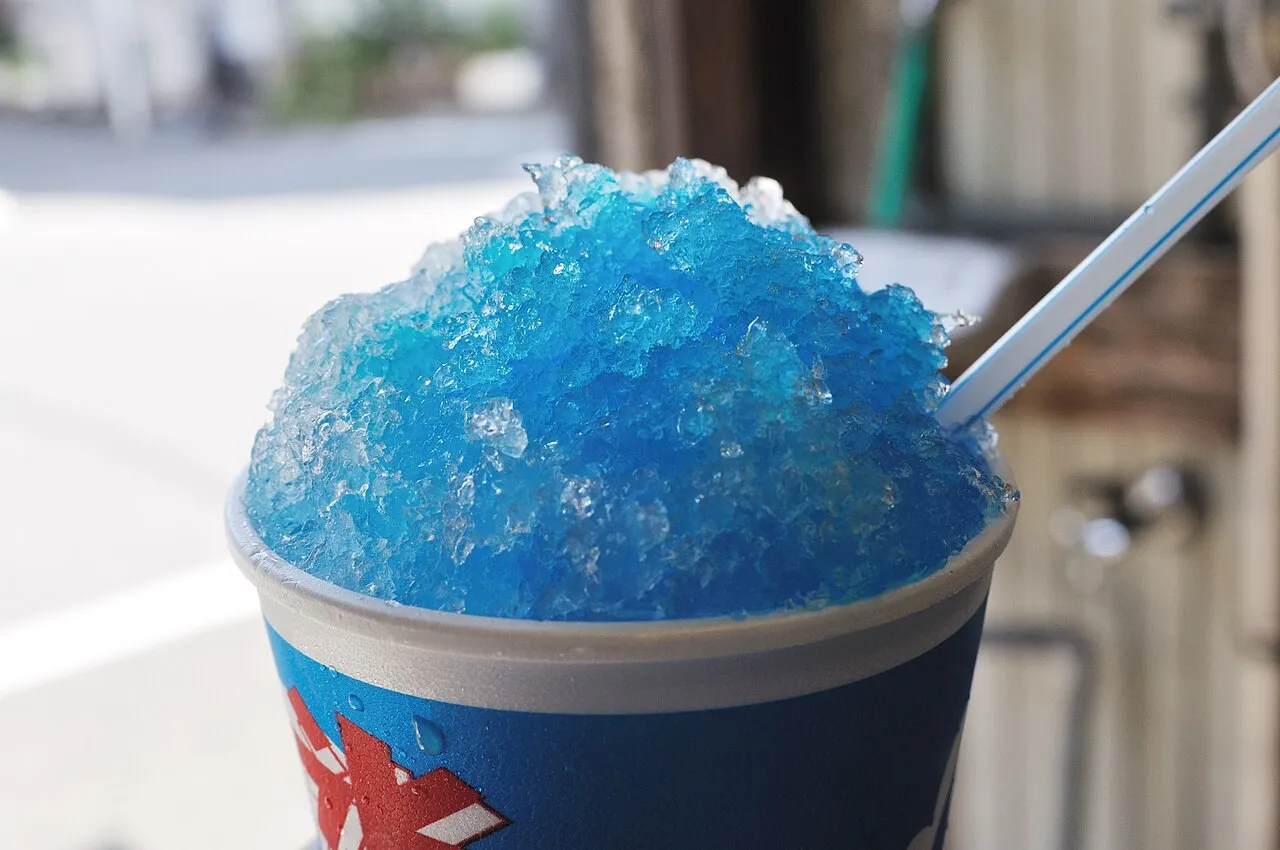
- Kakigōri. Shaved ice with bright syrup, the taste of summer festivals.
- Ringo-ame. A whole apple coated in hard red candy.
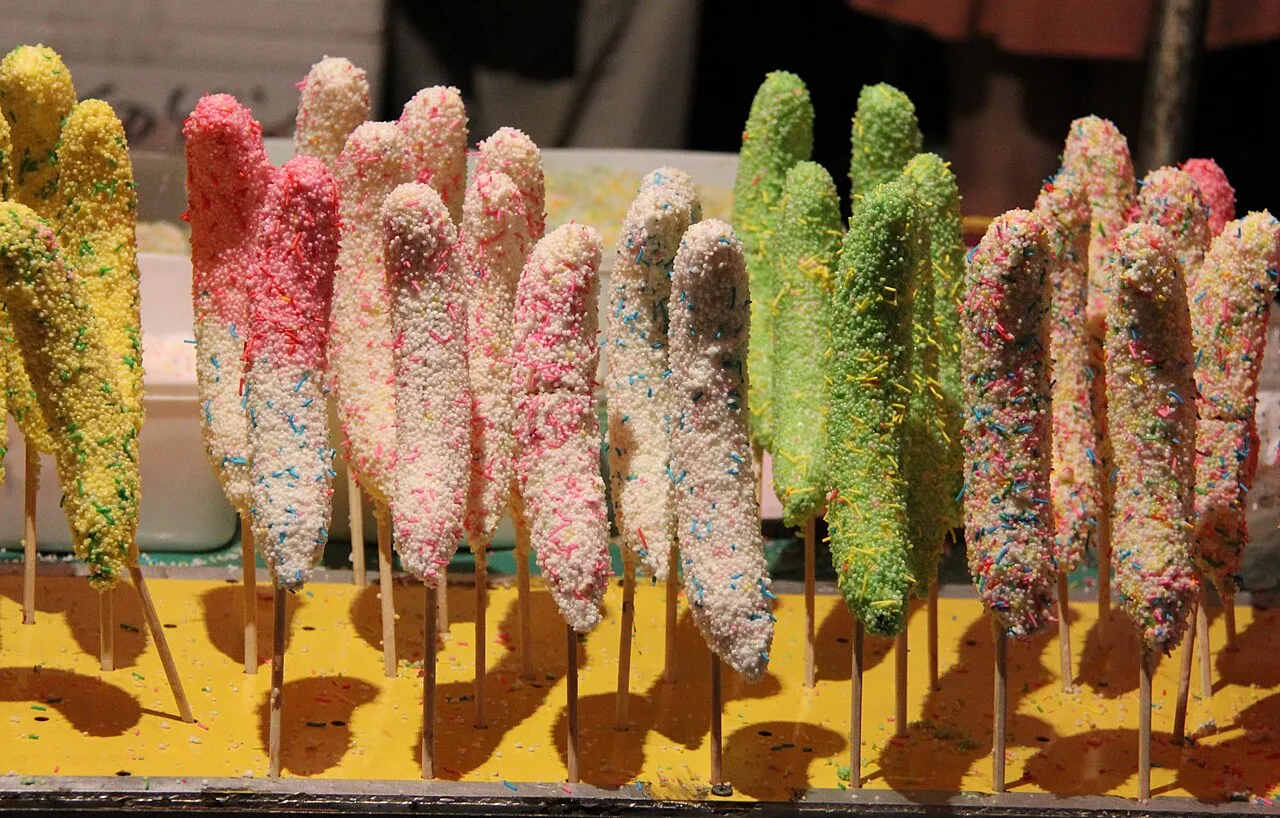
- Choco banana. A banana on a stick, dipped in chocolate and sprinkles.
- Wataame. Cotton candy, often in bags printed with cartoon characters.
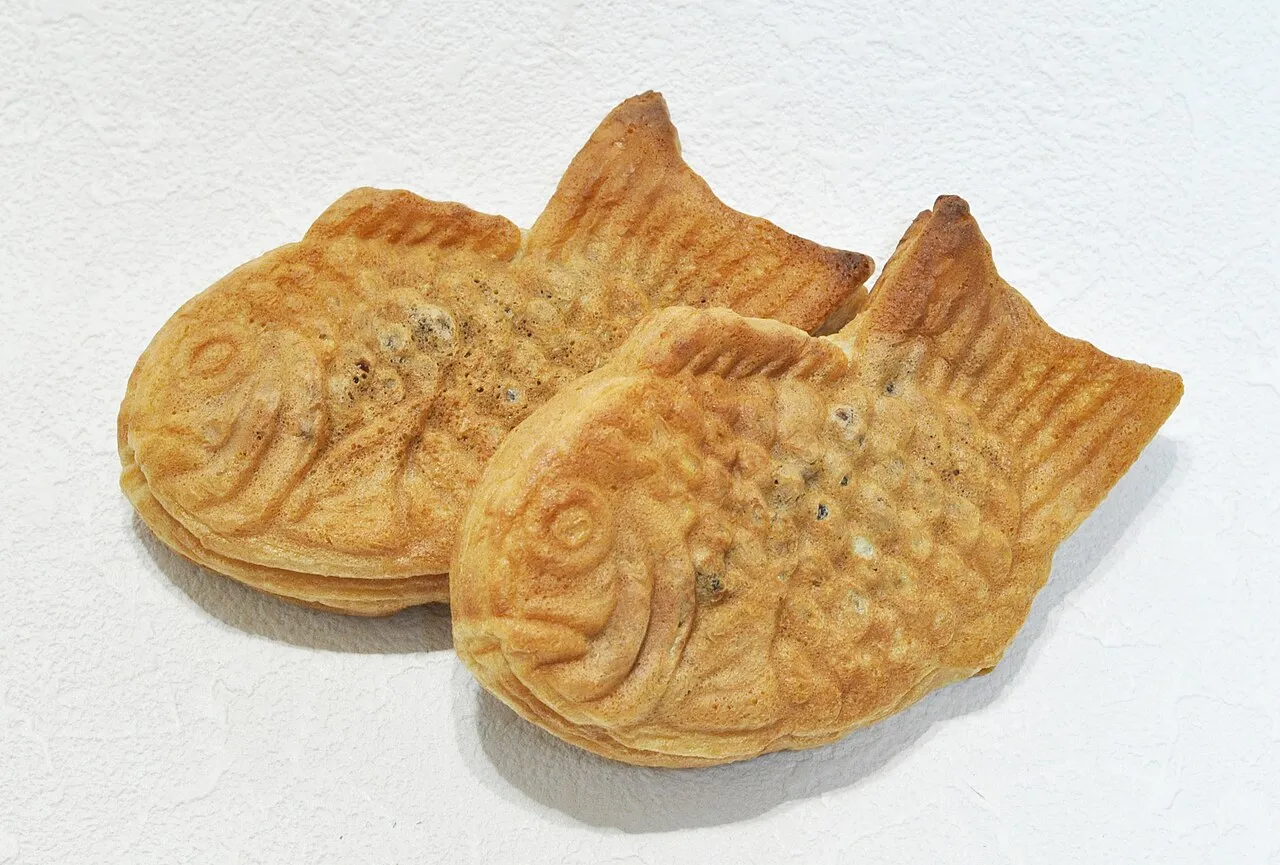
- Taiyaki. A fish-shaped cake filled with sweet red bean paste.
Winter warmers
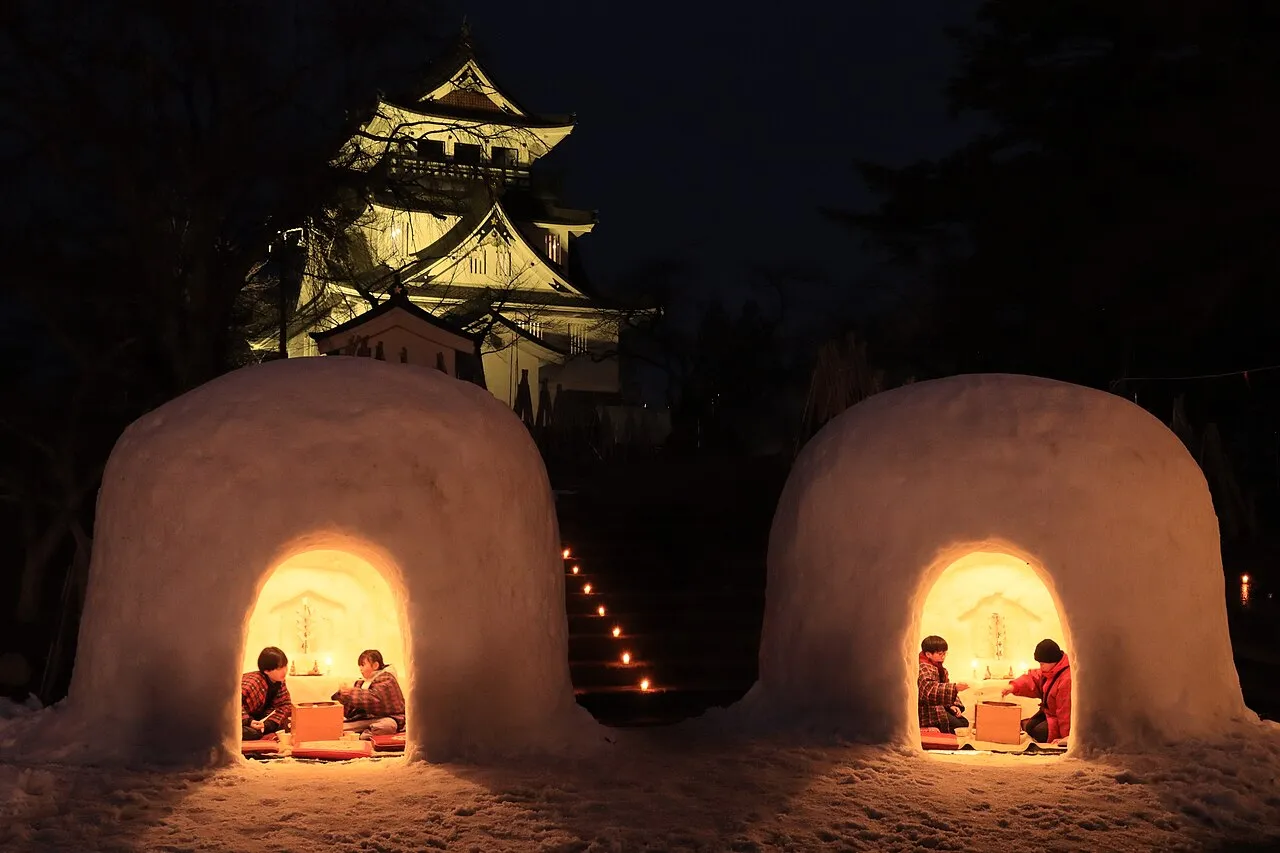
- Amazake. A sweet, warm drink made from fermented rice, with little or no alcohol. In Yokote, children in the snow huts offer it to passers-by.
- Oden. Fish cakes, eggs and daikon simmered in broth.
Food that belongs to one festival
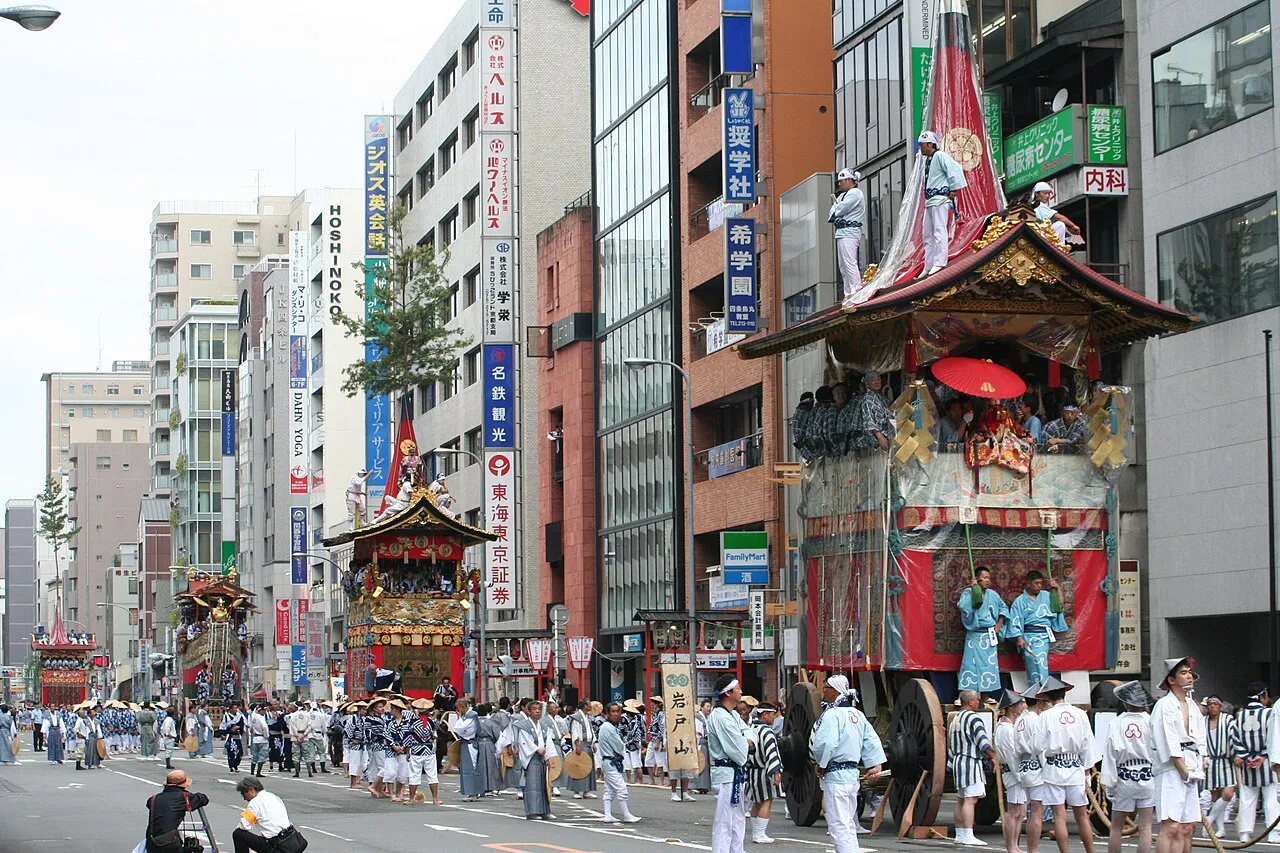
Some shrines and towns have their own festival food. At Dazaifu Tenmangū, the shops on the approach bake umegae-mochi, rice cakes filled with sweet bean paste. Kyoto’s Gion Matsuri sells chimaki, but be careful: the ones sold at the float stalls are charms made of bamboo leaves, to hang by your door, not to eat.
Beyond festivals: Fukuoka’s yatai
In Fukuoka, open-air food stalls called yatai open every evening along the river in Nakasu and in Tenjin, festival or not. They seat only a few people each and serve ramen, oden and grilled skewers. If you are visiting the Hakata Dontaku or Hakata Gion Yamakasa, end the day at one.