Japan Festival Atlas
Guides / December to February

Winter festivals in Japan

Snow sculptures and candle-lit snow huts, mountains set on fire, masked demons coming down from the forest. Winter is the quietest season for travel in Japan and one of the best for festivals. Here is what to see, and how to plan it.

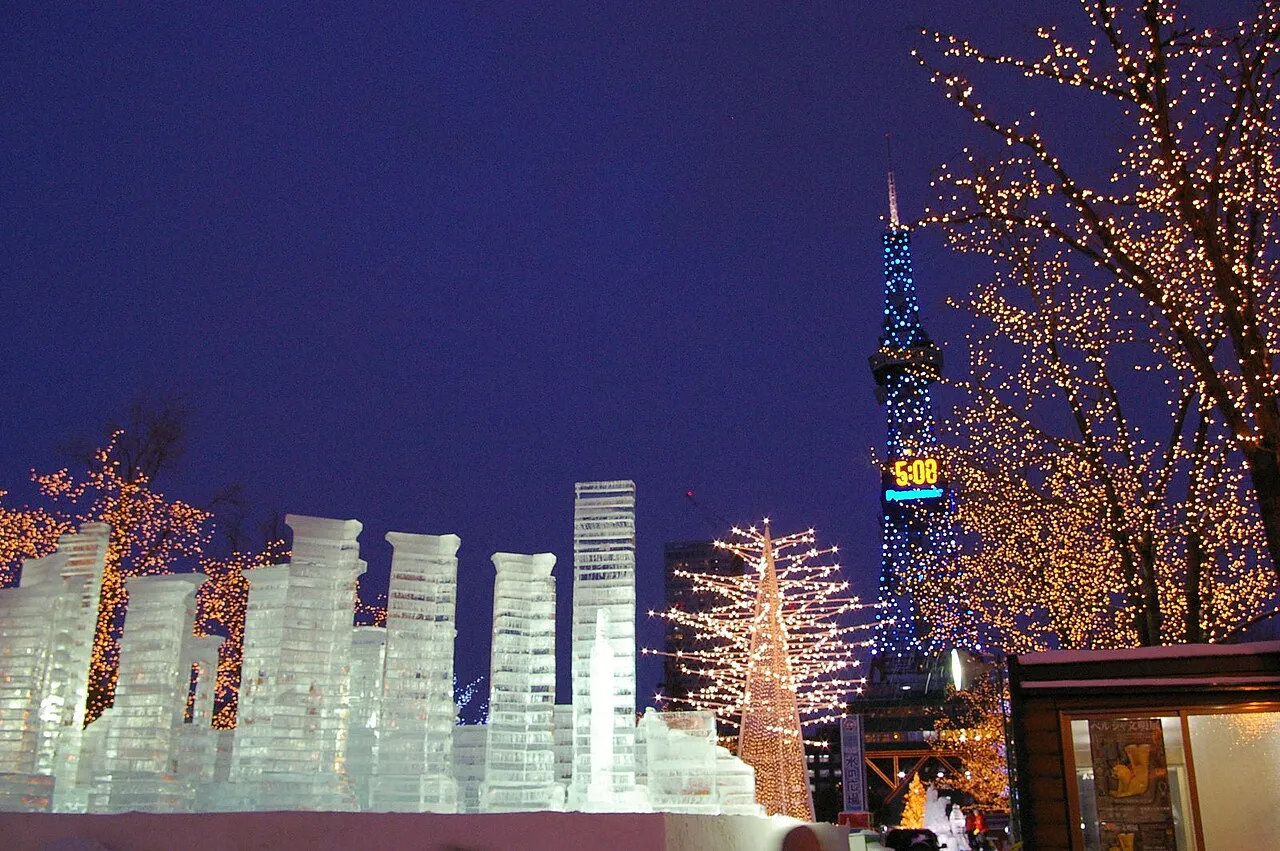
Ice sculptures lit blue at night in Ōdōri Park, with illuminated trees and the Sapporo TV Tower behind.
Ice sculptures in Ōdōri Park at night, February 2007. Photo: Materialscientist, CC BY-SA 3.0. Source

Why go in winter

From December to February, Japan is cold, clear and calm. Outside the New Year week and the snow festivals, hotels are easier to find and prices are lower than in spring or autumn. Many winter festivals are held at night, around fire or snow, and they are some of the most striking sights of the year.

Winter festivals fall into a few kinds. Pick one or two that suit your trip.

Snow and ice

  • Sapporo Snow Festival (Hokkaido, February 4–11, 2027). Giant snow and ice sculptures fill Ōdōri Park and the Susukino district, lit up every evening. The easiest winter festival to visit: it is in the middle of a big city and lasts a week.
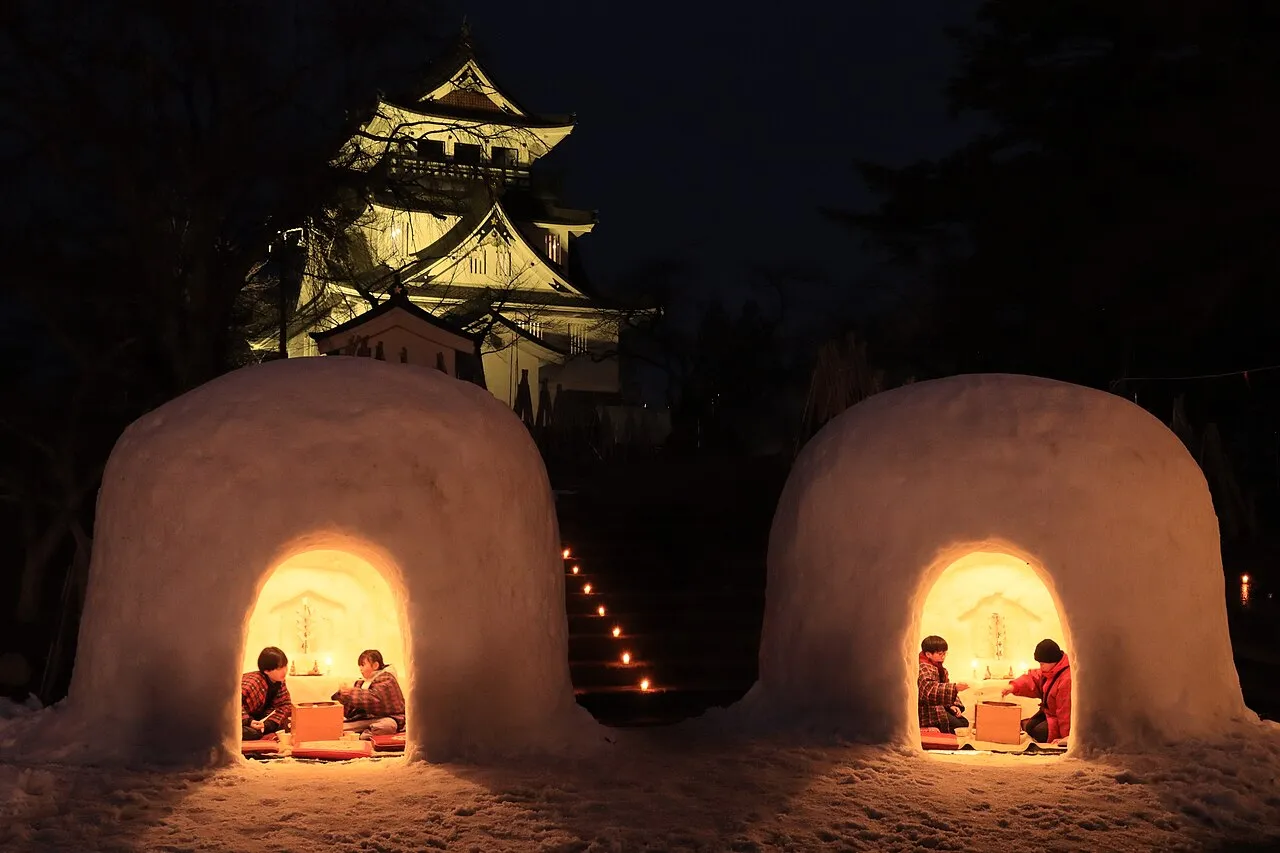
  • Yokote Kamakura (Akita, February 12–13, 2027). Children sit in candle-lit snow huts, kamakura, and invite passers-by in for rice cakes and warm sweet amazake. Small, quiet and very beautiful.
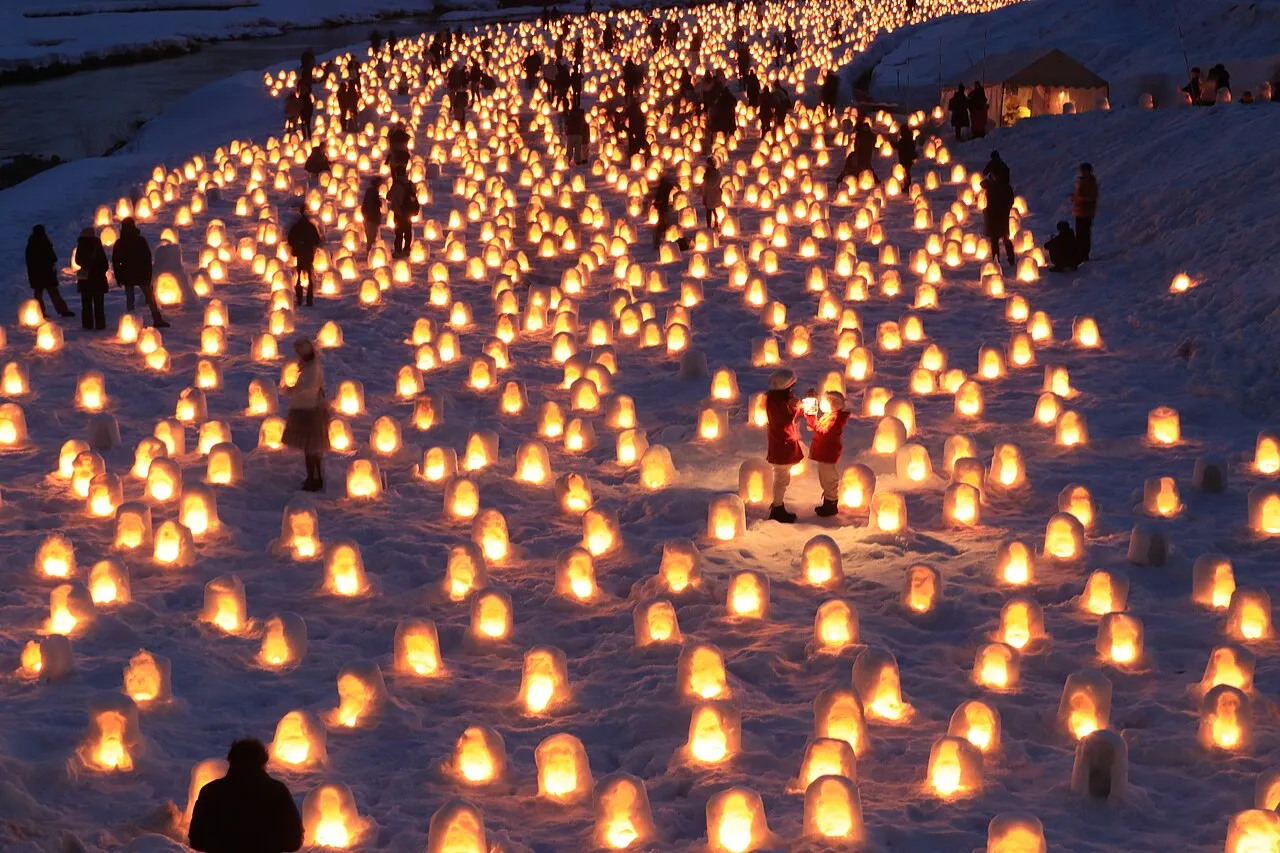
Thousands of tiny candlelit snow huts covering a snowy riverbank at dusk.
About 3,500 mini kamakura on the Janosaki riverbed of the Yokote River, February 16, 2025. Photo: Rarisan, CC0. Source

Fire

  • Nozawa Fire Festival (Nagano, January 15). In a snowy hot-spring village, villagers attack a tall wooden shrine with burning torches while men in their unlucky years defend it, until the whole structure goes up in flames.
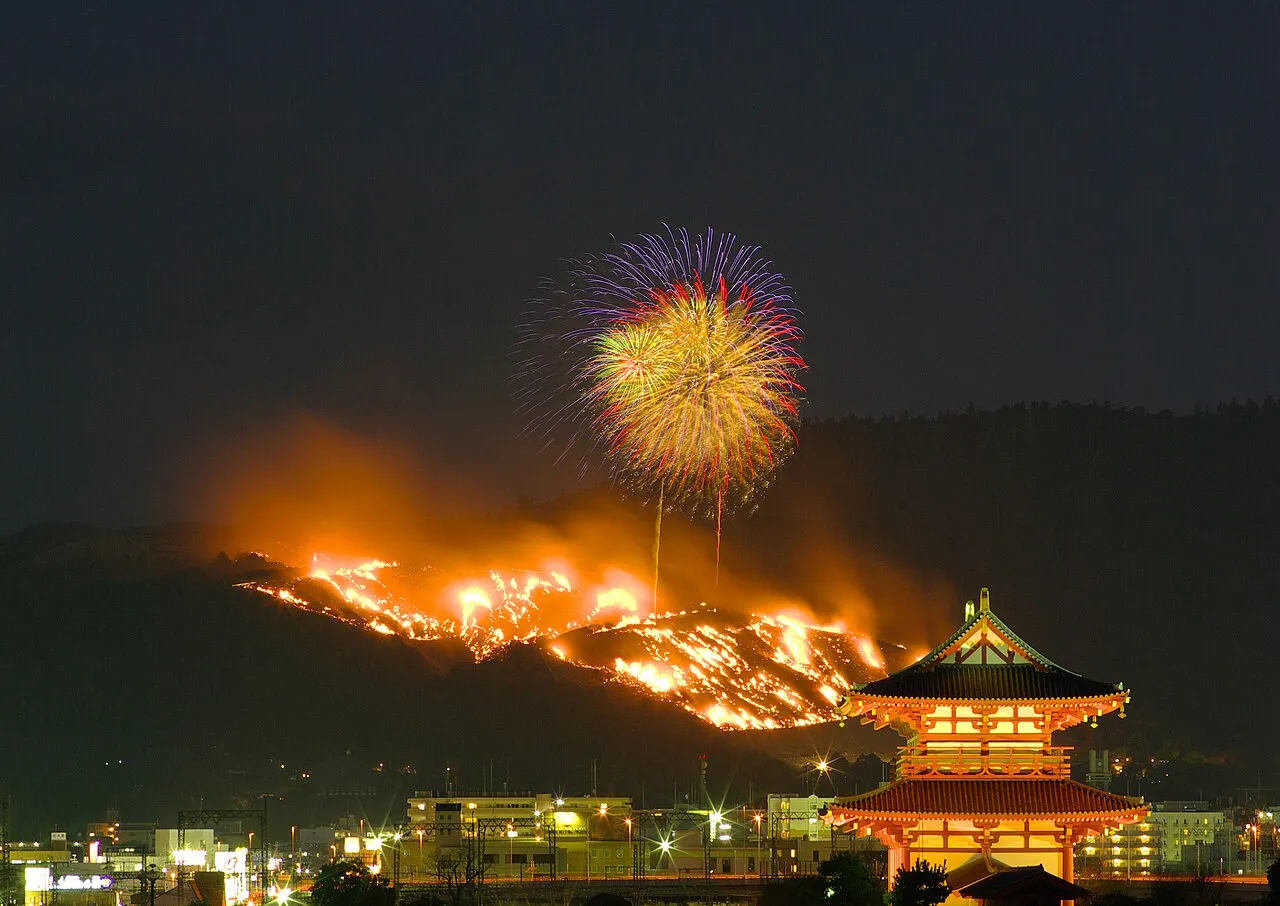
  • Wakakusa Yamayaki (Nara, fourth Saturday of January; January 23 in 2027 by the usual rule). Fireworks burst over Nara, then the whole grassy hillside of Mount Wakakusa is set alight.
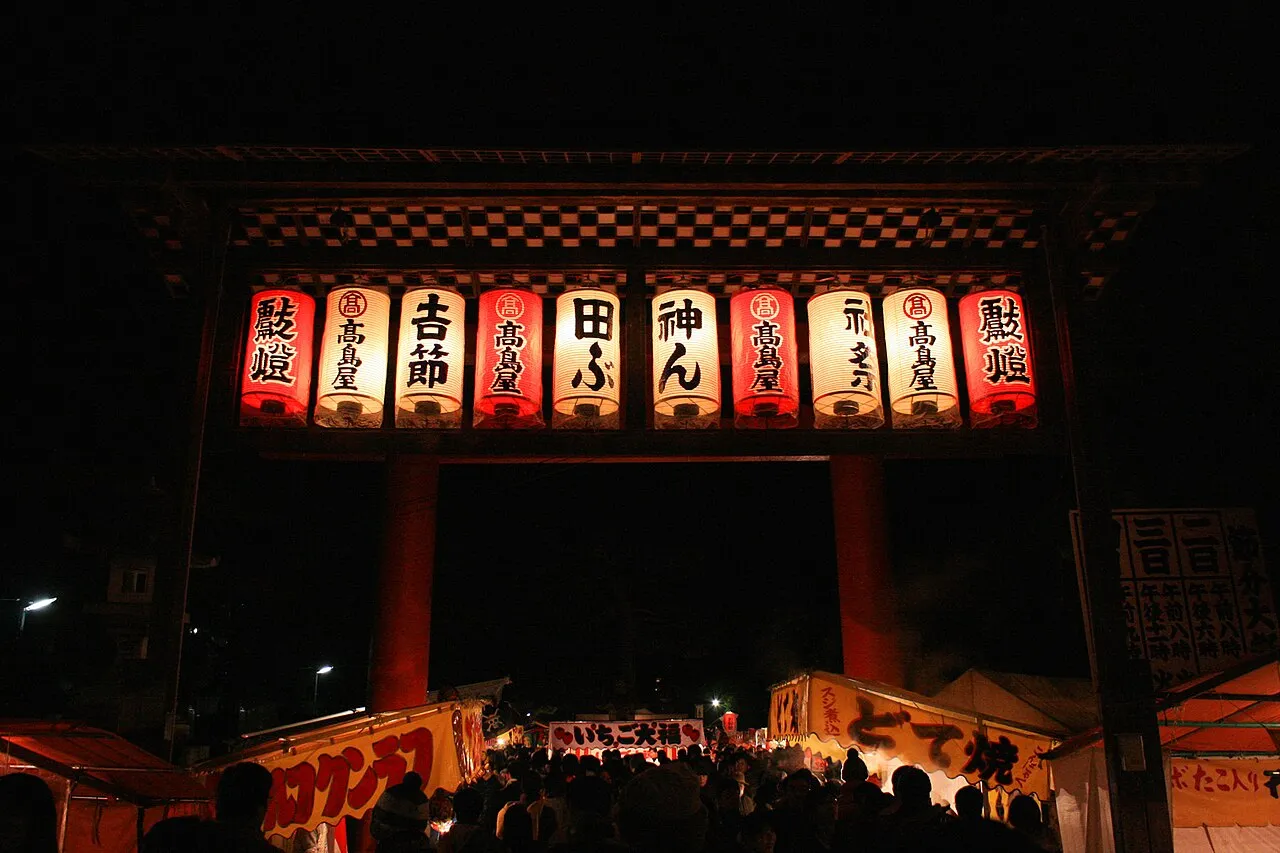
  • Yoshida Shrine Setsubun (Kyoto, February 2–4, 2027). On the eve of spring by the old calendar, demons are chased out of the shrine, and old charms are burned in a great bonfire.
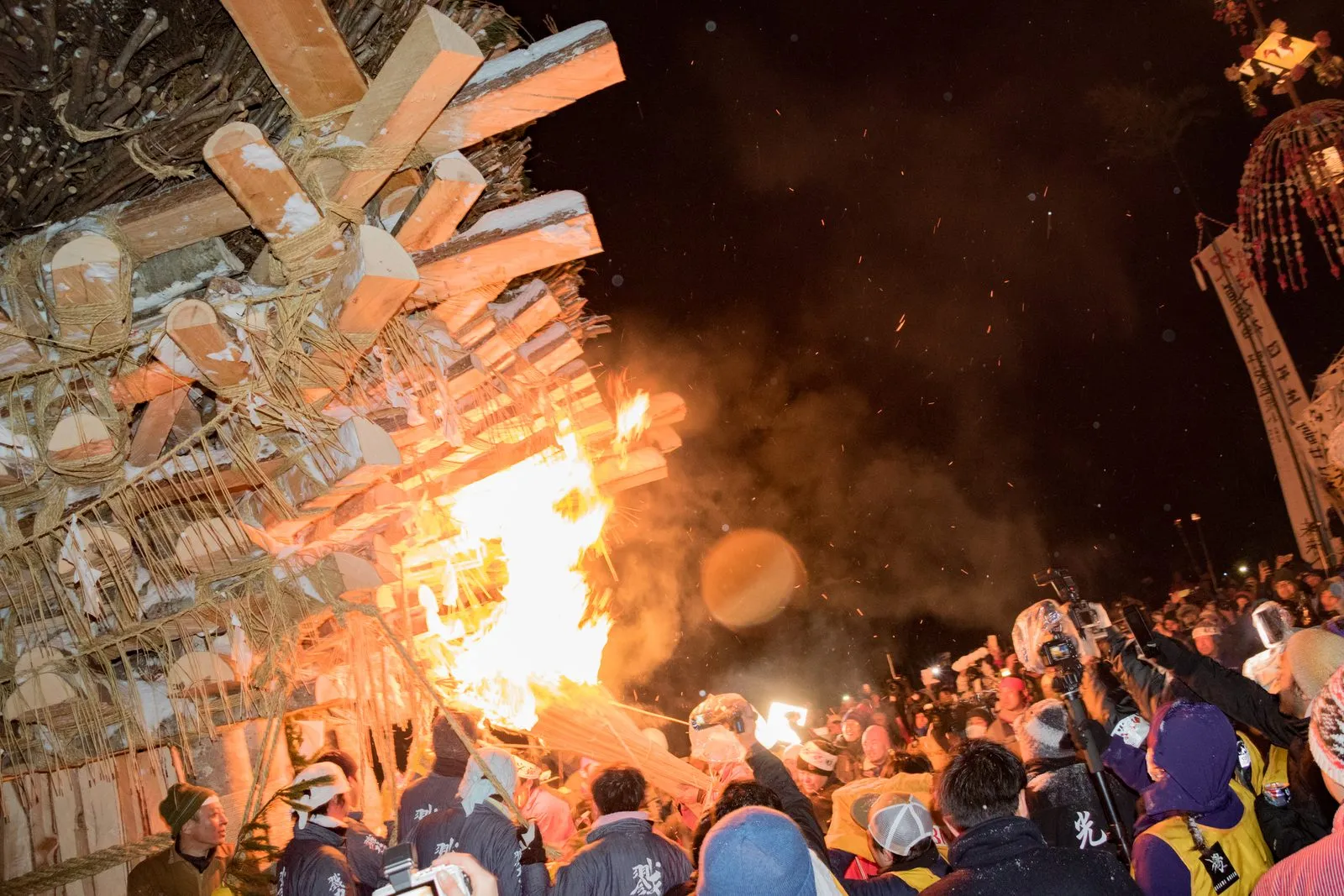
Flames and sparks burst from a wooden shrine structure at night as a crowd presses around it.
The fire battle at the Nozawa Onsen Dosojin Matsuri. Photo: Nippon Matsuri Network (matsuri-stream.jp), CC BY 4.0. Source
Fireworks burst over Mount Wakakusa as flames spread across the hillside, with the lit Suzakumon gate of the Heijō Palace site in front.
Wakakusa Yamayaki seen beyond the Suzakumon gate of the Heijō Palace site, January 24, 2009. Photo: 名古屋太郎, CC BY-SA 3.0. Source

Masked visitors and night rituals

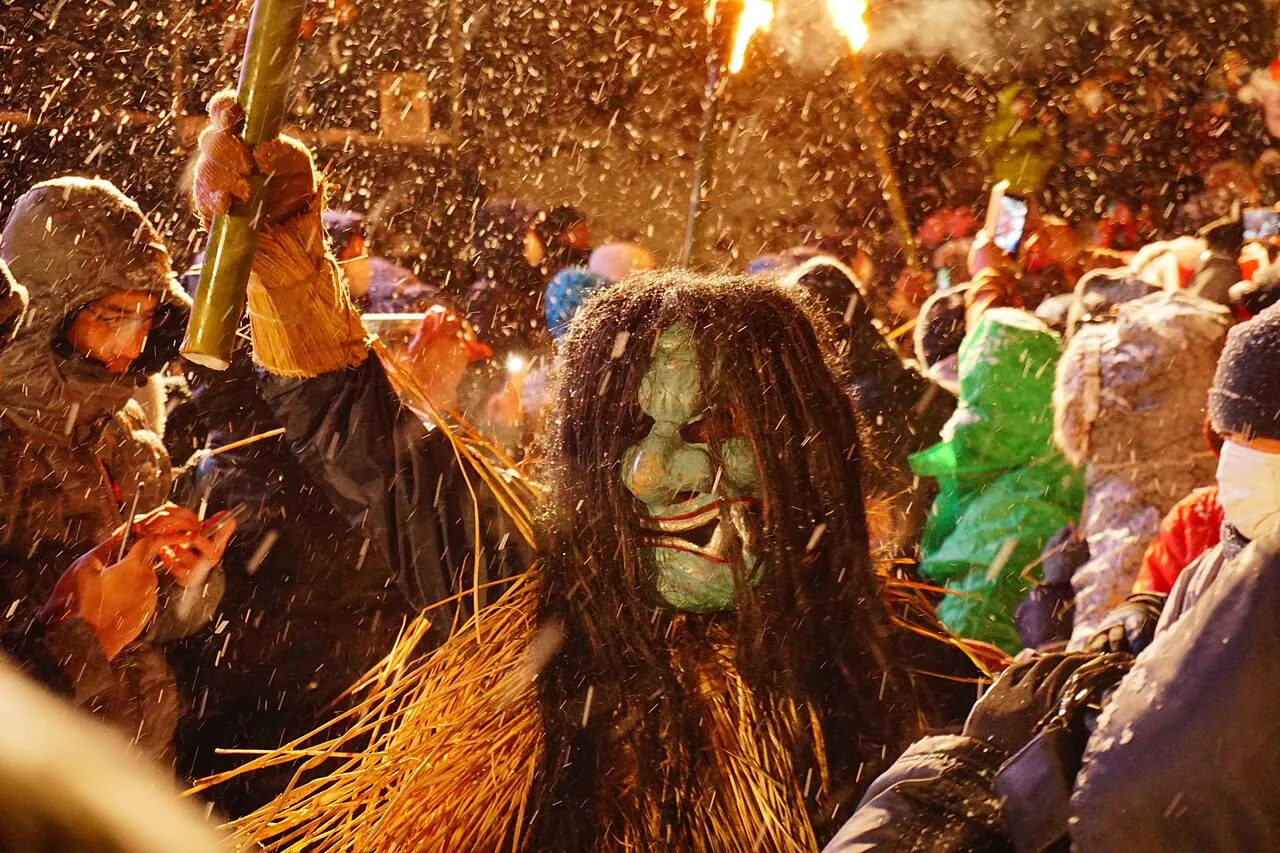
  • Namahage Sedo Festival (Akita, February 12–14, 2027). On the Oga Peninsula, masked namahage come down from the snowy forest by torchlight to a bonfire at Shinzan Shrine.
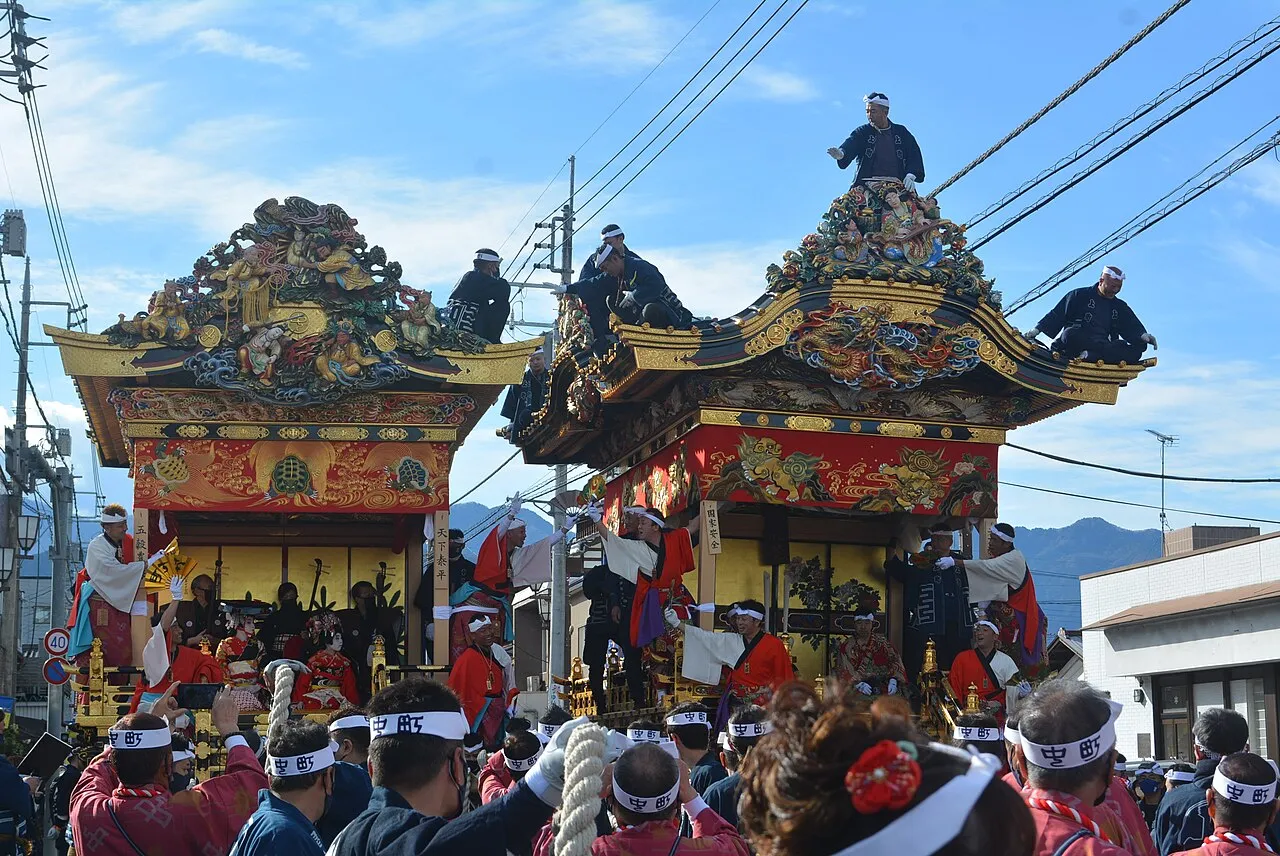
  • Chichibu Night Festival (Saitama, December 2–3). Lantern-lit floats are hauled up a steep slope under winter fireworks, about 80 minutes from Tokyo by limited express. One of Japan’s three great float festivals.
  • Kasuga Wakamiya On-matsuri (Nara, December 15–18). Held every year since 1136, with a costumed procession by day and ancient court dances for the kami by firelight.
  • Shiromi Kagura (Miyazaki, December 12–16). In a mountain village, 33 sacred dances go on through a December night.
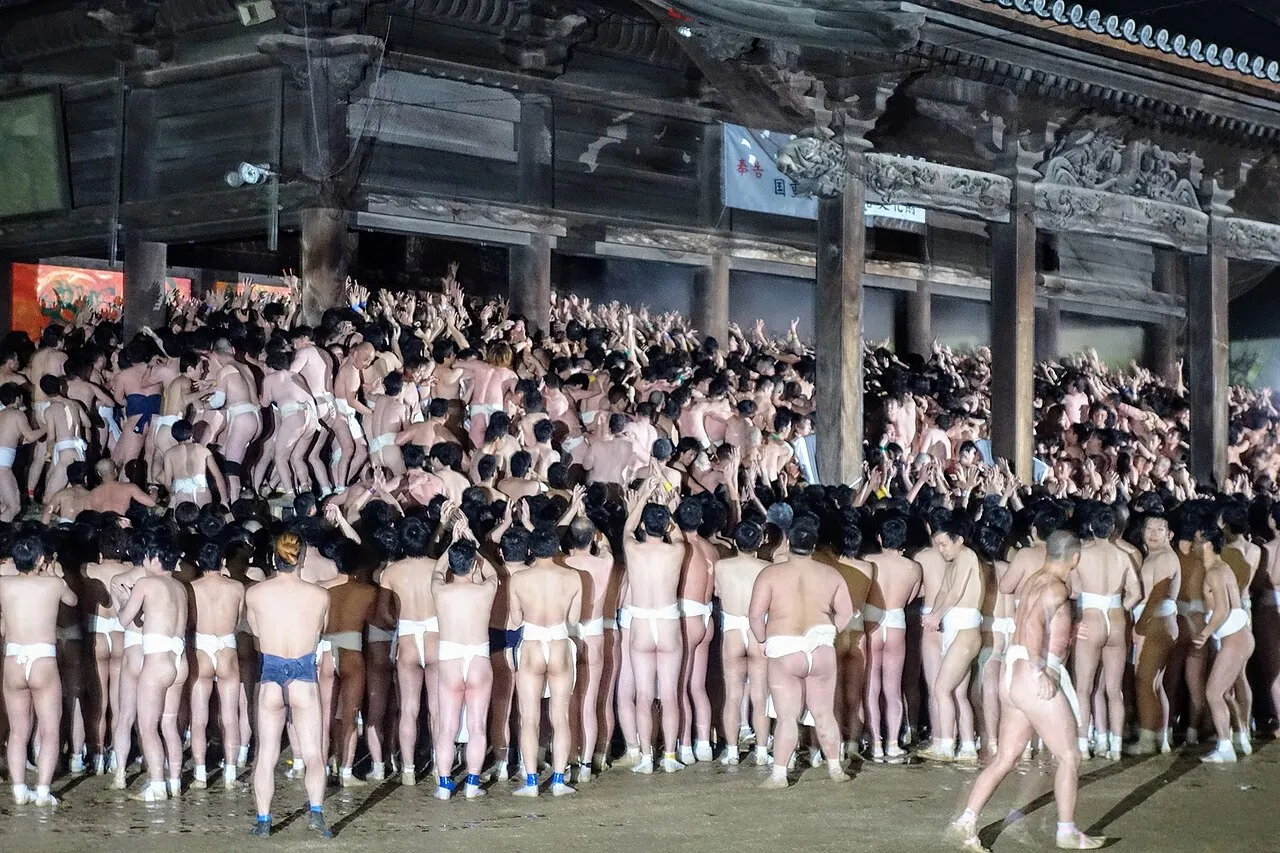
  • Saidaiji Eyō (Okayama, usually the third Saturday of February). Thousands of men in loincloths pack a temple courtyard at night. After a fatal accident in 2026, the organizers plan to hold the 2027 festival without the scramble for the sacred sticks. Check the festival page before you go.
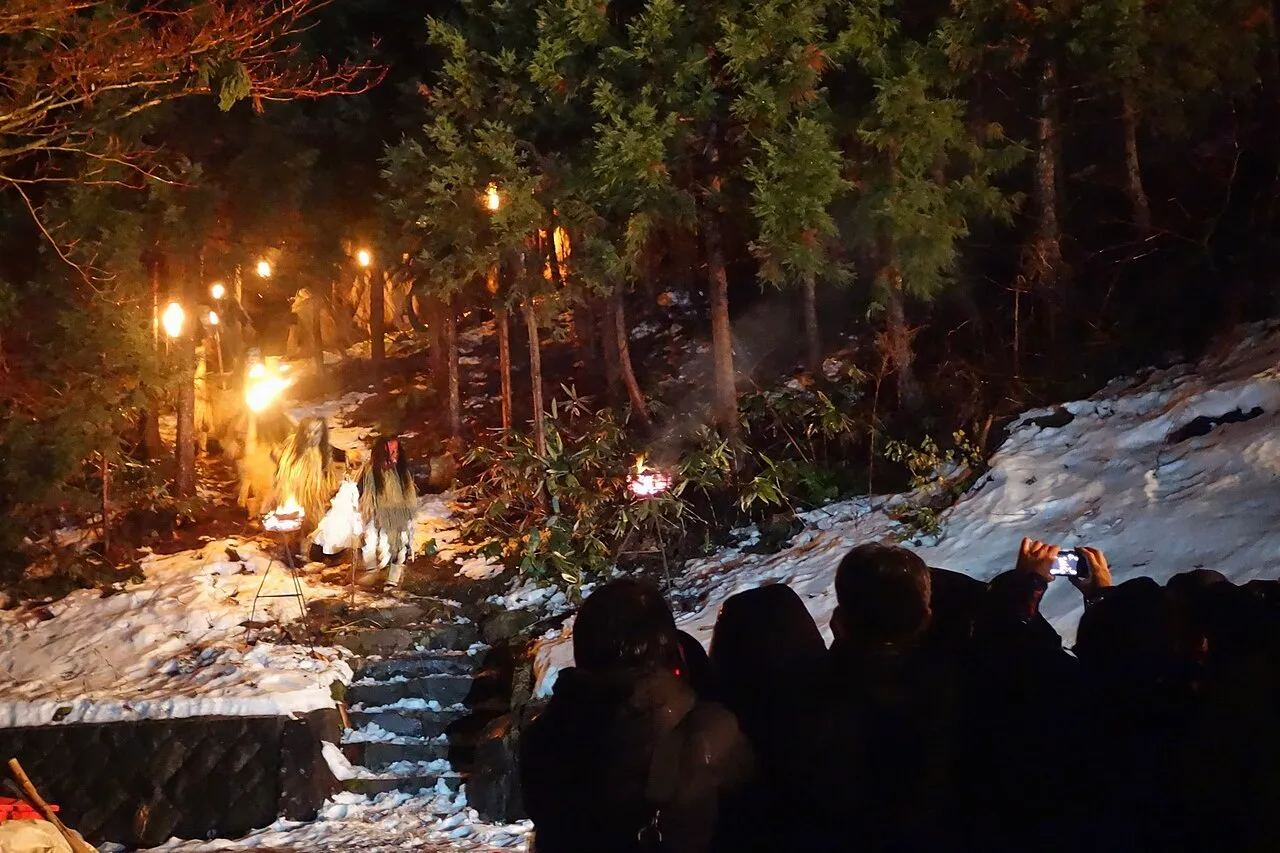
Torches light a line of figures coming down a snowy forest path at night, watched by a crowd.
The namahage descend the mountain by torchlight, February 14, 2016. Photo: KQuhen, CC BY-SA 4.0. Source
The Nakamachi and Kamimachi yatai floats, carved and lacquered, with crew members riding on their roofs above a crowd in festival coats.
The Nakamachi and Kamimachi floats in the streets of Chichibu, December 2, 2022. Photo: Katorisi, CC BY 4.0. Source

Lanterns, markets and lucky charms

  • Nagasaki Lantern Festival (February 5–21, 2027). About 15,000 Chinese lanterns light up Nagasaki for the Lunar New Year.
  • Tōka Ebisu (Osaka, January 9–11). About a million people collect lucky bamboo branches for business at Imamiya Ebisu Shrine.
  • Usokae (Fukuoka, January 7). At Dazaifu Tenmangū, crowds swap little wooden bullfinches with strangers, trading last year’s bad luck for good.
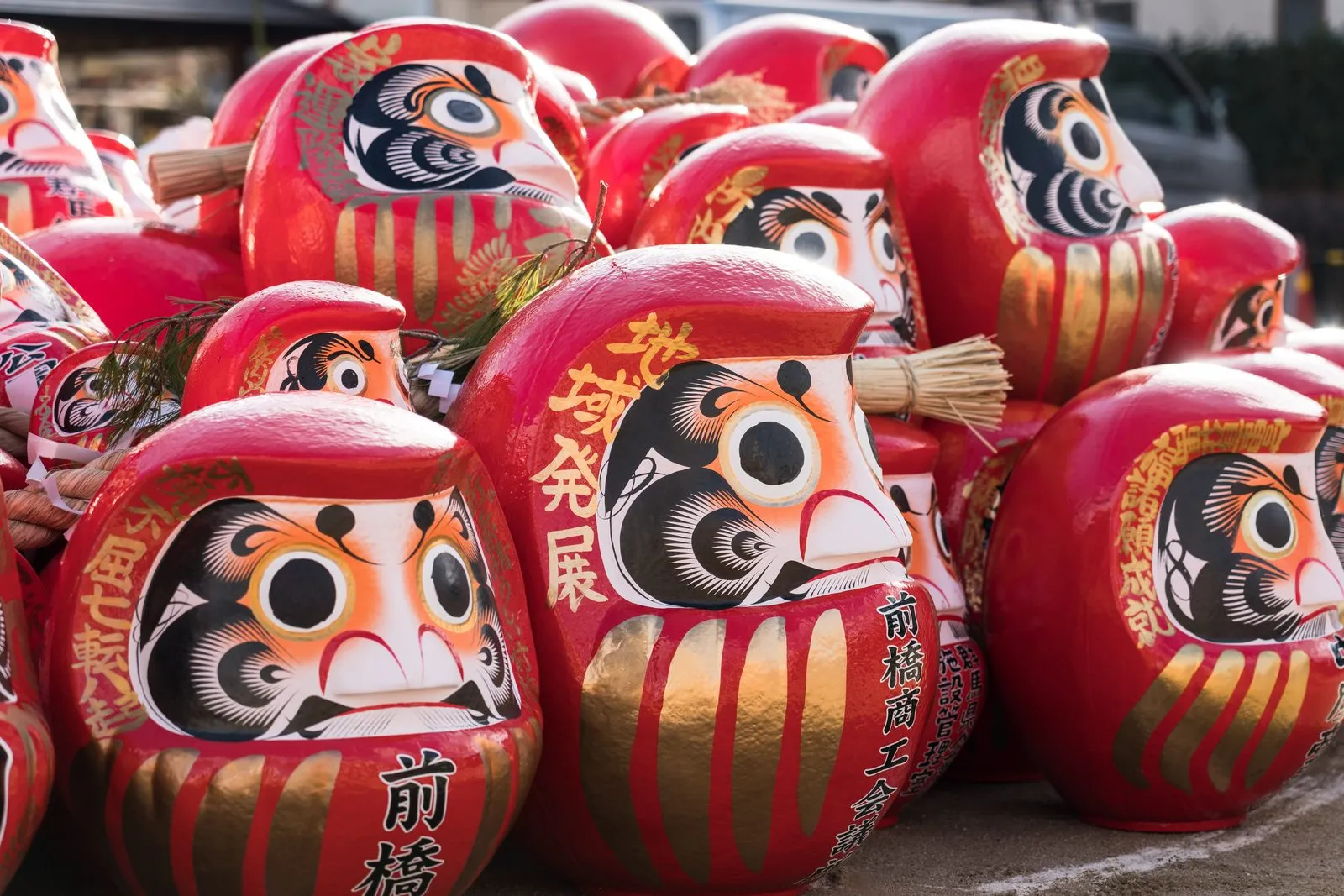
  • Maebashi Hatsuichi (Gunma, January 9). The year’s first market fills the streets with red daruma dolls.
  • Hagoita-ichi (Tokyo, December 17–19) and Setagaya Boroichi (Tokyo, December 15–16 and January 15–16). Two old Tokyo markets, one for decorated paddles, the other for antiques and street food.
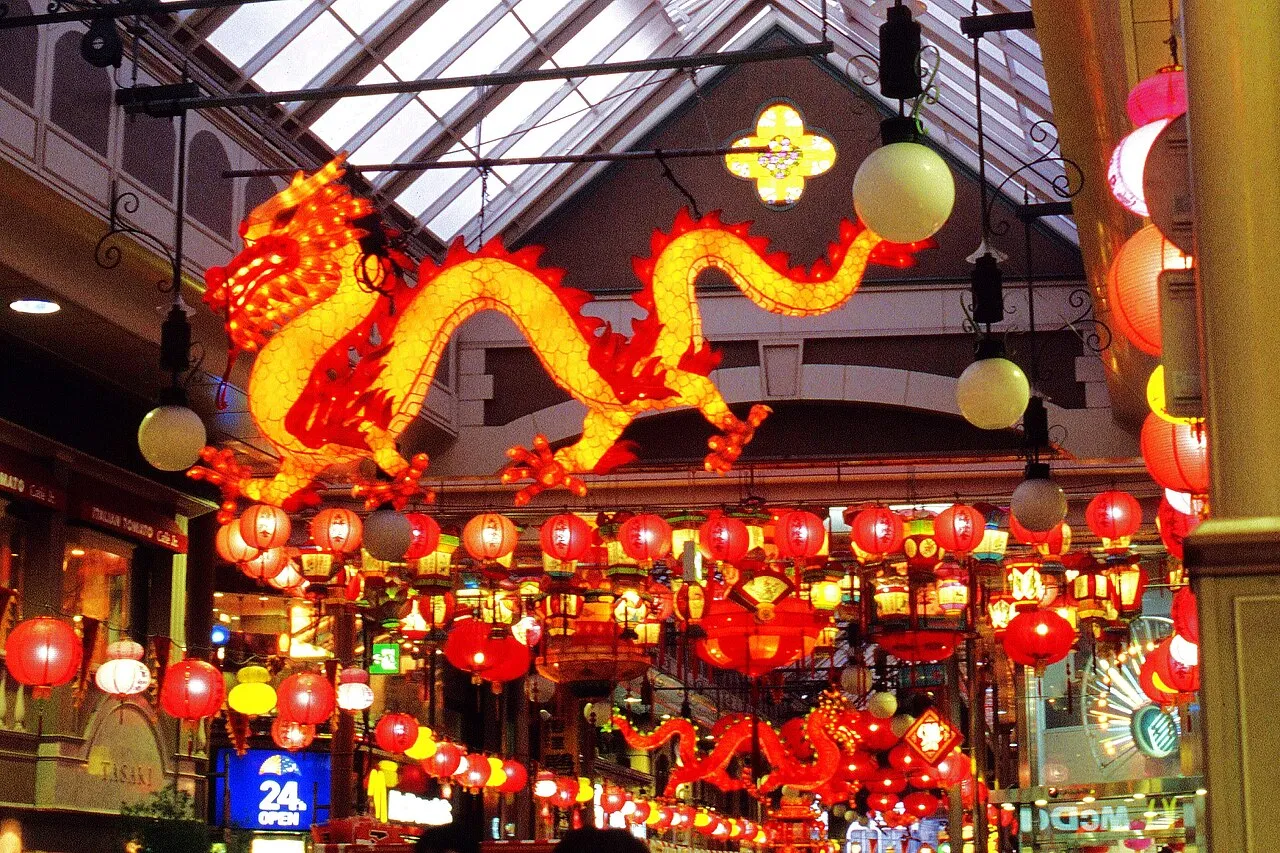
A long golden dragon lantern and rows of red and yellow lanterns hang under the roof of a shopping arcade.
Lanterns in the Hamanomachi arcade during the Nagasaki Lantern Festival, February 2010. Photo: ぱちょぴ, CC BY-SA 3.0. Source
A close view of many bright red daruma dolls with painted gold patterns.
Daruma for sale at the Maebashi Hatsuichi. Photo: Nippon Matsuri Network (matsuri-stream.jp), CC BY 4.0. Source

Planning a winter festival trip

  • Combine Akita in one weekend. In 2027, Yokote Kamakura (February 12–13) and the Namahage Sedo Festival (February 12–14) fall on the same weekend in Akita Prefecture. Both are small towns, so book early.
  • Sapporo fills up fast. Hotels in Sapporo for the snow festival week are the hardest winter booking in Japan. Book as soon as your dates are fixed.
  • New Year is a different trip. Around December 29 to January 4, transport is very busy and many shops close. See our guides to New Year in Japan and hatsumōde.
  • Dress for the cold. Night festivals mean standing outside for hours. In the snow country, wear warm layers, gloves and boots with a good grip; paths are icy at night.
  • Check the weather. Snow can delay trains in the north and in the mountains. Leave extra time, especially on the day you travel to a festival.

For the full list by month, see December, January and February.
Festivals in this guide

Plan your visit

Early February, about one week · Sapporo · ★★★

Sapporo Snow Festival

For about a week each February, giant snow sculptures and glittering ice carvings fill the center of Sapporo, the capital of Hokkaido.

Second Friday and Saturday of February · Yokote · ★★★

Yokote Kamakura Festival

In the snow country of Akita, children sit in candlelit snow huts and invite passers-by in for rice cakes and warm sweet amazake.

Second Friday to Sunday of February · Oga · ★★★

Namahage Sedo Festival

In the snowy mountains of Akita's Oga Peninsula, masked namahage come down from the forest by torchlight to a great bonfire at Shinzan Shrine.

January 15 · Nozawa Onsen · ★★★

Nozawa Onsen Dosojin Fire Festival

On a January night in a snowy hot-spring village, villagers attack a towering wooden shrine with flaming torches while men in their unlucky years defend it, until the whole structure goes up in flames.

Fourth Saturday of January · Nara · ★★

Wakakusa Yamayaki

On a January night, fireworks burst over Nara and then the whole grassy hillside of Mount Wakakusa is set on fire.

February 2–4 (around Setsubun) · Kyoto · ★

Setsubun at Yoshida Shrine

On the eve of spring by the old calendar, demons are chased out of Kyoto's Yoshida Shrine by a four-eyed exorcist, and old charms are burned in a towering bonfire.

December 2–3 · Chichibu · ★★

Chichibu Night Festival

A winter night festival in the hills west of Tokyo, where lantern-lit floats are hauled up a steep slope under fireworks on a freezing December night.

December 15–18 · Nara · ★★

Kasuga Wakamiya On-matsuri

A festival held in Nara every year since 1136, with a costumed procession by day and ancient court dances performed for the kami by firelight.

December 12–16 · Saito · ★★★

Shiromi Kagura

In a mountain village in Miyazaki, 33 sacred dances are performed through a December night in front of an altar of boar heads, keeping alive the faith of Japan's hunting communities.

Third Saturday of February · Okayama · ★★

Saidaiji Eyō (Naked Festival)

On a February night, about ten thousand men in loincloths pack a temple courtyard in Okayama and scramble in the dark for two sacred wooden sticks.

About two weeks around the Lunar New Year (late January to February) · Nagasaki · ★★★

Nagasaki Lantern Festival

For two weeks around the Lunar New Year, about 15,000 Chinese lanterns light up the streets, bridges and parks of Nagasaki.

January 9–11 · Osaka · ★

Tōka Ebisu

Osaka's New Year festival for the god of business. About a million people come over three days to collect lucky bamboo branches from shrine maidens.

January 7 · Dazaifu · ★★

Usokae at Dazaifu Tenmangū

On the evening of January 7, crowds at Tenjin's great shrine swap little wooden bullfinches with strangers, trading last year's bad luck for good.

January 9 · Maebashi · ★★

Maebashi Hatsuichi (Daruma Market)

Maebashi's first market of the year fills its streets with red daruma dolls, and old ones are burned at the city's Hachiman shrine to give thanks.

December 17–19 · Tokyo · ★

Hagoita Market at Sensō-ji

Before the New Year, stalls at Sensō-ji sell decorated wooden paddles, the classic charm to protect children and bring luck.

December 15–16 and January 15–16 · Tokyo · ★

Setagaya Boroichi

A street market with more than 400 years of history fills a quiet Tokyo neighbourhood with some 700 stalls of antiques, old tools and street food, twice each winter.

February 25 · Kyoto · ★

Baikasai Plum Festival

On the anniversary of Sugawara no Michizane's death, geiko and maiko serve tea under the plum blossoms at Kyoto's Kitano Tenmangū.

December 14 · Akō · ★★

Akō Gishi-sai

A castle town in Hyogo remembers the 47 loyal retainers of the Chūshingura story with a costumed parade on the anniversary of their revenge.

January 8, in odd-numbered years · Kitagawa · ★★★

Oyumi Matsuri at Hoshi Shrine

Every other January, twelve archers from a mountain village in Kochi shoot 1,008 arrows at a target to drive away evil and pray for a good harvest.

Words you’ll hear

Glossary

Matsuri祭り

A Japanese festival, usually held for the kami of a local shrine. The word comes from the idea of serving and entertaining the gods.

Kamakuraかまくら

A domed snow hut built in the snow country of northern Japan, with a small altar to the water god inside.

Dashi山車

A general word for a festival float that is pulled through the streets.

Kagura神楽

Sacred music and dance performed for the kami. Many forms retell myths, above all the story of Amaterasu and the rock cave.

Darumaだるま

A round, hollow good-luck doll modeled on a Buddhist monk. You paint in one eye when you make a wish and the other when it comes true.

Sources

References

  • Sapporo Snow Festival Executive Committee: 2027 Sapporo Snow Festival outline, https://www.snowfes.com/news/948.html
  • Yokote City: Yokote Kamakura, https://www.city.yokote.lg.jp/kanko/1004035/1004590.html
  • Namahage Sedo Festival Executive Committee (Oga City), https://oganavi.com/sedo/
  • Nagasaki Lantern Festival: 2027 dates, https://www.at-nagasaki.jp/lantern-festival/news/1283
  • Each festival's own page on this site lists its official sources.

Last checked 2026-10-15.